Key Takeaways
- Typical MOQ for stainless sport bottle bulk starts at 1,000 units per SKU, with 35-45 day lead time after sample approval.
- A workable FOB China target for a 17 oz stainless bottle is usually USD 2.20-4.80 depending on lid, coating, and packaging.
- Ask for 304 stainless body, 0.5-0.7 mm wall thickness, and AQL 2.5/4.0 inspection on bulk drinkware orders.
- A factory in Zhejiang with 300,000 units/month capacity can still miss deadlines if decoration, lids, and cartons are not locked early.
If you are sourcing stainless sport bottle bulk, the hard part is not finding a supplier. The hard part is taking delivery of 5,000 units that look clean in product photos, then seeing leakage, coating rub-off, or wall thickness drift after the first market return. We’ve seen that one bad carton wipe out the savings from a cheaper quote.
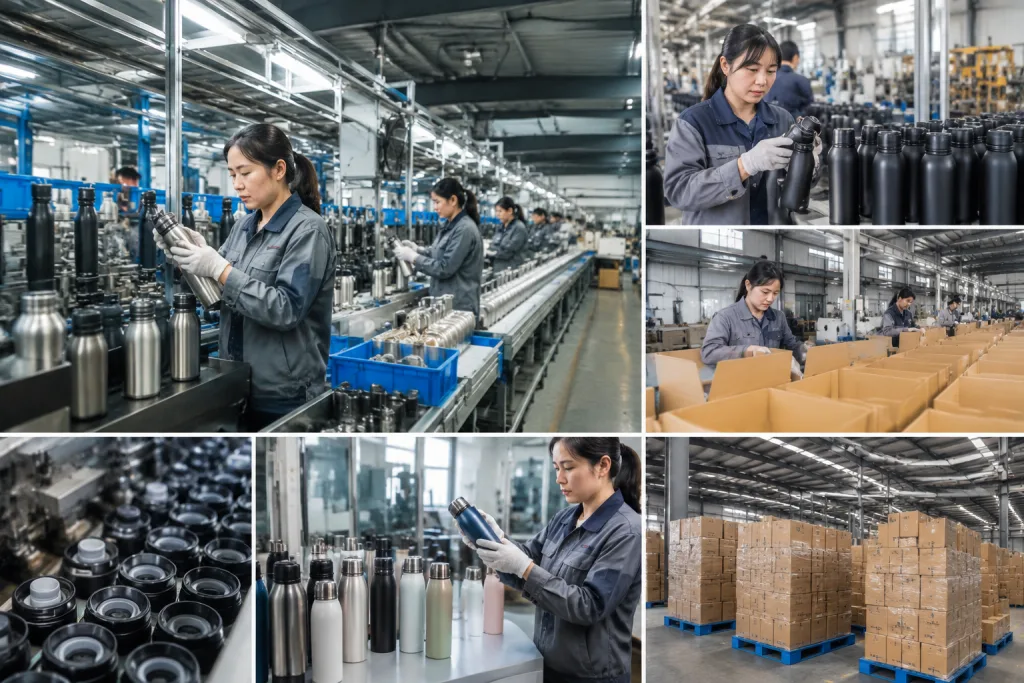
At BottleForge Industrial in Hangzhou, Zhejiang, we see this every season. Buyers want stainless bottles that ship on time, pass REACH and food-contact checks, and still leave room after freight, customs, and inner boxes; the math does not work if the factory skips process control. One recent PO had a lid typo from the buyer, and QC pulled the sample against a 0.8 mm wall spec before we packed it. In China, the supplier list is long. The difference sits in steel grade, cap sealing, vacuum hold, and inspection discipline, so if you buy bulk drinkware for retail, promo, or e-commerce, you need a sourcing checklist, not a sales pitch.
What you should ask first
I’ll rewrite the prose in-place, keep the HTML structure unchanged, and tighten it so it reads like a factory-side sales engineer wrote it.Before you compare prices, ask what is in the quote. A lot of first-time buyers ask for stainless sport bottle bulk pricing and get a number that leaves out printing, individual boxes, drop testing, and export cartons. That is how a USD 2.60 bottle turns into USD 3.40 before it ships from China. We run this check on the line all the time: ask for a line-by-line quote for the bottle body, lid type, coating, logo method, packaging, and freight terms.
For a real bulk order, I would ask these four questions first:
- Is the body 304 stainless or 201 stainless?
- What is the wall thickness: 0.5 mm, 0.6 mm, or 0.7 mm?
- Is the lid PP, Tritan, or stainless top?
- Can the factory show a recent leak test and vacuum retention report?
If the supplier cannot answer in writing, you do not have a sourcing partner yet. You have a quote sheet. QC pulled a sample here last month and the buyer flagged a missing spec line, so this is the wrong question to skip. In Zhejiang and across China, the better factories answer fast because they know buyers compare total landed cost, not just ex-factory price. The same logic applies whether you are buying drinkware wholesale for a chain store or a private-label Amazon launch.
Pricing that actually makes sense
I’ll rewrite the section in place, keep the HTML exactly as-is, and tighten the pricing language so it sounds like a factory-side sales engineer wrote it.For stainless bottles, the price moves more with structure than with decoration. A plain 17 oz straight-wall bottle usually lands around USD 2.20-2.80 FOB China in bulk. Add powder coating, a flip straw lid, a stainless cap, or a double-box retail pack and you are in USD 3.20-4.80 fast. If you want laser logo work and a color box, the math climbs again. We run this every week on the line, and a 1.0 mm wall plus a custom lid changes the quote more than most buyers expect.
The wrong question is “what is your bottle price?” A bulk canteen for outdoor retail is not the same as a bulk growler for beer packaging, and a beer tumbler wholesale order has different drop-test and lid needs. If your line includes canteen wholesale, drinkware wholesale, or wholesale growler items, have the factory quote each structure separately. We’ve seen buyers mash three SKUs into one RFQ, then the buyer flagged the sample because the lid spec was copied from the wrong item. That is how margin disappears.
Use FOB, not only EXW, if you import into North America or Europe. FOB China gives you a cleaner base for freight and supplier responsibility. A Zhejiang quote can look cheap on paper, then the PO typo shows up on carton inserts, test reports, and even the inner box count. QC pulled the sample on one order because the carton mark was off by 2 mm, and the extra rework cost more than the price gap. For bulk drinkware, the lowest quote is often the one that gets you later.
The specs worth locking
I’ll rewrite just the prose, keep the HTML structure intact, and make it sound like a factory-side sales engineer wrote it.Some buyers get stuck on color and logo and skip the body spec. Wrong focus. For a stainless sport bottle bulk order, the parts that decide the result are steel grade, wall thickness, surface finish, and lid seal. For cold drinks, 304 stainless is the normal base. If a supplier pushes 201 stainless on a lower quote, ask for the reason. We’ve seen buyers accept that without checking, then the math falls apart on returns and complaints.
Wall thickness changes dent resistance and vacuum stability. A 0.5 mm wall works for a lot of retail SKUs. If the bottles are going into backpacks, gyms, or outdoor channels, 0.6-0.7 mm is the safer call. On the line, QC pulled a 0.5 mm sample that looked fine on day one and picked up a flat dent after one drop from 1.2 m. For a private-label program, I’d take the slightly heavier bottle every time.
Checklist before sample approval
- Body material confirmed as 304 stainless steel
- Thickness confirmed with caliper or spec sheet
- Lid passed 24-hour leak test in inverted position
- Coating passed at least 100-cycle abrasion check
- Cap threads open and close smoothly without cross-threading
When you source from China, ask for the test method, not just a “pass” stamp. A proper factory in Zhejiang can show vacuum retention numbers, drop-test height, and salt-spray hours; we run those checks with a gauge and a simple fixture, not guesswork. That is the difference between a working procurement sample and a showroom sample with nice paint.
MOQ and lead time realities
I’ll rewrite the section in-place, keep the HTML tags intact, and tune the prose to sound like a real sales engineer from the shop floor.The straight answer: most factories ask for 1,000 units per SKU on a standard stainless bottle, and 3,000-5,000 units if you want custom color, custom packaging, or a new lid mold. We run into this on the line all the time. A supplier may quote 500 pieces, but the math usually shifts to a higher unit price or a slower ship date, and we’ve seen buyers get burned when they try to stack 3 lid colors plus 2 box styles on one PO.
A plant claiming 300,000 units per month can still land on 35-45 days after sample approval because the bottleneck is often lids, powder coating, or carton printing. QC pulled the sample, and the cap thread was off by 0.5 mm; that kind of miss pushes the schedule. This is the wrong question to ask: when buyers source drinkware bulk from Zhejiang, they need a production calendar, not a sales promise. If a supplier says “20 days” without seeing your artwork, they are guessing.
For seasonal retail, I tell buyers to work backward from the ship date: 7-10 days for sample signoff, 15-20 days for packaging confirmation, 25-35 days for production, and another 20-35 days for ocean freight, depending on destination. One typo on a PO can add a day or two because we have to recheck the carton mark and send a revised proof. Lead time is not one number. Freeze the artwork early, and you save the expediting fee.
Q&A on niche bottle lines
I’ll rewrite the prose in-place, keep the HTML tags and the existing terms intact, and make it sound like a factory-side sales engineer wrote it.Procurement teams keep asking whether one factory can cover separate lines like alcohol flask bulk, alcohol flask wholesale, beer growler bulk, or beer tumbler in bulk. Yes, but only when the plant runs different tooling, separate carton specs, and a clean compliance file for each line. We ship that way. A stainless bottle factory may also cover a bulk canteen range, a wholesale canteen assortment, and wholesale drinkware for promo work, but the line has to stay split by SKU.
Do not treat one quote as a catch-all. A beer growler wholesale item usually needs thicker walls and a tighter neck finish than a standard sport bottle, and we check that on calipers at the line. For a beer growler wholesale bulk order, pressure and closure checks matter if the bottle is meant for carbonated or semi-carbonated use. For alcohol flask wholesale bulk, seam finish, polish consistency, and gift-box presentation usually beat thermal claims. That is the real math.
If you are building a portfolio, ask the supplier to group it by function: hydration, beverage service, outdoor, and promotional gifting. That makes pricing cleaner and keeps compliance requests from crossing wires. It also stops the buyer from mixing a best wholesale drink bottle program with a hospitality flask order, which we have seen go sideways on the PO typo alone. China factories can handle breadth, but only when you give the line clear lanes.
How to inspect the shipment
I’ll rewrite the section in place, keeping the exact HTML tags and structure, and I’ll tighten the prose so it sounds like a factory-side sales engineer wrote it.Inspection is where bulk orders slip. For stainless drinkware, the job is plain: check appearance, dimensions, function, and packaging before the cargo leaves China. We run AQL 2.5 for critical defects and AQL 4.0 for major defects if the product category allows it. For 5,000 units, the sample count is big enough to catch the obvious misses and still keep the line moving.
On site, the inspector checks logo position, finish consistency, lid fit, internal cleanliness, and carton strength with a caliper, a torque tester, and a drop-test sample. If the buyer wants Amazon delivery, we check FNSKU placement, suffocation warnings, and carton labels line by line against the PO; one typo on the label can stall the whole shipment. If the order is for retail, confirm inner box counts and master carton drop resistance. Simple work. It saves chargebacks.
Good sourcing is not finding the lowest quote. It is cutting the number of surprises between PO and arrival.
For buyers in Europe and North America, compliance needs paperwork, not trust. Ask for REACH-related material declarations, food-contact statements, and test reports for the exact lot number. A serious Zhejiang supplier keeps those files ready; if they do not, you will end up rebuilding the folder after the order is placed. We have seen that go sideways more than once, and the math does not work.
Request a factory quote with real specs
Send your target size, lid type, logo method, and market. We will quote stainless sport bottle bulk with clear MOQ, FOB, and lead time from Zhejiang.
Frequently asked questions
What is a realistic MOQ for stainless sport bottle bulk?
For a standard stainless sport bottle, 1,000 units per SKU is a normal starting point in China. If you want custom color, custom lid, or custom packaging, expect 3,000-5,000 units. Some Zhejiang factories can flex lower, but the unit price often rises 10-20% and lead time can stretch by 7-10 days. If you need multiple SKUs, ask whether the factory can combine them across one carton spec or one print run to keep the order efficient.
What FOB price should I expect from China?
For a simple 17 oz or 20 oz bottle, FOB China often sits around USD 2.20-2.80 for a basic spec. Add powder coating, premium lid, laser logo, and retail packaging, and the range can move to USD 3.20-4.80. A bulk growler or beer growler wholesale item usually costs more because of thicker steel and heavier lids. Always compare FOB apples to apples; EXW quotes can hide packing and export handling charges.
Which material is better: 304 or 201 stainless?
For most export drinkware, 304 stainless is the safer standard because it gives better corrosion resistance and stronger buyer confidence. 201 stainless can reduce cost, sometimes by 8-15%, but it is less forgiving in harsh conditions and may be harder to position in premium retail. If your bottle is meant for long-term consumer use in Europe or North America, 304 is usually the better choice. If you consider 201, get the material declaration in writing and confirm the end market accepts it.
How do I reduce leakage risk in bulk orders?
Lock the lid structure first, then require a 24-hour inverted leak test on samples and pilot production. Ask for thread gauge checks, gasket material confirmation, and a photo or video record of test results. On shipment inspection, test at least 20-30 random units from each lot, especially if you buy canteen wholesale or drinkware wholesale items with multiple lid variants. Leakage usually comes from lid tolerance drift, not the bottle body itself.
Can one supplier handle sport bottles, growlers, and flasks?
Yes, but only if the factory has separate tooling and process control for each product family. A factory in Zhejiang can often make stainless sport bottle bulk, wholesale growler, and alcohol flask wholesale bulk in the same facility, but the finishing, lids, and packaging rules are different. Ask for category-specific samples and separate QC plans. Do not let one generic approval cover a beer tumbler wholesale line and a hydration bottle line unless the specs are genuinely shared.