Key Takeaways
- For a 1,000-unit order, a custom sports water bottle usually lands at USD 1.20-3.80 depending on material, lid, and print method
- A 35-45 day lead time is normal for custom colors and logos; add 7-10 days for ocean transit from China
- Most distributor programs work best at MOQ 500-1,000 pieces per SKU, not 50 mixed variants
- REACH, LFGB, FDA, and drop-test documentation matter more than a glossy sample when you sell into Europe and North America
If you are buying drinkware for a gym chain or fitness brand, the wrong bottle spec will cost more than the unit price. A lid that leaks in a locker bag, a Tritan wall that scuffs after two weeks, or a print that starts peeling after 30 dishwasher cycles will kill repeat orders faster than any freight delay. The first question is not “what bottle looks good?” It is “what should a sports water bottle distributor control for you?”
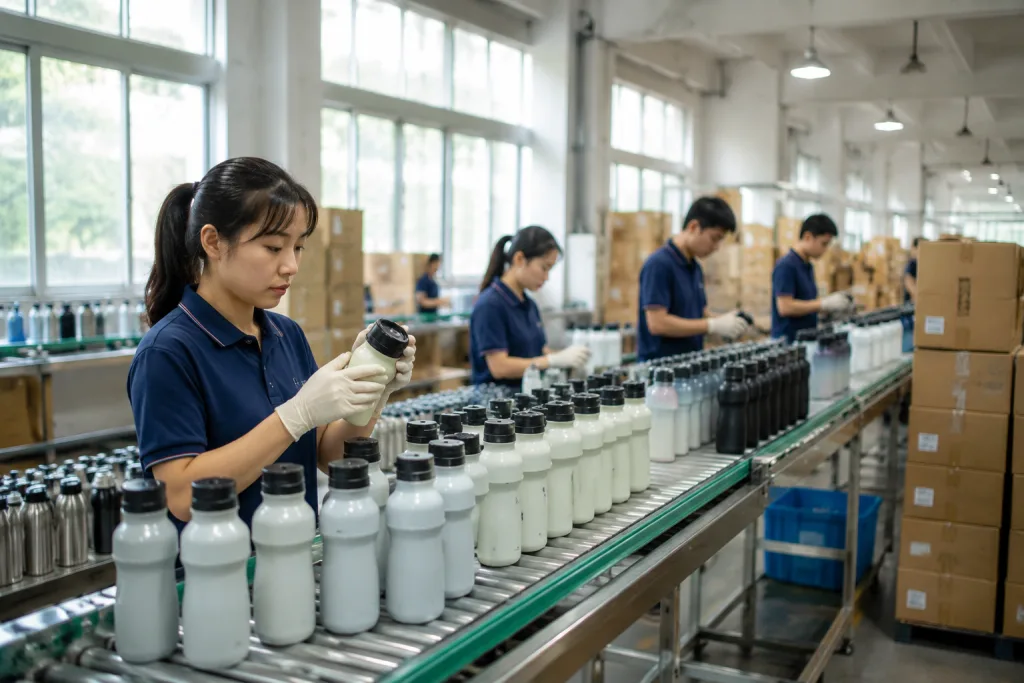
From our Zhejiang factory, we ship about 600,000 units per month across sports, shaker, and insulated lines, so we see the same pattern every season. Buyers who lock the four core decisions early get steadier pricing, fewer claims, and cleaner replenishment. QC pulled the sample at 120 mm cap height last week because the buyer flagged a loose flip-top, and that is the kind of issue you want fixed before mass production. If you are sourcing in China, the math does not work when the catalog looks nice but the capacity, material, closure system, and decoration are still fuzzy.
Start with the end use
I’ll rewrite the section in place, keeping the HTML tags and list structure intact while tightening the sales-engineer voice and adding a few concrete factory-floor details.Before you compare bottles, lock the end use first. A gym retail shelf, a chain’s member welcome kit, and a supplement-brand giveaway all call for different specs. For a bulk gym water bottle on daily training floors, we care more about impact resistance and easy cleaning than fancy looks. If the bottle is a retail item, shelf appeal and Pantone match take the lead. If it is a bulk sports water bottle for events, 7-day lead time and low complaint risk usually beat everything else.
The biggest mistake is treating all active-use drinkware as one product. A 600 ml squeeze bottle for spin studios will not work for a premium fitness brand that wants a rigid custom fitness water bottle with a clean logo panel. A 28 oz shaker with a powder-proof lid is another build. We had a buyer flag a 1.5 mm wall spec as too flimsy after QC pulled the sample at the line, and they were right. The more exact the use case, the easier it is for a sports water bottle distributor in China or Zhejiang to quote a spec that holds up.
- Training floor use: soft squeeze PE or PP, simple flip cap, low cost
- Retail merch: Tritan or stainless steel, cleaner surface, better decoration
- Supplement use: shaker insert, leak-resistant cap, wide mouth
- Welcome kit: light weight, fast branding, stable MOQ
If you skip this step, the rest gets messy. You will pay for features you do not need, or you will under-spec the bottle and hear about it after the first season. The math does not work. We ship enough rework cases to know that.
Pick the right body material
I’ll rewrite the section in place, keep the HTML exactly as-is, and strip the AI-style phrasing while adding a few factory-floor details and harder numbers.Material choice sets your cost, hand feel, and scrap risk. For most distributors, the real call is not plastic versus metal. It is whether you want the lightest bulk fitness water bottle, a rigid bottle with a cleaner shelf look, or a shaker that can take 5,000 cap cycles without the hinge whitening.
PP is the lowest-cost stable pick. We run it on a lot of bulk gym water bottle orders where the buyer cares about volume and print price, not crystal clarity. PE squeeze bottles work well for team packs and class giveaways because they flex, open fast, and decorate cleanly. Tritan gives the best consumer look among plastics; we use it for a customizable fitness water bottle or customizable sports water bottle when the buyer wants clarity and dishwasher tolerance. Stainless steel sits at the premium end, and it adds freight weight plus more tooling steps. That math does not lie.
Practical cost bands
At 1,000 pcs, a basic PP or PE bottle with one-color print may land at USD 0.65-1.30 FOB China. Tritan bodies usually sit around USD 1.60-3.20, depending on wall thickness, lid style, and packaging. Stainless steel starts higher, often USD 3.50-7.50 for a simple single-wall or basic vacuum build. QC pulled the sample on one 1,000-piece run because the lid spec on the PO said 28 mm, but the cap came through as 30 mm. Those are the numbers you should expect from a real distributor fitness water bottle quote in Zhejiang.
Ask for wall thickness in millimeters, not “premium feel.” For Tritan, 1.5-2.0 mm is a common usable range for retail-grade bottles.
If you are building a custom made shaker bottle, check the mixer insert material too. Cheap PP inserts can warp at the line, and then the body is fine while the blend performance goes sideways. We’ve seen buyers blame the bottle when the real problem was the insert.
Choose the closure system
I’ll rewrite the section in-place, keep the HTML structure untouched, and tighten the wording so it sounds like a factory-side sales engineer wrote it.The lid is where we see most field failures. A bottle body can clear visual check and still leak because the cap thread is off, the gasket is under-compressed, or the hinge angle is wrong. For a sports water bottle distributor, closure design is the product. We’ve had buyers flag a 0.3 mm thread mismatch after one carton test, and the line caught it before ship.
For plain hydration bottles, a flip-top or push-pull cap gives fast drinking and familiar handling. For shaker use, a screw-on lid with an internal seal and a wide mouth is the standard. If your order is a custom shaker bottle for a gym chain or supplement brand, ask for a leak test at fill level, not a dry-close check. A supplier in Zhejiang should show 100% water-leak inspection at assembly, then AQL sampling on finished cartons. The math does not work any other way.
- Flip-top: quick drinking, fair leak resistance for daily carry
- Push-pull: simple part, low cost, common in team programs
- Screw lid: better for retail packs and transport
- Shaker lid: needs tight thread control and gasket fit
For a custom logo shaker bottle, decide early whether the logo goes on the body or the lid. Lid printing wears faster, especially after dishwasher cycles at 60°C. We’ve seen this go sideways on a 5,000-piece reorder when the buyer changed the cap mold but kept the same artwork. For bulk shaker bottle supply, body printing is the safer call; keep the cap plain and your repeat orders stay cleaner.
Set branding and decoration rules
I’ll rewrite the section in-place, keeping the HTML structure and tightening the sales-engineer tone. I’m preserving the heading and list tags, and I’ll add a few concrete factory-floor details without changing the meaning.Decoration is where buyers burn margin fast. A logo is not a better bottle just because it uses more colors or more steps. We run this all the time: if the bottle is going into a 5,000-piece replenishment program, lock the print area and process before the first sample. The buyer flagged one PO for a 3 mm logo shift, and that job went back to the line.
Silkscreen is still the workhorse for a custom gym water bottle or custom sports water bottle when you need a durable 1-color or 2-color mark at a low unit cost. Laser engraving works best on stainless steel, and the mark stays clean after 200 wash cycles. Heat transfer and UV print handle more complex graphics, but they need tighter setup control. For a custom fitness water bottle used in gyms, a simple logo usually beats a full-wrap design because it stays aligned on repeat runs. QC pulled the sample on a 500-piece lot and found the wrap drift at the seam.
If you sell in North America through retail or online, get FNSKU-friendly packaging planned early. For a distributor sports water bottle program built for Amazon replenishment, carton labels, polybag thickness, and inner pack counts matter as much as the print. We saw a 24-count inner pack fail because the PO typo called for 20, and the math does not work on the warehouse side. A cheap print on a messy packout is still a weak program.
- Silkscreen: best for 1-2 colors, stable on high-volume repeats
- Laser: best for metal, permanent, low-maintenance
- UV print: good for graphics, but more process control needed
- Wrap label: useful for short campaigns, not ideal for long-term replenishment
Treat compliance as a buying filter
I’ll rewrite the section in-place, keep the HTML exactly as-is, and tune the prose so it sounds like a real factory-side sales engineer wrote it.Compliance is not something you chase after the PO lands. It is the first filter. If you ship into Europe, put REACH and food-contact declarations in the quote from day one. If you sell in North America, ask for FDA food-contact statements where they apply, plus any state packaging rule your channel requires. For stainless models, LFGB matters if you want less pushback from stricter EU buyers.
From China, especially Zhejiang, suppliers will say “compliant” all day. That is the wrong question to ask. Ask for test reports tied to the exact material, color, and production batch. A black dye formula and a clear bottle do not carry the same risk. We’ve seen a soft-touch custom gym water bottle need extra review because the additive package changed migration results on a 1,000 pcs pilot run.
Good distributors in China should show factory controls, not just a PDF. Look for incoming material checks, gasket hardness records, torque checks, and carton drop testing. We run those on the line with a torque meter and a 1.2 m drop test, then QC pulls the sample before packing. Ask for AQL terms too. AQL 2.5 for critical defects and AQL 4.0 for minor defects is a common starting point in drinkware, but the math shifts when the buyer flags a retail program with tighter return exposure.
If a supplier cannot point to the test report for your exact SKU, treat the compliance claim as unverified.
This matters even more when you sell a customizable shaker bottle as retail, not a giveaway. Retail customers spot odor, staining, and lid fit fast. Procurement usually notices only after the first 200 units come back.
Buy on MOQ and lead time
I’ll rewrite the section in place, keep the HTML structure intact, and tighten the sales-engineer voice with concrete factory detail and cleaner sourcing language.The best price means nothing if the MOQ traps you with dead stock. In our line, a bulk sports water bottle order usually lands best at 500-1,000 pieces per color per SKU. Custom colors push the MOQ up fast because resin blending, color matching, and machine changeover all cost real money. If someone quotes 100 units across six colors, the math does not work.
From our Hangzhou plant in Zhejiang, a custom order with logo and standard packaging usually ships in 35-45 days after sample approval. New molds or special caps can stretch that to 50-60 days. We run a 24-cavity lid tool on the bottle line, and QC pulled the sample twice last month because the cap torque was off by 0.3 N·m. Add ocean freight to Europe or North America, and you should plan another 7-10 days on standard service, with delays during peak season. For a sports water bottle distributor, that schedule has to match gym launches and promo windows.
Do not push on MOQ alone. A cheaper minimum order with weak packaging, unstable color, or sloppy lids will cost more on the second buy. Ask for repeatability: can the supplier hold the same color code, the same carton pack, and the same print position for three re-orders? We have seen buyers flag a PO typo on the artwork line and lose a week fixing it. That check is worth more than a small sample discount.
- Small trial run: 300-500 pcs for market testing
- Standard distributor run: 1,000-5,000 pcs per SKU
- Re-order target: fixed mold, fixed artwork, fixed packout
Work the supplier like an engineer
I’ll keep the HTML structure intact and rewrite the prose to sound like a factory-side sales engineer, with concrete production details and tighter sourcing language.Once you shortlist a sports water bottle distributor, stop talking catalog and start talking line speed. Ask for tooling photos, the cap-press jig, fill-line shots, and carton packout. Ask how many units per month they run, how many lines are set aside for sports bottles, and what first-pass inspection looks like on the last 10,000 pcs. A real answer beats a polished brochure every time.
For fitness brands and gym chains, the best supplier behavior is plain: clear drawings, confirmed tolerances, simple artwork rules, and sample lead times in writing. We usually push a physical pre-production sample first, then a sealed golden sample for sign-off. If you need a custom shaker bottle or customized fitness water bottle line, lock the hinge, gasket, and print position before mass production. We’ve seen a 0.5 mm shift on pad print turn into a buyer complaint, and the schedule goes sideways fast.
When buyers ask for a distributor gym water bottle or distributor shaker bottle program, we tell them to standardize the core parts across SKUs. One lid family, one bottle family, multiple colors. That cuts spare-part headaches, keeps claim handling cleaner, and usually brings better pricing on the next PO. The math works. In Zhejiang, the suppliers who stay profitable are the ones who simplify the platform, not the ones who promise the widest catalog.
That is the practical way to buy from China: fewer assumptions, tighter specs, and a cleaner production sheet. The result is a customizable shaker bottle or customizable fitness water bottle program you can reorder without chasing fixes on every PO.
Get a tighter quote on your bottle program
Send your target capacity, logo format, MOQ, and destination market. We will quote the right custom sports water bottle spec from Zhejiang, not a guess.
Frequently asked questions
What MOQ should I expect from a sports water bottle distributor?
For standard stock shapes, 500-1,000 pieces per SKU is realistic. For custom color or custom logo runs, 1,000 pieces is more common, especially for a custom sports water bottle or custom gym water bottle. If you want multiple colors, the MOQ is usually counted per color, not across the whole order. A 300-piece trial run is possible, but the unit price often rises 15-30% because setup cost is spread over fewer bottles. For shaker models, caps and inserts can add their own minimums.
How long does a custom order take from China?
A standard custom fitness water bottle or custom logo shaker bottle typically needs 35-45 days after sample approval. If you need a new mold, special lid, or custom packaging, plan for 50-60 days. Then add 7-10 days for ocean freight to Europe or North America on normal service. In peak months, the transit window can stretch further. If you are launching a gym chain campaign, do not leave less than 70 days from PO to warehouse receipt.
Which material is best for a bulk gym water bottle?
For price-sensitive programs, PP or PE is usually best. For a more retail-looking bulk gym water bottle, Tritan gives better clarity and a stronger premium impression. Stainless steel is the right answer only if you need a higher-end shelf price and can absorb extra freight weight. For a bulk shaker bottle, PP bodies with a proper gasketed lid are common because they keep cost low while staying functional. Material choice should match use, not trend.
What compliance documents should I ask for?
At minimum, ask for food-contact declarations, REACH for Europe, and FDA-related material statements if you sell in North America. For stainless products, LFGB is often useful for EU customers. Also ask for the specific test report tied to your SKU, not a generic sample report. A good supplier in Zhejiang should also share in-line QC controls, AQL targets, and leak-test records. If they cannot connect the document to the exact production batch, treat the file as incomplete.
How do I reduce leak complaints on shaker bottles?
Use a screw-top lid with a verified gasket, and require fill-level leak testing before carton packing. For a custom made shaker bottle, the thread tolerance and seal compression matter more than the graphic. Keep the lid design simple, avoid over-stretching thin PP, and do not force mixed cap families across one run. Ask for 100% assembly inspection plus AQL finished-goods sampling. If you are shipping a distributor shaker bottle program into retail, this one control can save a lot of returns.