Key Takeaways
- MOQ for most custom bulk drinkware starts at 3,000-5,000 units, but decorated stainless lines may need 8,000 units
- Typical FOB China pricing for basic stainless bottles runs USD 2.10-4.80 per unit at 5000+ pcs
- Standard lead time is 25-40 days after sample approval, with 7-10 days for repeat tooling checks
- REACH, LFGB, and food-contact declarations matter more than sample appearance when you source from Zhejiang or anywhere in China
` tags intact, and strip the AI-ish phrasing while adding a couple of factory-floor specifics.
If you are sourcing drink bottle wholesale, the first trap is treating a sample like a spec. A 500 ml bottle can look fine on a desk and still fail in transit, on a filling line, or after 3,000 dishwasher cycles. We have seen a buyer approve a hand sample, then the cap torque drift by 0.4 N·m in production and the carton crush ratio go wrong at export. Procurement teams in Europe and North America need to buy the process, not just the product: material grade, wall thickness, cap torque, decoration method, carton packout, and compliance paperwork.
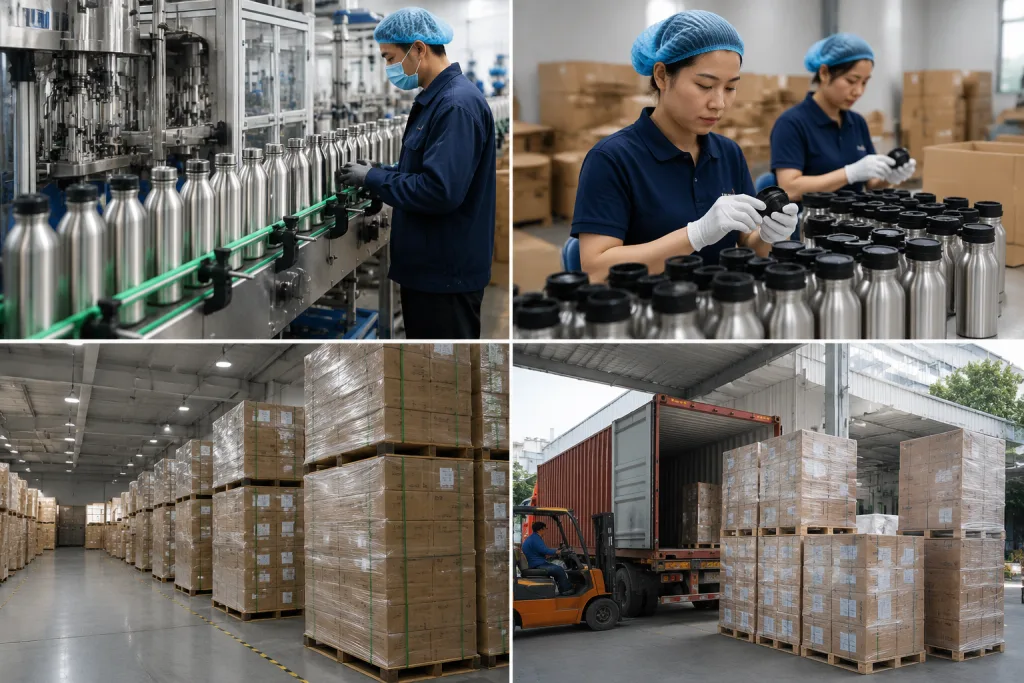
At BottleForge in Zhejiang, we run that job every day. A typical line in China can ship 80,000 to 120,000 units per month depending on the bottle family, but the real question is whether your target spec holds color, seal, and print quality at scale. QC pulled the sample at 24 hours, checked the neck finish with a caliper, and the buyer flagged a 1 mm artwork shift before mass run. Use this guide like a spec sheet: line by line, because that is where the money is.
Start With The Use Case
I’ll rewrite the prose inside the existing HTML, keep every tag and list structure intact, and make it read like a factory-side sales engineer wrote it.Before you ask for quotes, write the use case in one sentence. A commuter bottle, a gym shaker, a retail gift item, and a promotional canteen wholesale order are different jobs, even if they all hold water. The use case decides steel grade, closure type, coating, and whether you should buy bulk drinkware or a tighter family like bulk canteen or bulk growler.
If the bottle is for cold drinks and daily carry, 304 stainless with 0.4-0.5 mm wall thickness is the usual starting point. If you need hot-fill or real heat hold, ask for vacuum structure details, lid insulation data, and a 95°C fill test report. We’ve seen buyers skip that step and then wonder why freight went up 12% and the returns bin filled up fast.
- Retail shelf bottles: prioritize print quality, surface finish, and carton presentation.
- Promo orders: prioritize MOQ, unit cost, and decoration speed.
- Fitness or outdoor orders: prioritize leak resistance, impact resistance, and grip.
For China sourcing, the right ask is a use-case spec, not a vague catalog request. That gives the Zhejiang factory something measurable to quote against, and QC can pull the sample against the same checklist on the line.
Material Grade Sets The Floor
I’ll rewrite the section in place, keep the HTML structure intact, and tighten the sales-engineer tone while preserving the certifications and product terms.Material is where quotes go off the rails. A low unit price means nothing if the alloy, liner, or resin is not stated. For stainless steel, ask if the body is 304 or 316, whether the cap is PP, Tritan, or AS, and whether every food-contact part has FDA and EU paperwork. If you are buying alcohol flask wholesale or alcohol flask wholesale bulk, the same rule holds: the flask is small, but the sealing system and inner finish decide whether it passes taste and odor checks. We have had a buyer flag a PO because “lid material” was typed as PP on one line and ABS on the next.
For stainless bottle bodies, 304 is the normal commercial standard. For marine or specialty jobs, 316 can add 8-15% to cost. On our line, the 0.5 mm wall on a bottle and the 0.8 mm spec on a cap ring are not the same thing, and the price gap shows up fast. In China, a factory may say “food grade” all day, but we still ask for written declarations, migration test reports, and resin traceability. When you source drink bottle wholesale, get the exact resin grade, steel thickness, and recycled content status. Recycled content is fine in some markets, but only when the file is clean.
Buyer impact: one missing material declaration can block customs clearance, retail onboarding, or Amazon-style compliance checks.
Do not compare bulk drinkware offers until the material grade matches. A 304 body with a thinner cap can look the same in photos and fail after 12 days of shipping vibration or a warm-fill test. QC pulled the sample, and the cap thread was already soft. That is the wrong question to ask if you are only chasing the lowest quote.
Dimensions Change Freight And Shelf
I’ll rewrite the section in place, keeping the HTML tags and structure unchanged while tightening the prose and adding the factory-floor detail the style guide wants.Size is not just capacity. Diameter, height, shoulder shape, and base geometry change carton count, pallet pattern, and how the bottle sits on a retail shelf. A 750 ml bottle with a narrow body can ship cleaner than a 600 ml bottle with a wide base. Freight eats margin fast. We’ve seen a $0.12 unit saving disappear once the carton went from 24 pcs to 18 pcs.
Take a 500 ml straight-sided stainless bottle: it may pack 24 pcs per carton at about 58 x 39 x 28 cm. A tapered body often drops to 18 pcs because the voids waste space. That shifts air or sea freight density by 10-18%. QC pulled the sample and the buyer flagged it on day one because the cup-holder diameter missed by 3 mm. If you are sourcing canteen wholesale or wholesale canteen products for outdoor channels, check cup holders, backpack pockets, and bicycle cages before you place the order. That is the question that matters.
Ask the factory for the full dimension set: bottle height, top diameter, bottom diameter, gross weight, net weight, and master carton size. We run this check on the line before we release packing. Zhejiang suppliers shipping to North America and Europe should know this already. If carton and pallet data show up late, the math does not work for a real bulk order.
Closure And Seal Decide Returns
I’ll keep the HTML structure intact and rewrite the prose to sound like a factory-side sales engineer. Next I’m tightening the closure details, adding a few concrete shop-floor cues, and removing the AI-style filler.The lid is where leak claims are won or lost. We’ve seen a perfect bottle body fail because the seal ring was too soft, the thread angle drifted, or nobody checked torque on the capper. For wholesale drinkware, ask for cap type, gasket material, and closure test data. If you are buying a growler wholesale program, this is non-negotiable; pressure, carbonation, and 50 opening cycles will expose a weak closure fast.
Typical gasket materials are silicone and TPE. Silicone takes heat better and usually survives more wash cycles; TPE lowers unit cost, but QC pulled wear marks sooner on repeated tightening tests. A useful check is 20 to 30 leak cycles under inverted conditions, plus a drop test from 1.0 to 1.2 meters based on your channel. If the bottle is for beer growler bulk or beer growler wholesale bulk, ask whether the lid can handle carbonation pressure and whether the neck finish matches your filler; the wrong question is “does it seal once?”
- Leak test: inverted, shaken, and after thermal cycling.
- Torque test: checks repeatable tightening on the line.
- Dishwasher test: checks gasket retention and printed decoration.
This is why a polished sample is not enough. A buyer once flagged a PO typo on the closure spec, and the whole run came back with the wrong liner. On a buyer scorecard, the closure system is usually the biggest driver of customer complaints.
Decoration Is A Cost Driver
I’ll rewrite the section in-place, keep the HTML tags unchanged, and tighten the copy so it reads like a factory-side sales engineer wrote it.Decoration is a process choice, not a taste test. Silk screen works for flat logos and 1-3 colors. Laser engraving holds up better on premium SKUs and usually leaves a cleaner edge. Powder coating gives more grip and hides weld marks, but it can change hand feel and add 2-4 days on the line. For beer tumbler bulk or beer tumbler wholesale, batch-to-batch logo consistency matters more than on a 500-piece gift run.
For most sourcing drink bottle wholesale jobs, print cost is only half the math. A 4-color wrap can add USD 0.12-0.40 per unit. Laser engraving can add USD 0.20-0.55, depending on artwork size and line speed. On alcohol flask in bulk orders, the small body makes engraving a strong option, but the finish still decides how the mark reads. Brushed, mirror, and matte all show the same logo differently; we’ve had buyers flag a PO because they wrote “matte” in the spec and sent mirror photos.
Ask for decoration tolerance in writing. A serious factory in China should give you registration shift, ink adhesion test results, and the alcohol wipe standard. QC pulled the sample with a 3 mm logo offset once, and the buyer rejected the lot on the spot. That is the wrong question to ask if you only compare unit price, because the logo is the first thing a retailer checks and the first thing a customer scratches.
Compliance Is Not Optional
Compliance is the part buyers try to skip. They cannot. For Europe, ask for REACH, food-contact declarations, and LFGB test reports when the item touches stricter German retail. For North America, ask for FDA food-contact statements and the state rules your sales channel names on the PO. If the bottle is for sports or kids, get phthalate, BPA, and heavy metal paperwork before we run the line. If you are sourcing from Zhejiang or anywhere in China, insist on reports tied to the exact material batch or a clearly identified product family; QC pulled a 304 stainless sample last month where the report matched the lid, not the inner bottle wall.
Do not accept generic certificates with no model reference. This is where we’ve seen things go sideways. A compliance file should map to your SKU, color, coating, and lid material, not to a factory’s mood. For drinkware bulk orders, I recommend a tight document pack: material declaration with grade and supplier name, test report with model number, carton drop test for retail-ready packs, and supplier audit information such as BSCI or equivalent if your retail customer asks for social compliance. Some channels will also want ISO 9001 evidence, especially for repeat programs; one EU buyer flagged a 1-letter typo in the SKU code and held booking for 6 days.
Buyer impact: the cheapest quote becomes expensive when you need a relabel, re-test, or customs hold release.
If you are buying canteen bulk or wholesale drinkware for a chain program, confirm compliance before you approve artwork. Wrong order. The math does not work if you print 20,000 color boxes first, then learn the barcode label or warning text needs changing. Changing packaging after testing can trigger another round of paperwork, and we have watched a ready shipment sit in Hangzhou warehouse 12 days while the buyer waited for a revised declaration.
MOQ And Lead Time Shape Cash Flow
MOQ is where procurement and sales get burned because “MOQ” can mean blank bottle, printed bottle, one color, or one carton mix. For stainless drinkware, we usually run 3,000 units for stock colors, while custom print or custom lid combinations move to 5,000 or 8,000 units. For complex beer growler wholesale or wholesale growler programs, tooling, powder coating, and lid sourcing can push the first order higher. Normal stuff. Last month QC pulled a growler sample where the lid supplier changed the silicone ring by 0.4 mm, and that small change killed the leak test, so pretending every MOQ is the same number is the wrong question to ask.
At our Hangzhou factory in Zhejiang, standard lead time for repeat orders is often 25-35 days after sample approval, and first orders run 35-45 days depending on decoration and packing. That timing hits cash flow fast. If you need a back-to-school drop in North America or a Q4 retail launch in Europe, build 2-3 weeks for sampling and approval before production starts. We had one PO come in with “matte black” typed as “mate black,” and the line stopped half a day while sales confirmed the finish code with the buyer. Freight booking and customs time still sit outside production, so do not hide them in the factory lead time.
When you compare drinkware wholesale quotes, ask for the MOQ by color and print method, then ask whether the carton configuration changes the price. A supplier that gives one MOQ number is usually hiding the real cost split. We ship some programs one SKU deep because the math works better; we ship others across 4 SKUs only when the buyer accepts the higher handling cost. The buyer flagged this before: 3,000 units sounded fine until they learned it meant 3,000 per color, not 3,000 total. Get the numbers broken out before you plan the cash.
Build A Quote You Can Compare
A quote should let you compare one factory against another without guessing. Ask for EXW or FOB China price, unit weight, carton count, lead time, sample cost, tooling cost if any, and payment terms. Get the details in writing. If you are sourcing drink bottle wholesale for 2 or 3 sales channels, ask the supplier to split bottle body, lid, decoration, and packaging into separate lines. On our side, the merchandiser checks this against the BOM in ERP; one missing silicone ring at 0.018 USD can turn into a margin argument after QC pulled the sample.
Here is the level of clarity you want: 500 ml 304 stainless bottle, powder-coated body, one-color silk screen logo, silicone gasket, individual polybag, 24 pcs per carton, FOB Ningbo or Shanghai, MOQ 5,000 pcs, lead time 30 days. That format lets you judge whether the landed cost fits your margin before the PO is typed. If the price misses by 6%, change the spec, not the spreadsheet. We have seen this go sideways when a buyer approved “black bottle with logo” and later flagged the coating as matte instead of semi-gloss; the line had already run 3,200 pcs.
For procurement managers, the best wholesale drink bottle is the one you can reorder without arguing over every detail again. For brand owners, the right supplier writes the spec down, holds it stable, and ships the same build from China. Small detail, big difference. We run repeat orders off the approved sample card, carton mark file, and last AQL 2.5 inspection report, because relying on memory is the wrong way to buy bottles.
Send your spec, get a real quote
Share capacity, material, logo method, and target market. We’ll turn it into a factory-ready drinkware wholesale quotation from China.
Frequently asked questions
How long does production usually take in Zhejiang?
For repeat orders, 25-35 days after sample approval is common. First orders with new tooling, custom colors, or new packaging often need 35-45 days. Add 7-10 days for sample round trips if the artwork is still moving. If you are planning wholesale canteen or canteen wholesale shipments for a seasonal launch, build in freight booking and customs clearance time as well. A factory in Zhejiang with 80,000-120,000 units per month capacity may still need your approval on print proof, carton spec, and label placement before it can schedule your slot.