Key Takeaways
- For silicone vacuum flask wholesale, most MOQs start at 1,000 units per SKU, with 30-45 days lead time after sample approval
- A good custom thermos RFQ should specify 304 or 316 stainless steel, 0.4-0.5 mm wall thickness, silicone sleeve hardness, and lid type
- Typical FOB China pricing for a 500 ml thermos ranges from USD 2.35 to USD 4.80 depending on finish, print, and packing
- A serious bulk PO should include AQL 2.5 inspection, carton drop-test expectations, barcode labeling, and spare lid percentage
If you are buying a silicone vacuum flask wholesale program for outdoor retail or promotions, the hard part is not finding a shiny bottle. The hard part is getting a stainless thermos that survives drops, prints cleanly, and lands at the right FOB price without blowing up the first PO. We see this all the time. In Zhejiang, the factories that handle it well usually ask the ugly questions early.
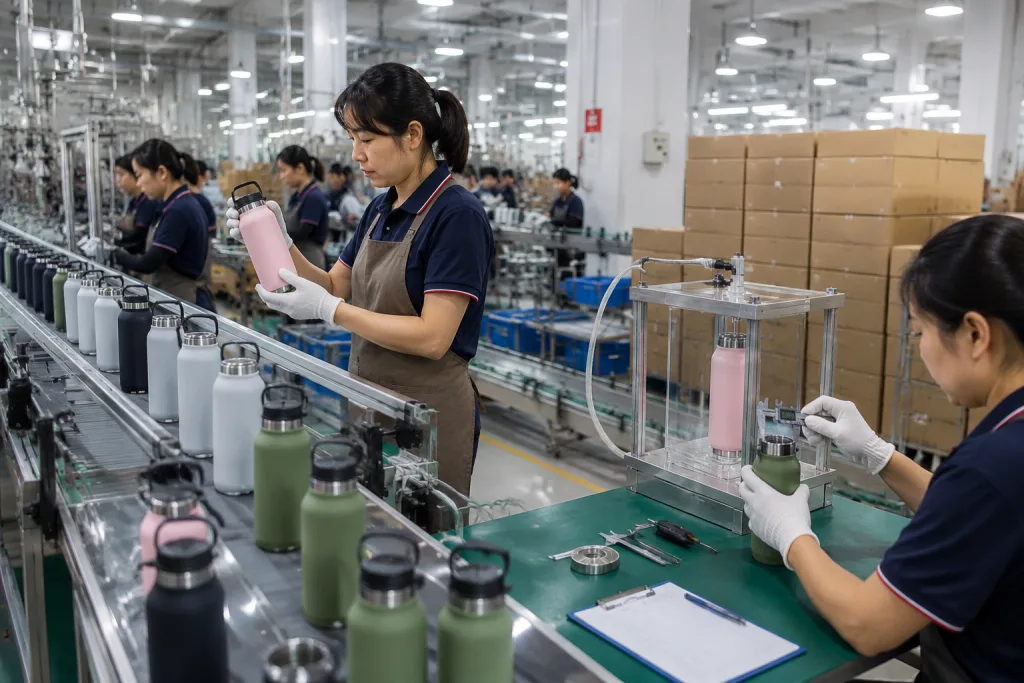
For a custom thermos order, think like a sourcing engineer, not a catalog shopper. The clean runs start when the RFQ already spells out capacity, 304 or 316 steel, silicone sleeve thickness, lid style, decoration method, drop-test target, and pack-out. QC pulled the sample at 1.5 mm wall thickness last week because the sleeve sat loose by 2 mm, and that is the kind of miss that costs a buyer a week. At BottleForge in Hangzhou, our standard thermos factory output reaches 500,000 units per month, and the line usually goes smooth only after the sample sign-off is locked.
Start With The Real Use Case
I’ll rewrite just this section, keep the HTML exactly intact, and tune the prose to sound like a factory-side sales engineer.Before you send any RFQ, pin down the actual use. Outdoor retailers usually want a rugged bulk thermos with real grip, solid insulation, and a lid that stays closed in a backpack. Promo buyers care about logo area, unit cost, and whether we can ship in 18 days instead of 28. A distributor thermos order for Europe is not the same as a thermos promotional run for a North American event program, even if both are 500 ml stainless models with silicone sleeves.
Write down the buyer reality on one page:
- Capacity: 350 ml, 500 ml, 750 ml, or 1000 ml
- Insulation target: 6 hours hot / 12 hours cold, or better
- Material: 304 stainless for standard use, 316 for premium or acidic drinks
- Grip: full silicone sleeve or partial band
- Decoration: silkscreen, laser engraving, embossing, or full-wrap print
If you skip this step, the factory will quote a default custom bottle, not a fit-for-purpose customized thermos. The math does not work. On our line, QC pulled a sample last month because the buyer wanted a 72 mm body but sent a PO with 70 mm, and the carton insert no longer fit. In Zhejiang, stronger thermos manufacturers ask for use case first because it changes the cap, the vacuum spec, and even the carton size. A thermos supplier that does not ask those questions is selling price, not engineering.
Build A Tight RFQ
I’ll rewrite this section to sound like a hands-on sales engineer, keep the HTML structure intact, and swap in more concrete factory-side detail without changing the technical numbers.A clean RFQ is the fastest way to sort real manufacturers from middlemen. For silicone vacuum flask wholesale pricing that saves time, keep the spec plain and complete. Call it a custom thermos or thermos customizable project, then list the build in shop-floor language. We run quotes on these every week, and the buyer who leaves out wall thickness or lid type gets a messy reply.
Use these line items in the RFQ:
- Body: 304 stainless inner and outer, 0.4 mm minimum wall thickness
- Silicone sleeve: matte finish, 1.2-1.8 mm thickness, food-contact grade
- Lid: screw lid, push-button lid, or straw lid with silicone gasket
- Performance: 70°C after 6 hours minimum for a 500 ml flask, based on test method agreed in writing
- Branding: one-color logo, 2-color logo, or laser mark with exact artwork file
- Packing: individual white box, brown box, or retail-ready color box with barcode
Ask for EXW and FOB Ningbo or Shanghai pricing; a serious thermos factory in China should quote both. On a 500 ml model, FOB usually lands around USD 2.35-3.10 for a basic print version and USD 3.40-4.80 for premium sleeve, box, and laser work. If the number sits far outside that band, the math doesn’t work. QC pulled one sample last month where the sleeve was 0.9 mm, and the buyer flagged it before shipment. A professional supplier thermos quote should also show sample charge, tooling if any, and lead time in days.
Judge The Sample Like A Buyer
I’ll rewrite the section in place, keeping the HTML structure intact and tightening the prose so it reads like a buyer-side factory note.Once the RFQ goes out, do not jump to bulk. Order samples and judge them like a retail buyer who has to eat the return cost. A custom thermos sample is not just about camera appeal. We check thread fit, lid seal, coating evenness, and whether the silicone sleeve stays put after 20 handlings on the line.
For a stainless thermos sample check, we run a short, hard list:
- Fit and finish: no sharp rim, no bubbles in the silicone, no paint dust
- Leak test: invert for 24 hours with hot water and room-temperature water
- Drop test: 1 meter onto wood or concrete, depending on your channel spec
- Heat retention: match the agreed sample standard, not the factory’s brochure claim
- Decoration: logo position, size tolerance, and color match to Pantone or the artwork proof
Good manufacturers in Zhejiang can ship pre-production samples in 7-12 days. If a thermos distributor says they need 20 days for one sample, the math does not work. A buyer once flagged a 2 mm logo shift on our PO, and QC pulled the sample back before we packed the carton. For European buyers, this is the point to ask for REACH declarations, food contact documents, and LFGB-compatible material statements if needed. For North America, keep traceability records and carton labels lined up with your warehouse rules.
Lock The PO Before Bulk
I’ll rewrite this section in-place, keep the HTML exactly as-is, and tune the wording to sound like a real sales engineer with concrete factory details.Bulk is where bad sourcing gets expensive fast. Your purchase order should not stop at “same as sample.” That line starts fights. A proper thermos bulk PO turns the approved sample into line items the line can measure, check, and sign off. We run this every week in the workshop, and the difference between a clean PO and a sloppy one shows up on the first carton.
Your PO should include:
- SKU code: one code per capacity, sleeve color, and lid type
- Quantity: for example, 3,000 units split across 2 colors
- Material callout: 304 inner/outer, 0.4 mm, silicone sleeve 1.5 mm
- Logo method: silkscreen or laser, with artwork version number
- Inspection standard: AQL 2.5 major, 4.0 minor, or your own tighter target
- Packing details: inner box, master carton count, barcode, FNSKU if Amazon is involved
- Spare parts: 2% extra lids, 1% extra silicone seals if you need service support
Most Zhejiang thermos factories can ship a standard bulk run in 30-45 days after sample approval. On a common color, we have seen 28 days; on a new Pantone, it can stretch to 38 days because the sleeve mold needs a color check. The buyer flagged a PO once because it said “black lid” but the approved sample was matte black, and the math did not work. A solid factory should also confirm carton drop-test and vacuum leak QC before shipment, not after the goods land in your warehouse.
Use The Right Quality Checks
I’ll rewrite the section in place, keep the HTML structure intact, and tighten the wording so it reads like a factory-side QC note.QC is not a checkbox. It decides whether a program gets reordered or comes back with a chargeback. In silicone vacuum flask wholesale, the trouble usually lands in three spots: coating flaws, lid leaks, and print wear. If you want a customized thermos that still sells through retail, lock the QC spec before the line starts.
A practical QC plan includes:
- Incoming material check: stainless coil thickness, silicone hardness, lid resin consistency
- In-process check: weld seam, vacuum level, sleeve fit, print alignment
- Pre-shipment inspection: AQL sampling, leak test, insulation spot check, carton drop verification
For exported bulk thermos orders, ask the factory to record the vacuum performance test on a random sample from each lot and send photo proof of carton packing. We run this on a 0.35 mm shell job and the buyer still asked for a second leak test; fair ask. If the bottle goes into a distributor thermos program, barcode readability and master carton marks need to match the PO line by line. A solid thermos factory in China will not fight those checks. If they do, the quote is the easy part. The math does not work anywhere else.
One more point. Silicone sleeves can hide dents and tiny print flaws on the body, so QC should check the stainless shell before sleeve assembly. QC pulled a sample once and found a 2 mm ding under the sleeve that no one would have seen later. Once the sleeve is on, that defect disappears until the customer strips it off. That is the kind of miss that hurts a retail rollout.
Price It For Margin, Not Surprise
I’ll keep the HTML exactly as-is and rewrite only the prose for a sharper, more sales-engineering tone. Then I’ll sanity-check that the section still reads like a factory-side pricing note.Outdoor retailers and promo brands usually start with the lowest quote, then ask about the spec after the sample is already on the bench. That order is wrong. Build margin first, especially when you buy from a China thermos supplier and freight, duty, and warehouse fees sit on the same line as the bottle.
Here is a practical pricing frame for a 500 ml silicone sleeve stainless thermos:
- Basic FOB China: USD 2.35-3.10
- Upgraded sleeve or print: USD 3.20-3.90
- Premium packaging and laser logo: USD 3.80-4.80
These numbers move with raw material, finish, and order size. A 1,000-unit thermos custom order will land higher per piece than a 5,000-unit run, and a 316 stainless upgrade can add 10-18 percent on the spot. If your channel needs a promotional thermos under USD 4 landed, say it before QC pulls the sample. We’ve seen a buyer flag the target after sampling, and then the math stops working.
This is also where you choose between a one-off and a repeat platform. If seasonal reorders are likely, standardize the body and change only the sleeve color or logo. That gives you a real thermos manufacturers relationship, not a one-season purchase. On the line in Zhejiang, the factories that keep margins steady are built for repeat programs; the box label typo on a single PO is not the business, and we don’t price as if it is.
Request a quote with your exact spec
Send capacity, logo file, sleeve color, and target MOQ. We will quote your custom thermos program with clear FOB pricing and lead time.
Frequently asked questions
What MOQ should I expect for silicone vacuum flask wholesale?
For a standard custom thermos with a silicone sleeve, MOQ is usually 1,000 units per color or per SKU. If you want multiple lid styles or a special Pantone sleeve, some thermos manufacturers may ask for 2,000 units. For very simple promotional thermos runs, 500 units is possible, but the unit price rises by 10-20 percent. In Zhejiang, factories with real production lines can handle 30,000+ units per month per model family, so the bottleneck is usually customization, not capacity.
How long does sampling take from a China thermos factory?
A normal sample cycle is 7-12 days after artwork and spec confirmation. If the mold is existing, a customized thermos sample can move faster. If you need a new silicone color, lid tooling adjustment, or special print, expect 12-20 days. Ask the thermos supplier to send photos before shipping the sample so you can catch obvious issues early and avoid a second round.
What documents should I ask from suppliers thermos quotes in Europe?
For Europe, ask for REACH-related material statements, food-contact declarations, and if needed LFGB-supporting material data. For bulk thermos shipments, also request carton dimensions, gross weight, HS code suggestion, and a packing list format. If your distributor thermos program needs retail compliance, add barcode placement, country of origin marking, and batch traceability in the PO.
Can I get custom logo printing on silicone and steel both?
Yes, but you should separate the decoration method in the RFQ. Silicone sleeves can take pad print, heat transfer, or embossing depending on the material and finish. Stainless bodies usually work better with silkscreen or laser engraving. A thermos customizable design with both sleeve and body branding is common for promotional thermos orders, but you need artwork files in vector format and a clear Pantone target.
What quality checks matter most before bulk shipment?
Leak test, insulation performance, and logo accuracy matter most. For a factory thermos bulk order, I would also check carton drop resistance, sleeve adhesion, and lid thread smoothness. AQL 2.5 is a practical starting point for major defects. If your product will be sold through retail, ask for 2% spare lids and 1% extra seals so service issues do not stop your launch.