Key Takeaways
- A typical silicone drink bottle custom MOQ is 3,000 pcs, with 7-day samples and 25-30 day lead time.
- Use platinum-cured silicone around Shore A 50-70 and wall thickness of 1.8-2.5 mm for stable handling.
- Deboss or emboss lasts longer than surface print if you expect 50 dishwasher cycles or retail abuse.
- Ask for REACH, LFGB, or FDA support, plus AQL 2.5 leak checks before shipment from China.
If you are sourcing silicone drink bottle custom orders, do not treat them as a simple color swap. Silicone changes hand feel, cap sealing, mold cost, and the compliance file. For Europe and North America, we check REACH, LFGB or FDA, odor control, and whether the bottle is meant for sports, travel, or promo use. On the line, we run a vacuum leak test and a cap torque check; if the seal spec is loose, the buyer flags it fast. This is the wrong question to ask: not “can you make it,” but “what will break first?”
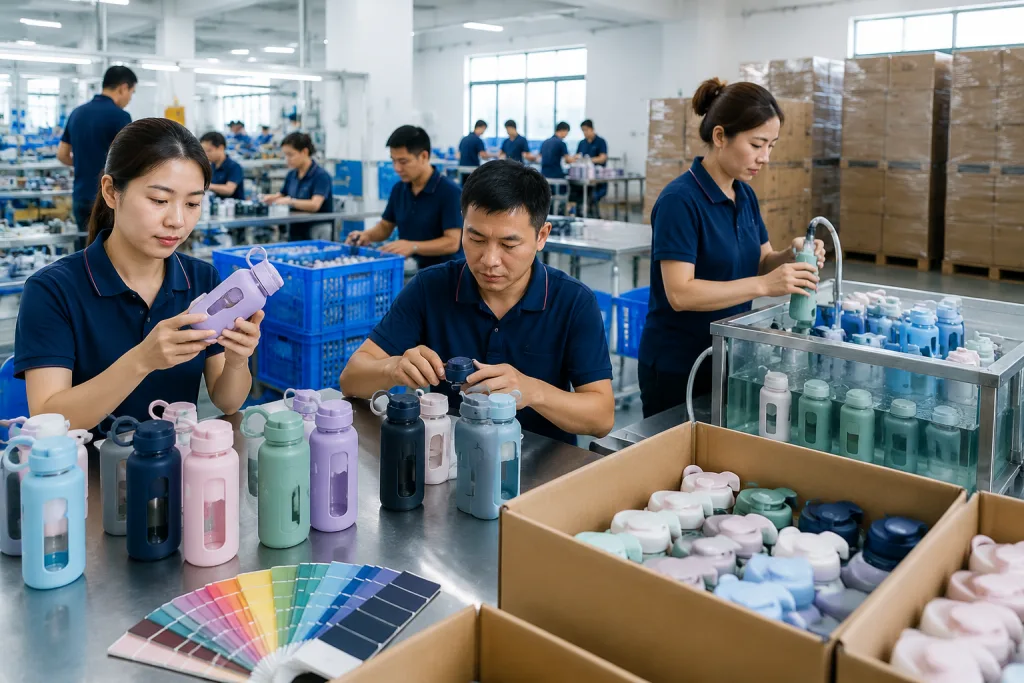
At our canteen factory in Zhejiang, China, buyers usually want a real quote before they move: 3,000 pcs MOQ, 7-day sampling, 25-30 day mass lead time, and packaging that works for retail or distributor drinkware. We ship a lot of orders like this, and the math does not work if the wall thickness or logo area is left vague. If you are a canteen distributor, brand owner, or canteen supplier, a tight brief keeps you away from soft walls, weak sealing, and rework that eats the margin.
Define The Use Case First
Start with use, not decoration. A silicone drink bottle custom order for gym retail is a different job from a canteen promotional giveaway or a children’s reusable bottle. Capacity affects the mold cavity, cap style changes the leak test, and wall thickness decides whether the bottle feels cheap in hand. We run 0.8 mm, 1.0 mm, and 1.2 mm silicone wall checks with a digital caliper before quoting. A canteen custom brief should state 350 ml, 500 ml, or 750 ml, then confirm if the bottle must fit a 72 mm car cup holder, a lunch bag, or a backpack side pocket.
For a canteen distributor or distributor drinkware buyer, define the user and washing method before asking for pricing. The logo question matters too. Will it take 50 dishwasher cycles, or is hand-wash only acceptable for the channel? QC pulled one sample last year where the printed logo lifted after 18 dishwasher cycles, even though the PO only said “durable logo.” That kind of wording costs time. If the same project also needs a customizable canteen line or a custom growler style for events, say it early. Some tooling can be shared, but the cap family and opening size are not things we should guess after the mold deposit is paid.
Good projects usually start with a simple drawing, a target retail price, and one clear market note, such as “school shop item under USD 6.99” or “race pack giveaway, MOQ 3,000 pcs.” A canteen manufacturer can work with that. A vague brief often gives you a nice-looking sample that fails on grip, leak resistance, or carton pack-out; we have seen 24 pcs cartons swell past the buyer’s 14 kg warehouse limit. This is the wrong question to ask first: “How many colors can I get?” If you want a canteen customizable program, lock the basics before color matching and packaging artwork.
Choose Safe Silicone And Specs
Specify food-grade platinum-cured silicone and write Shore A 50-70 on the PO, not just “soft silicone.” Below 45A, QC can press the filled bottle with a thumb and see the sidewall buckle; above 70A, the squeeze feel is poor and buyers complain it feels like a rubber flask. For a silicone drink bottle custom project, we run 1.8-2.5 mm on the body and 2.5-3.5 mm around the mouth or folding sections. That range works. On the line, our caliper check usually flags trouble when the folding groove drops under 1.6 mm, because that is where stress whitening starts after repeated bends.
For Europe, ask for REACH and, when relevant, LFGB test reports; for North America, ask for FDA food-contact declaration and migration support. If the bottle is for kids or a promo campaign, add CPSIA or Prop 65 screening based on the destination. Also ask whether the colorant is mixed in-body or surface coated. This is the wrong place to save USD 0.08 per bottle; we have seen cheap surface coating crack after a 95 C wash, and one buyer flagged black specks on a light-blue sample during incoming inspection.
- Platinum-cured, food-grade silicone with grade name shown on the material declaration
- Odor check after 95 C wash and 24-hour air-out, then seal 3 samples in PE bags
- AQL 2.5 for critical leak points, with cap torque and inverted leak checks recorded
- AQL 4.0 for cosmetic issues, including flash, color streaks, and dirty mold marks
- Material declaration for cap, gasket, and spout, with plastic type and colorant listed
If a canteen vendor cannot tell you the exact silicone grade, move on. We ship repeat orders only when the paperwork matches the sample, down to the gasket material and hardness range. The cheapest quote often hides the most risk, especially for Europe or a North America retail chain. The math doesn’t work if a 3,000 pcs trial order gets rejected over odor, coating bleed, or a missing LFGB report.
Lock Down The Closure System
The closure is where most custom drinkware projects fail. Silicone bodies forgive a 0.3 mm wall-thickness drift; caps do not. For a silicone drink bottle custom order, we ask for a cap drawing that shows thread pitch, gasket material, and torque range, then we check it on the digital torque meter before the line runs. A 28 mm or 38 mm neck is fine for basic sports use. A 55 mm wide-mouth design is easier to fill with ice, but if the gasket is soft or undersized, QC will find leaks before carton sealing.
Tell the canteen factory to run 0.5 bar air pressure for 30 seconds, then a 1 meter inverted shake test and a 1.2 meter drop test with water inside. We ship samples only after QC pulls 5 pcs from the pilot run, not from the clean showroom set. If the bottle will be sold as a custom growler or customizable growler for events, the pressure and seal spec changes because carbonation and temperature swings punish the cap. This is the wrong question to ask: “Can it hold liquid?” Ask whether it still seals after 24 hours in a warm car and 10 drop cycles.
Buyers should ask about condensation, grip, and dishwasher survival before approving artwork. A silicone sleeve helps when the bottle is carried in cold weather, but it adds cost, slows assembly by about 6 seconds per piece, and can trap dirt under the lower lip. If the cap contains stainless steel or PP, verify that the gasket can be replaced; we have seen a PO typo list “fixed gasket” when the buyer expected spare rings. That small part can save a distributor thousands of dollars in returns, especially for distributor growler and distributor drinkware programs with repeat orders.
Make The Branding Durable
Branding has to fit the material. On silicone, deboss, emboss, and one-color screen print with a silicone-safe ink system hold up best. We ran a 1.2 mm groove sample on the line, and after 50 dishwasher cycles the recessed mark still looked clean; surface print started to feather first. A laser mark works on a metal lid or stainless insert, but on the soft silicone body it is the wrong finish for primary branding. For a retail canteen project, the logo has to survive cart scratches, heat, and repeated washing, not just a polished sample.
Color control matters more than most first-time buyers expect. Send Pantone references and lock a delta E target below 2.0 for repeat orders. We had a buyer flag a PO typo on the cap color code once, and QC pulled the sample back to the mixing room before the run was approved. For canteen promotional units or distributor drinkware, keep it tight: body color, cap color, and one accent. Three inks sound neat on paper. On the line, each extra color adds setup time and batch drift.
For canteen customizable and customized drinkware programs, packaging often carries more brand value than the bottle itself. A plain insert card, barcode label, and retail sleeve can lift sell-through faster than one more print pass. We shipped a run where the sleeve did the heavy lifting because the sample table was crowded and the bottle looked plain in a sealed carton. If the same program also needs a custom growler or custom canteen line, keep the logo in the same place across the range so buyers see one family and reorders stay simple. That is the right question. Not a fresh artwork round every season.
Price, MOQ, And Lead Time
Price comes down to wall thickness, mold detail, cap choice, and how you pack the cartons. For a 500 ml silicone drink bottle custom order with a one-color logo and a standard PP cap, we usually see USD 1.85 to 3.20 EXW at 3,000 pcs. Add a stainless lid, a carry strap, or a two-color body, and the quote moves to USD 3.50 to 5.80. New tooling for the mold room is usually USD 1,200 to 3,500, and a folding or collapsible build pushes it up fast. QC checked a 0.8 mm wall on one sample last week, and that was the first place the buyer tried to cut cost.
At our Zhejiang canteen factory, sampling takes 7 days and mass production runs 25 to 30 days after sample approval. Peak season can add 7 days if the line is full. We run about 120,000 units a month across core drinkware lines, so early buyers get first pick on color matching and carton space. The buyer flagged a carton typo on one PO, and that small mistake cost a day. For canteen manufacturers and canteen suppliers selling into Europe and North America, that timing matters more than people think.
If you are a canteen distributor, ask for EXW, FOB Ningbo, and landed-cost numbers side by side. This is the wrong question to ask if you only chase the lowest unit price. A cheap bottle that needs stronger cartons or air freight is not cheap. For distributor growler or distributor drinkware programs, saving USD 0.12 on packaging or USD 0.08 on printing usually beats shaving material and inviting returns. We have seen that go sideways when a 6 mm strap hole tore in transit, and the math stopped working fast.
Audit The Factory Before Ordering
Before you place a PO, audit the canteen manufacturer the same way you audit any export supplier. Ask for the business license, ISO 9001, and if the channel needs it, BSCI or SMETA social compliance. Then get specific: silicone raw-material lot, cap resin lot, gasket lot, and who records them on the batch card. We run this check against the incoming material COA and the warehouse label, not a sales PDF. A solid canteen factory should trace each production batch back to a raw-material certificate and keep retention samples for at least 12 months; QC pulled one sample last year where the PO said “food grade silicon,” missing the final “e,” and that typo still delayed buyer approval by 2 days.
- Pre-production sample signed by you, with color chip, logo position, and cap fit confirmed in writing
- In-line leak checks at AQL 2.5 critical, AQL 4.0 minor, using the same torque setting on every check
- Drop test and dishwasher test, with odor test after 24 hours in a sealed bag
- Carton compression and 1.2 m outer-carton drop test, checked against the packing method we ship
- Photo report before payment balance, including carton marks, barcode scan, and opened-box images
Ask direct questions: Which defects are rejectable? How many pieces were reworked on the last 3 orders? Who signs off on the final shipment? A serious canteen vendor will answer without hiding behind sales language. Short answers are fine. Vague answers are not. For custom drinkware going into retail chains, this is the wrong question to ask: “Can you make it cheaper?” Ask what happens when 18 cartons leak at DC inspection, because one leaking carton can cost more than the margin on the whole order.
If you need a custom canteen or customized canteen range, keep the QC plan simple and repeatable. Use the same gauge, same gasket, same carton spec, and the same test sheet on every reorder. We ship cleaner orders when the line sees one approved sample, one 0.5 mm tolerance sheet, and one carton drawing instead of 6 buyer emails with mixed comments. That is how a canteen distributor protects sell-through and avoids surprise changes from one China shipment to the next.
Request Your Silicone Bottle Quote Today
Send your capacity, logo file, target market, and packing spec. We will quote MOQ, tooling, and lead time from Zhejiang, China.
Frequently asked questions
What MOQ is normal for silicone drink bottle custom orders?
For most factory programs, 3,000 pcs is the normal MOQ for a silicone drink bottle custom order with a fresh logo or color. If the body mold already exists, some Zhejiang suppliers can go down to 1,000 pcs, but expect a higher unit price and less color flexibility. New tooling usually adds USD 1,200 to 3,500, depending on bottle shape, fold lines, and cap complexity. If you want mixed colors, ask whether the MOQ is per color or per total order, because that changes the economics fast. A canteen distributor should get that answer before approving samples.
Is food-grade silicone safe for Europe and North America?
Yes, if you buy the right material and paperwork. For Europe, ask for REACH and, when needed, LFGB migration reports. For North America, ask for FDA food-contact compliance and supporting declarations from the canteen manufacturer. Platinum-cured silicone is usually the safer choice because it has lower odor and fewer residues than cheaper options. You should also check the cap, gasket, and any printed ink, not just the bottle body. If the supplier cannot document every contact part, the product is not ready for retail, even if the sample looks good.
Which logo method lasts longest on silicone bottles?
Deboss and emboss usually last the longest because the logo is built into the surface, not sitting on top of it. If you need color, one-color screen print with silicone-safe ink is the next best choice, but it should be tested for dishwasher wear. On a custom canteen or customizable drinkware project, surface print can look strong on day one and weak after a few wash cycles. If you need a premium finish, use a debossed body and print only on the cap or carton. That gives you durability without inflating the tooling budget.
How long do sample and mass production take?
For a standard silicone drink bottle custom project, sample development usually takes 7 days after artwork and dimensions are confirmed. If you need a new mold, add 15 to 25 days for tooling and first-off approval. Mass production is usually 25 to 30 days after sample sign-off, and peak season can add another 5 to 10 days. A Zhejiang factory with around 120,000 units per month can usually keep that schedule if you lock colors early and avoid late packaging changes. If you are serving a distributor drinkware launch, build in time for cartons and pre-shipment testing.
Can one factory handle custom canteen and custom growler projects?
Yes, but only if the factory has the right material family, cap platforms, and QC discipline. A canteen factory that handles custom canteen, custom growler, and silicone bottle programs should be able to manage different neck sizes, gasket specs, and logo placements without mixing parts. The biggest risk is assuming one mold family fits all. It usually does not. Ask for separate drawings, separate SKU codes, and separate retention samples. That matters even more if you are a canteen distributor selling into Europe and North America, where returns are expensive and labels must stay consistent.