Key Takeaways
- A realistic MOQ for a custom Tritan promotional bottle is 1,000 pieces per color, with 25-35 days production after artwork approval
- For USA programs, ask for FDA food-contact declarations plus BPA-free material documentation before sampling
- Logo durability depends more on surface prep and curing time than on the printing method name
- DDP air can save a launch date, but FOB Ningbo or Shanghai is usually 18-35% cheaper for planned bulk orders
If you are buying a promotional tritan bottle usa program, price is the wrong first question. The real hit comes from late delivery, weak printing, unclear plastic compliance, and cartons landing with scuffed bottles 2 days before a launch. We have seen a $1.60 bottle turn into a chargeback case after QC pulled 32 leaking lids from a 500-piece pre-shipment sample and the buyer flagged logo rub-off after 20 dishwasher cycles.
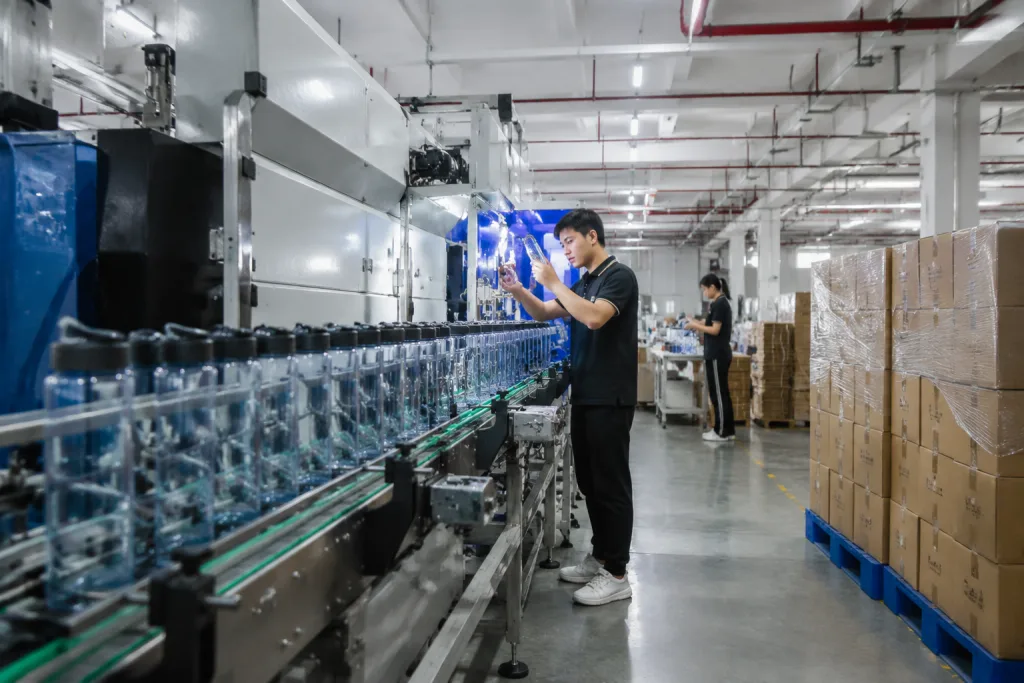
From our Zhejiang, China production base, we run the same buyer checks every week: Tritan or PETG, silkscreen or UV print, FOB or DDP, 1,000 pieces or 10,000 pieces. BottleForge Industrial handles custom drinkware orders with a practical MOQ of 1,000 pieces per color and typical output around 450,000 Tritan and stainless units per month. On the line, we check cap torque with a handheld torque meter and measure print position to ±1.5 mm, because a small logo shift looks cheap fast on a retail-ready promo bottle.
Start With The Use Case
A promotional Tritan bottle is not one fixed SKU. We’ve shipped 500 ml fitness giveaways for gym chains, 650 ml school welcome bottles, outdoor canteen promos, subscription box inserts, distributor drinkware SKUs, and conference bottles packed 50 pcs per carton. The spec changes by use case, and this is where USA buyers lose money. We see it on the line: the same “BPA-free bottle” request can mean a 72 g event bottle or a 128 g retail bottle with a thicker shoulder.
For a one-day event, a lighter 500 ml bottle with a flip lid, 1-color silkscreen logo, and individual polybag can work. Cheap is fine there. For retail or a loyalty program, the math changes: drop resistance, cap gasket design, barcode labeling, carton compression, and repeatable color matching start to matter because returns cost more than the bottle. QC pulled one sample last quarter where the silicone gasket sat 0.6 mm proud, and the buyer flagged leakage after a 1.2 m drop test. A custom canteen for outdoor buyers may need a carry loop, matte texture, ounce markings, and a wider mouth. A distributor canteen line often works better with three capacities using the same cap family, so spare caps do not become a warehouse headache.
Be clear about whether you need a bottle, canteen custom project, or a broader customizable drinkware range. This is the wrong question to ask: “What is your cheapest Tritan bottle?” A canteen manufacturer in China should ask about liquid type, temperature range, dishwasher claims, retail channel, and children’s use. A pure trading canteen vendor may just send 6 catalog photos. Tritan handles cold and room-temperature drinks well, but it is not for boiling water. We normally tell buyers to write usage as 0-60°C unless the compliance file and cap design support a higher claim; our lab checks this with a digital thermometer and a 24-hour leak stand before we print cartons.
If your buyer brief only says “BPA-free bottle with logo,” the canteen suppliers will quote the cheapest mold on the shelf. That may be acceptable for a low-cost giveaway, but we’ve seen this go sideways for repeat canteen customized programs. Put the intended user, channel, target landed cost, and required delivery date into the RFQ. Add the pack method too, such as 1 pc/polybag, 24 pcs/carton, or Amazon FBA label required. Good canteen manufacturers can then quote a realistic option instead of racing to the bottom; last month one PO even had “Trian” typed instead of Tritan, and our merchandiser caught it before the FDA declaration was drafted.
Material And Compliance Checks
Tritan sells well because it looks like glass, survives desk drops, and is BPA-free. Clear is not enough. For USA promo orders, the resin story needs paperwork: resin grade, food-contact declaration, BPA-free statement, and recent third-party test reports when the buyer asks. We run this check before tooling color approval, not after; last month QC pulled a sample where the PO said “Tritan TX1001” but the supplier sheet showed a different grade code.
For the USA market, common checks include FDA food-contact suitability and California Proposition 65 risk review when applicable. If the bottle is for children, talk through CPSIA and ASTM-related requirements before the sample stage. For Europe, REACH and LFGB questions may enter the file. A serious China canteen factory should know these terms without a 3-day email loop. If they send a random “BPA free” PDF with no company name, no material grade, and no date, the math doesn't work; treat it as marketing, not compliance support.
Cap material matters too. We see 7 out of 10 Tritan bottle projects using PP or HDPE caps with silicone gaskets, plus stainless pins or springs on flip lids. The bottle body can pass while the gasket smells, bleeds color, or fails migration testing. For a canteen customizable project, request a bill of materials covering the body and lid, then list the straw, gasket, handle, print ink, and packaging with material names. Small detail. Big risk. On the line, a 0.5 mm gasket mismatch is enough for leakage complaints.
Wall thickness is another practical issue. A 650 ml Tritan bottle often sits around 1.2-1.8 mm wall thickness depending on shape and mold design. Thin walls reduce price and carton weight, but they flex badly and feel cheap; we have seen buyers flag this after the first 20 pcs sample set. Thick walls improve hand feel but can create sink marks and push molding cycles from 18 seconds to 24 seconds. For USA promotional volumes, ask for a physical sample and a 1.2 m drop test on a filled bottle before approving mass production.
Logo Options That Survive Handling
Most promo bottle problems show up before anyone checks the cap seal. The logo scratches, drifts 6 mm from the approved proof, looks gray instead of solid black, or lands too close to a rib. For customized drinkware, choose the logo process after checking the bottle wall shape, artwork lines, order volume, and target price. This is the wrong question to ask if the buyer starts with “which logo is cheapest?” Last month QC pulled a 700 ml Tritan sample where the print jig was 2 mm loose, and every second bottle leaned left.
Silkscreen printing is still our daily choice for 1-color and 2-color logos on cylindrical Tritan bottles. Fast. Clean. Predictable. We run it when the artwork has solid blocks, simple text, and no photo effect. A typical print area might be 70 x 120 mm on a 700 ml bottle, but exact size depends on taper and ribs; our line checks this with a flexible ruler and a test film before making the screen. UV printing works better for full-color logos and gradients, especially below 3,000 pieces where screen setup charges eat the margin. Heat transfer can cover larger graphics, but we test adhesion on the curved wall first. Laser engraving is not typical on clear Tritan because the mark looks weak beside stainless steel.
For a promotional tritan bottle usa campaign, ask for an artwork proof with Pantone numbers, logo position in millimeters, and the print method named. Do not approve “same as picture.” We have seen that go sideways when a PO typo said “logo 25 mm from bottom” while the buyer’s PDF showed 35 mm. If you need a canteen customized with wraparound art, ask whether the factory uses automatic registration or manual positioning. Manual work can pass for 1,000 pieces, but the variation is easy to see on 20,000 pieces when bottles line up on a Costco-style display tray.
Durability comes down to ink match, curing time, and surface treatment. We normally run alcohol rub checks and tape tests before bulk packing; QC uses 3M tape and records the result beside the carton mark. For higher-risk retail or distributor drinkware orders, request 3-5 printed pre-production samples and run your own dishwasher or hand-wash test. Tell the end customer plainly: 8 out of 10 promotional printed Tritan bottle programs we ship are “hand wash recommended.” If you promise dishwasher-safe decoration, write that requirement in the purchase order and agree on the test method before production, because the math does not work after 18,000 bottles are printed.
MOQ, Price, And Lead Time
The first number buyers ask for is unit price. Wrong question. The first number should be the working MOQ at the exact spec on the PO. At BottleForge Industrial in Zhejiang, China, we usually run a standard promotional Tritan bottle from an existing mold at 1,000 pieces per color for logo printing. Custom PMS color matching starts closer to 3,000 pieces, because the injection line loses resin and color masterbatch during purge; last month QC weighed 11.6 kg of transition scrap before the color settled. A new private mold usually needs 8,000-20,000 pieces on the first run, depending on bottle size, wall thickness, cap structure, and whether the buyer wants the mold cost amortized into the unit price.
For FOB China budgeting, a 600-750 ml Tritan bottle with PP lid and 1-color logo often sits around USD 1.45-2.80 per piece at 3,000-10,000 pieces. Add a straw lid or molded handle, and the tooling insert plus assembly labor move the number. Add UV full-color print, individual color box, or FNSKU labeling, and the math changes again; one buyer flagged a USD 0.18 jump because Amazon prep required barcode placement within a 2 mm tolerance. A custom growler or customizable growler in Tritan is less common than stainless. Large Tritan bodies carry more material cost and higher deformation risk, so for growler programs we see buyers shift to stainless or glass after the first cost review.
Lead time is usually 7-10 days for sampling, then 25-35 days for mass production after deposit and artwork approval. Peak season before summer and Q4 can add 7-15 days. We have seen a clean repeat order ship in 25 days, while a revised logo job took 35 days because the buyer sent AI artwork with a missing font and the PO had “matte black” typed as “mate black.” Ocean freight to the USA West Coast may take about 18-25 days port-to-port; East Coast routing often takes 30-40 days. DDP timing depends on customs release, trucking slots, and warehouse queues, so a launch plan with zero buffer is where we’ve seen this go sideways.
Price comparison only works when quotes use the same terms. Ask canteen vendors to state FOB port, carton quantity, gross weight, carton size, packaging, logo method, material grade, and inspection standard. Better yet, put them in one quote sheet. If one canteen distributor quotes DDP Los Angeles and another canteen factory quotes FOB Ningbo, those numbers are not comparable; last quarter a buyer missed 0.032 CBM per carton and thought the factory quote was cheaper until freight was added. Normalize the quote before you negotiate.
Factory Audit And Quality Control
A capable canteen manufacturer should welcome QC because it keeps the fight out of the shipment stage. For B2B custom drinkware, ask for the business license, 3 export references from the last 12 months, product test reports, production photos, and audit status if they have it. We run this file check before quoting firm delivery, because one buyer once sent a PO with “Trian” instead of Tritan and the paperwork trail caught it before the PI went out. BSCI, ISO 9001, or similar audits are good signals, but they do not replace product inspection.
Use AQL inspection for bulk orders. For most promotional programs we see in the USA, buyers use AQL 2.5 for major defects and 4.0 for minor defects. Critical defects such as leaking, sharp edges, contamination, wrong material, or unsafe packaging should be zero tolerance. No debate there. On a 5,000 piece order, a third-party pre-shipment inspection might cost USD 280–450, which is cheaper than missing a launch date for 12 campus bookstores. It is not insulting to inspect; it is professional, and the line takes it better when the standard is written before packing starts.
For Tritan bottles, inspection should cover capacity, weight, appearance, color, logo position, print adhesion, lid fit, gasket placement, leakage, carton markings, and barcode scanning where needed. QC should use a digital scale, caliper, 3M tape test, and a 100% leak test jig for the pulled samples, not just “looks OK” on a desk. If you sell through online marketplaces or retail chains, confirm FNSKU, UPC, suffocation warning, country-of-origin marking, and master carton labels before production packing starts. Re-labeling 200 cartons after sealing is slow and expensive; we’ve seen this go sideways when the buyer flagged a missing “Made in China” mark after the pallets were wrapped.
Be careful with “factory” claims. Some canteen vendors are trading companies, some are decorators, and some are integrated mold-injection and assembly factories. None of those models is automatically bad. The wrong question is “Are you a factory?” The better question is “Which step do you control?” A real canteen factory can explain 160T or 280T injection machines, mold ownership, daily assembly capacity, and reject rate from the last batch. A good canteen distributor can still work if they manage 2 or 3 canteen suppliers honestly and give you traceability down to the mold number and packing line.
Packaging And USA Logistics
Packaging is not decoration only. It keeps the bottle from getting scuffed, makes receiving faster, and changes the freight bill. For promotional Tritan bottles, we usually quote bulk pack with dividers, individual polybag, kraft box, color box, belly band, or a retail-ready carton. Bulk pack saves money. The risk is rubbing: on one 12,000 pcs glossy order, QC pulled the sample after a 3A carton shake test and found faint ring marks around the raised logo. For matte finishes and full-color prints, individual bags are cheap insurance; the math works better than sorting scratched bottles in a USA warehouse.
Carton strength matters. A typical 650 ml Tritan bottle might pack 50 pieces per export carton, with carton weight around 9-13 kg depending on lid and packaging. We run 5-ply export cartons for ocean freight and check edge crush before the line releases cartons to packing. If the bottles will move through UPS, FedEx, or Amazon parcel handling, ask for drop-test results, not just “strong carton” on a quote sheet. If your USA warehouse requires palletization, carton labels, ASN data, or FNSKU stickers, put that in the RFQ. Do not add it after production is finished. We have seen this go sideways when a buyer sent FNSKU files 2 days before loading, and 84 cartons had to be reopened by hand.
FOB Ningbo or Shanghai is usually the cleanest term for experienced importers. You control the freight forwarder and can consolidate with other custom drinkware. DDP is easier for a first order, but compare the landed cost line by line. Some DDP quotes look cheap because they use slow routing, weak insurance, or vague customs handling; this is the wrong question to ask if the launch date is fixed. For time-sensitive launches, air freight may cost USD 1.20-3.50 per bottle depending on weight and season, which can exceed the bottle cost. We ship samples by DHL, but air-shipping 10,000 bottles is a different bill.
For a USA promotional order, build the calendar backwards. Artwork approval, printed sample, production, inspection, vessel booking, sailing, customs, domestic trucking, and warehouse receiving all need days. A realistic ocean timeline from approved pre-production sample to USA warehouse is often 55-80 days. The line may finish production in 18 days, but vessel space can add another 7-12 days before sailing from Ningbo. If you need bottles in 30 days, reduce customization, use existing stock colors, and discuss air shipment early. Fast orders need fewer moving parts.
Choosing The Right Supplier
The best canteen supplier is not the cheapest line on your spreadsheet. We’ve seen this go sideways. You need a factory that will push back when the spec is risky, like PMS 021C on clear Tritan with a 0.3 mm logo stroke. If a canteen vendor promises any color, any logo, any test, and 15-day delivery at the lowest price, slow down. Customizable canteen work has limits, especially plastic color matching, curved-surface printing, and USA labeling rules.
When comparing canteen distributors, ask who owns the mold, where production runs, who does the decoration, and who signs the quality standard. For repeat programs, you want stable molds and written injection settings, not “same as last time” in a WeChat note. If your first order is 2,000 pieces and your second order becomes 30,000 pieces, the supplier must hold the same cap fit, color, and logo placement. The line needs gauges for cap torque, a checked cavity number, and a print jig that does not drift 2 mm after lunch. One nice sample proves less than buyers think.
Use samples intelligently. Request one blank sample, one printed sample, and one packed sample when possible, then open the packed one like QC does with a cutter and a checklist. The packed sample tells you more than a showroom photo: carton fit, 0.03 mm bag thickness, insert quality, barcode position, and real hand feel. For a customized canteen or customized growler line, approve golden samples and keep one at your office, one at the factory, and one with the inspector. QC pulled the sample last month because the PO said matte black, but the artwork file said gloss black. Small typo. Big argument.
A good China supplier should talk in numbers: MOQ, lead time, print area, wall thickness, carton size, defect limits, and payment terms. A Zhejiang export team that handles USA distributor growler and bottle programs should also understand purchase orders, commercial invoices, packing lists, HS codes, and inspection scheduling. Ask for the carton measurement in cm and the gross weight in kg before you approve freight. We ship these programs from Ningbo and Shanghai, and the boring paperwork is not a side job; it is what keeps a 10,000-piece promotional bottle order from missing the event date.
Send Your Tritan Bottle Brief For A Real Quote
Share capacity, quantity, logo file, delivery date, and USA destination. We will return practical options with MOQ, lead time, and FOB pricing.
Frequently asked questions
What is the normal MOQ for a promotional Tritan bottle order for the USA?
For an existing mold with a standard transparent or stock color body, 1,000 pieces per color is a practical MOQ. If you need Pantone-matched plastic, many canteen manufacturers will ask for 3,000 pieces because resin purging and color setup create waste. For a private mold, expect 8,000-20,000 pieces for the first production run, plus mold cost. If your order is under 1,000 pieces, a canteen distributor may source stock bottles and print locally, but the unit cost is usually higher and color options are limited.
Is Tritan acceptable for USA food-contact promotional drinkware?
Tritan is commonly used for BPA-free reusable bottles, but you still need documentation for the exact resin and finished item. Ask for FDA food-contact support, BPA-free declaration, and a bill of materials covering body, lid, straw, gasket, and ink. If the bottle is intended for children, discuss CPSIA and applicable ASTM concerns before ordering. For adult promotional use, many buyers still require a current test report within 12-24 months. Do not rely only on a catalog statement saying “food grade.”
Which logo method is best for customized Tritan bottles?
For 1-color logos at 1,000-10,000 pieces, silkscreen is usually the most cost-effective and clean. For gradients, photos, or multi-color brand art, UV printing is often better, especially for small runs. Heat transfer can work for larger graphics but needs adhesion testing on the specific bottle finish. Ask for logo size in millimeters, Pantone references, and a printed pre-production sample. If dishwasher durability is required, define the test, such as 20 or 50 cycles, before mass production.
How long should I allow from China production to a USA warehouse?
A safe schedule is 55-80 days from approved artwork or pre-production sample to USA warehouse when shipping by ocean. Sampling usually takes 7-10 days, mass production takes 25-35 days, inspection and booking add several days, and ocean plus inland delivery can take 25-45 days depending on destination. Air freight can reduce transit to roughly 5-10 days, but it may add USD 1.20-3.50 per bottle. For fixed event dates, approve samples early and avoid custom plastic colors.
How do I compare quotes from different canteen suppliers fairly?
Normalize every quote before judging price. Each canteen supplier should state bottle capacity, material grade, wall thickness if available, lid type, logo method, print colors, packaging, carton quantity, carton size, gross weight, MOQ, lead time, payment terms, and trade term such as FOB Ningbo or DDP USA. A USD 1.70 FOB quote may be more expensive than a USD 2.15 DDP quote after freight and duties, or it may be cheaper. Without matching specs, you are comparing guesses.