Key Takeaways
- Plan 3,000 pieces per color as a realistic MOQ for custom Tritan bottle production
- Ask for material declarations naming Eastman Tritan or approved copolyester grade, not just BPA-free wording
- Use AQL 2.5/4.0 inspection for logo, leakage, cap torque, carton drop, and barcode checks
- Budget 28-40 days for bulk production after sample approval and deposit
For a promotional Tritan bottle American campaign, the bottle shape is the wrong question to ask first. The real risk sits in the small stuff: Tritan material proof, logo rub resistance, carton drop strength, compliance files, and the ship date your distributor already promised. We have seen this go sideways when QC pulled a lid sample from the line and found a 2.8 mm warp; the artwork was fine, but 37 cartons still got flagged for rework because the logo sat 3 mm off-center.
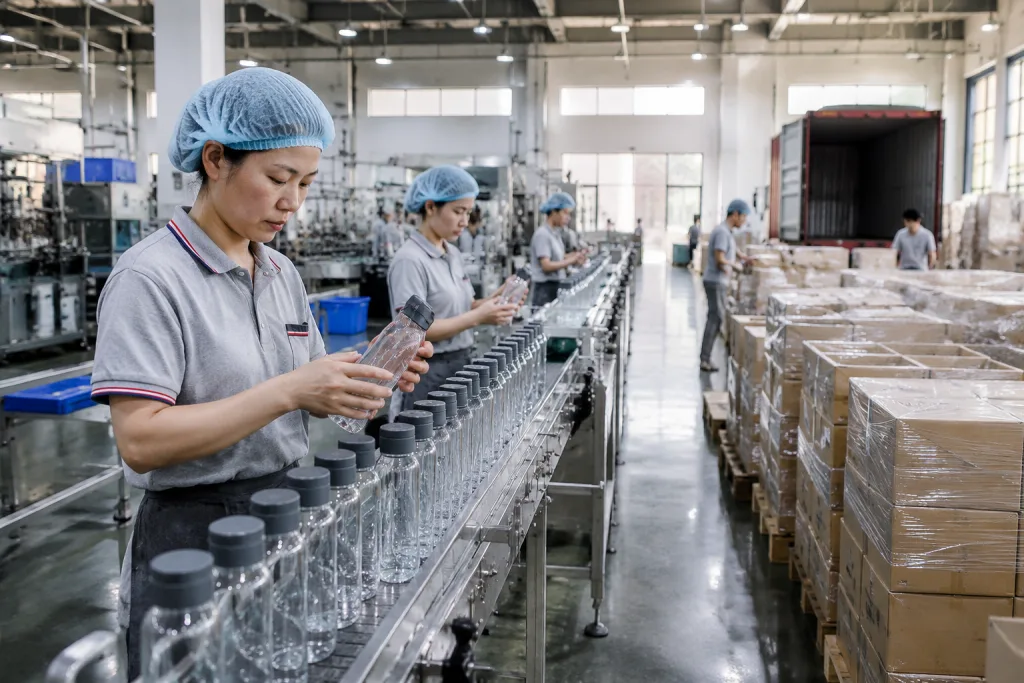
From our Zhejiang factory, we see the same mistake about 6 times a quarter: a buyer approves a clean rendering, skips the pre-production sample, then tries to fix packaging after the bottles are already on the injection line. Bad timing. BottleForge Industrial runs about 480,000 plastic and stainless drinkware units per month, with Tritan bottle MOQ starting at 3,000 pieces per color. Define the use case early, including lid type, logo method, carton count, and test standard, or the math gets ugly fast: a 12-day sample approval can become 18 days once the buyer flags a PO typo or asks for a new insert card.
Start With The Campaign Use
A promotional Tritan bottle American buyer usually comes to us with one of four orders: 5,000 pcs for an event giveaway, 2,000 pcs for an employee welcome kit, 8,000 pcs for a school or camp program, or a retail-style distributor drinkware order. Different use, different bottle. Capacity is the wrong first question. A 650 ml bottle with a flip straw works for gyms and student programs, but a 1,000 ml canteen custom shape with a carry loop fits outdoor campaigns better. If the bottle goes into a welcome box, our packing table checks height with a 300 mm steel ruler because carton cube can matter more than capacity.
Tritan sells well because it gives glass-like clarity without the breakage problem buyers worry about at events. For American promotional use, most buyers land on 600-750 ml because it fits cup holders and standard mailer boxes; we tested one 720 ml sample in a Camry cup holder after a buyer flagged this in 2023. Wall thickness is normally 1.8-2.3 mm on blow-molded bodies. Below 1.6 mm, the math doesn't work: you save a few cents, then QC pulls dented samples after hot warehouse storage.
Tell your canteen supplier the sales channel before we quote. For canteen distributors or a distributor canteen program, we run neutral master cartons and barcode-ready inner boxes. For a canteen promotional giveaway, bulk polybag packing can cut USD 0.18-0.35 per unit, and we ship more bottles per carton. Retail needs hang tags, UPC labels, possibly FNSKU labels for marketplace fulfillment, and a tighter cosmetic AQL limit. We once had a PO typo showing “UPD label,” and the buyer caught it only after pre-production artwork review.
Use one factory-floor test before approval: fill the bottle, shake it for 60 seconds, leave it sideways for 4 hours, then check whether the cap threads still feel smooth. Simple test. We do it over a white inspection tray so a 1 mm leak mark is easy to see. Tritan bodies are rarely the failure point. Caps, seals, straws, and handles create most claims, and we've seen this go sideways when buyers approve only the body color chip.
Material And Compliance Checks
For customized drinkware, “BPA-free” is not enough. It is a label claim, not a compliance file. Ask the canteen manufacturer for a material declaration, food-contact test reports, and production batch traceability tied to the resin lot on the injection record. For the United States, we usually see buyers ask for FDA food-contact compliance; California Proposition 65 screening comes up on West Coast campaigns and national retail drops. For Europe, request EU 10/2011, LFGB if Germany is on the PO, and REACH SVHC documents for accessories, coatings, inks, and packaging. QC should be able to match the test report to the bottle by SKU, color code, and lid drawing, not just wave a PDF from last year.
A good canteen factory in China knows the difference between testing the bottle body and testing the finished bottle. This is where orders go sideways. The Tritan body may pass, while a 2.8 mm colored silicone gasket, printed sleeve, or metallic cap insert fails migration or restricted substance checks. If your American client is strict, test the complete finished bottle with the exact color, logo method, and lid assembly that will ship. We had a buyer flag a black flip lid after QC pulled the sample from the line; the bottle body was clean, but the soft-touch coating needed a separate report.
Ask these questions before paying for tooling or samples:
- Resin grade: Is the body made from named Tritan copolyester with a resin lot number, or is the quote based on lower-cost PETG/PC substitute?
- Temperature claim: What range is supported, such as -10°C to 90°C, and is dishwasher use allowed after 20 cycles in the lab?
- Odor control: Are silicone seals post-cured or washed before assembly, and did QC check odor after 24 hours in a closed bottle?
- Colorant safety: Are masterbatches food-contact approved for the exact Pantone color on the artwork?
- Audit status: Can the factory provide BSCI, ISO 9001, or customer audit documents dated within the last 12 months?
At BottleForge in Zhejiang, we separate compliance files by product family and component, because one canteen customizable order may use three lid suppliers across 5,000 pcs. It is paperwork, but the math works. If a buyer asks for documents two days before vessel closing, we usually lose the slot: 12 days on the original schedule becomes 18 days after carton relabeling, warehouse handover, and a new booking. We have seen one PO typo on “PC lid” instead of “PP lid” trigger a document recheck at the forwarder’s desk.
Logo Method And Artwork Limits
Logo decoration is where 3 out of 10 promotional programs start to look cheap. For a promotional Tritan bottle American order, we usually run silk screen printing, UV printing, heat transfer, or insert paper under a clear outer wall if the bottle structure allows it. Laser engraving is the wrong method for Tritan bodies. The mark comes out pale, and QC pulled samples before where the buyer said it looked “like a scratch.” Use laser on stainless steel lids or metal badges instead.
Silk screen is the safest choice for simple one- or two-color logos. On curved Tritan, a safe print area might be 70 x 110 mm on a 700 ml bottle, depending on body taper; our screen jig usually needs 8-10 mm clearance from the shoulder and bottom curve. Fine text under 6 pt and thin lines below 0.25 mm can break up. UV printing handles gradients and full-color artwork, but the math does not work for every promo order because unit cost and adhesion risk both go up. For outdoor canteen promotional use, we rub-test prints with 3M tape and alcohol wipes before recommending bulk production.
Expect typical decoration costs like this from a China canteen vendor: one-color silk screen at USD 0.08-0.18 per unit, two-color at USD 0.16-0.30, and UV full-color at USD 0.35-0.75 depending on coverage. Setup charges are often USD 45-90 per color or position. If a canteen customized order needs PMS matching, allow 2-4 working days for ink adjustment and sample curing; last month one PO had PMS 186 typed as “PMS 168,” and that small typo cost 3 days before the buyer caught it.
Approve a physical printed sample, not only a PDF mockup. A mockup does not show curvature distortion, ink opacity, or whether the logo looks too small when held at arm’s length.
For distributor growler or customizable growler projects, decoration rules change because larger diameters distort artwork in a different way. The same logo file that works on a Tritan bottle may look stretched on a 64 oz growler; we have seen a round badge turn oval after wrapping across a 145 mm arc. Ask your supplier to mark the maximum printable arc in millimeters, not just say “large logo area.” That phrase tells a buyer nothing.
MOQ, Pricing, And Cost Drivers
For a standard promotional Tritan bottle American program, we usually quote FOB China around USD 1.45-3.20 per unit for 600-1,000 ml. The spread comes from lid structure, wall weight, logo process, and packing. A simple screw-cap Tritan bottle with one-color silk screen print, checked on our 0.01 mm caliper for mouth fit, can land near USD 1.45. A canteen-style bottle with flip straw, silicone boot, carry handle, full-color logo, and individual color box can pass USD 3.00 fast. The math doesn't work if the buyer asks for “premium retail look” and also targets the cheapest giveaway price.
MOQ is not just factory preference. Resin color change, injection setup, printing jigs, and carton material all create fixed cost before the line makes the first good bottle. At BottleForge Industrial, our practical MOQ is 3,000 pieces per body color for most Tritan bottles, 5,000 pieces for a full custom color match, and 10,000-20,000 pieces for private mold changes. We can sometimes run a small reorder at 1,000-2,000 pieces if the same lid, gasket, and bottle body are already on the machine, but do not build a launch calendar around exceptions. Last April, QC pulled the sample on a 1,200-piece repeat order because the buyer's PO had “smoke gray” while the approved chip said “smoky grey,” and that one typo cost 2 days.
The biggest cost drivers are usually:
- Lid assembly: One-piece screw caps are cheaper; flip straw lids need springs, silicone seals, lock buttons, and a 3-step leak test on the line.
- Body weight: An extra 15 g of Tritan may add USD 0.06-0.12 per unit, and buyers notice it when carton gross weight jumps by 180 kg on a 12,000-piece order.
- Packaging: Individual color box can add USD 0.20-0.55 depending on board grade and print, with 350 gsm white card costing more than a plain kraft tuck box.
- Testing: Third-party compliance tests can run USD 180-650 per report set, and we need enough retained samples for the lab plus factory file.
- Inspection: Third-party pre-shipment inspection is commonly USD 250-350 per man-day in China; under AQL 2.5, inspectors often spend half the day just checking logo rub, cap torque, and carton drop marks.
If you are a canteen distributor or distributor drinkware buyer, keep a core range with shared lids and bodies. Change color, logo, and sleeve design instead of rebuilding every program from zero. We ship cleaner this way. We have seen this go sideways when a buyer launches 6 shapes, 8 lid colors, and 4 packing styles in one promo season, then asks why lead time is 18 days instead of 12 days.
Sampling And Approval Timeline
A clean sampling process saves more money than another USD 0.03 squeezed out of the unit price. We run standard molds first. Blank samples usually leave Hangzhou in 2-4 days when the warehouse has stock; last week QC pulled 6 pieces from a 700 ml Tritan bin and rejected 1 for a 0.8 mm gate mark. A printed pre-production sample normally needs 7-10 days after final artwork, PMS codes, and logo position are signed off. New body color takes 10-14 days because the color chip must match under a D65 light box before resin mixing and blow molding trials start.
Your approval sheet should lock the capacity and filled weight first, then the body, lid, and silicone colors with exact PMS or sample references. Add logo size in millimeters, logo position from base and seam, packing method, barcode placement, carton quantity, and gross weight. Photos alone are the wrong approval method unless it is a repeat order using the same canteen suppliers and the same material lot. We have seen this go sideways: the buyer flagged a cap that looked fine in photos, but the torque gauge read 0.42 N·m lower than the approved sample and the bottle had a light plastic odor after hot-water testing.
For American promotional schedules, work backward from the event date. Ocean freight to the US West Coast may take 18-25 days port-to-port, but inland trucking, customs, and warehouse receiving can add 7-14 days. Air freight is possible, but the math often fails. A 700 ml bottle order of 5,000 pieces may occupy 8-12 CBM, and we have had buyers cancel air shipment after seeing the freight quote exceed the logo print cost by 4 times.
A normal timeline from Zhejiang, China looks like this: 2 days for quotation alignment, 7-10 days for printed sample, 3 days for buyer review, 28-40 days for mass production, 2 days for inspection and loading. Tight schedule? Cut complexity. If you are under 45 days from event date, use existing colors, one-color logo, bulk packing, and approved mold items. Custom growler, custom canteen, or private mold projects need a wider runway; the line cannot fix a late PO typo like “matte balck lid” after resin and silicone have already been booked.
Quality Control Before Shipment
Quality control for customizable drinkware has to be measured on paper and on the table. “Looks good” is not a QC plan. We run AQL inspection with Critical 0, Major 2.5, Minor 4.0 as the normal starting point for promotional orders. Critical defects mean unsafe material, sharp edges, contamination, or severe leakage; QC pulled 3 samples last month with burrs around the drinking spout, and those never should reach an American promo buyer. Major defects cover wrong logo, lids that do not lock, cracked bodies, missing parts, and barcode errors. Minor defects are small scratches, light color drift, or carton scuffing under the tape gun.
For Tritan bottles, final inspection should cover these points at minimum: capacity tolerance within ±5%, cap fit, leakage after inversion, straw function, silicone gasket presence, logo adhesion, print position, body clarity, odor, carton marking, and drop resistance. Check the gasket. It takes 4 seconds. A basic carton drop test from 76 cm on one corner, three edges, and six faces gives a fair read on courier-style handling, even when the goods ship by pallet. On the line, we use a 500 ml measuring cylinder and a simple torque check on the cap because “tight enough” is the wrong standard.
American buyers should look hard at barcode and fulfillment labels. If the program moves through marketplace or 3PL channels, wrong FNSKU or UPC placement costs more than a small scratch near the base. We have seen this go sideways: the buyer flagged 2 cartons because the PO had “navy” but the label file said “blue,” and receiving held the whole lot. For distributor canteen orders, carton labels should show PO number, SKU, color, quantity, gross weight, net weight, and country of origin. If you need “Made in China” on the product or packaging, decide that before printing begins.
At BottleForge, we prefer to send inline inspection photos at 10-20% production completion, not final photos after everything is packed. This catches logo shade, cap color, and assembly problems while the line can still adjust the pad-print ink or swap a cap batch. We ship cleaner that way. Serious canteen manufacturers should welcome this. If a canteen vendor refuses pre-shipment inspection or says defects are “normal” before defining tolerances, treat that as a warning sign.
Choosing The Right Factory Partner
The right canteen manufacturer is not the cheapest line on a spreadsheet. For promo work, you need a supplier who reads distributor deadlines, understands carton cube, and writes compliance wording the way your end customer expects it. We had one U.S. buyer reject a quote because the carton mark showed “Trian” instead of “Tritan” on the draft PO. Small typo. Big delay. A trading company works for mixed one-off orders, but if the program depends on one lid fit, repeat PMS colors, and clean AQL results, talk to the factory team directly. Ask who runs the mold room, who prints the logo, and who packs the master cartons. If those steps sit in 4 outside workshops, build in extra inspection days.
Good canteen vendors answer with numbers, not “no problem.” They should give monthly capacity, MOQ by color, sample lead time in days, production lead time after artwork approval, carton size in cm, and the defect limit they will accept before rework. Weak canteen suppliers say yes, take the deposit, then ask for the AI artwork again on day 6. We have seen this go sideways. For a promotional Tritan bottle American order, the written quote should show FOB port, Incoterms, payment terms, packaging style, HS code, estimated CBM, and quote validity. QC should also know the target AQL 2.5 before the line starts packing.
Check whether the supplier can support nearby drinkware categories, not just one bottle shape. About 6 out of 10 buyers who start with a Tritan bottle later ask us for custom drinkware, customized growler samples, stainless tumbler options, or kids bottle assortments for a seasonal set. One quality system and one export contact cut PO mistakes across SKUs. On the factory floor, we check shared lids with a 0.02 mm caliper because a loose thread can pass a photo check and still leak in transit. Zhejiang is strong for drinkware because mold shops, lid suppliers, printing lines, carton plants, and Ningbo or Shanghai export routes sit close enough to keep orders moving. Not instant. Just faster.
If you want a practical benchmark, a factory that can produce 300,000-600,000 drinkware units per month, hold 3,000-piece MOQs on standard items, and provide inspection-ready cartons within 35 days after approval is usually suitable for mid-size B2B programs. Ask the wrong question and the math breaks; “Can you ship earlier?” matters less than “What date does printing start, and how many cavities are open on the mold?” For a 5,000-piece promo run, one missing gasket bin can stop the line for half a day. The best supplier relationship is boring: approved samples match bulk, pricing stays stable, surprises are rare, and the factory tells you when your delivery date is not workable.
Send Your Tritan Bottle Brief For A Firm Quote
Share quantity, logo file, delivery country, and packing needs. We will return FOB pricing, MOQ, sample lead time, and compliance options.
Frequently asked questions
What MOQ should I expect for a promotional Tritan bottle American order?
For most standard Tritan bottles, expect 3,000 pieces per color as a practical MOQ from a China canteen factory. If you need a custom PMS body color, 5,000 pieces is more realistic because resin mixing and machine setup create fixed cost. Private mold changes, special lids, or exclusive shapes often need 10,000-20,000 pieces to make tooling and testing worthwhile. Some canteen vendors may quote 1,000 pieces, but check whether they are using stock bottles and manual printing. That can work for a rush event, but unit cost may be 20-45% higher and color consistency is harder to control.
Is Tritan better than stainless steel for promotional drinkware?
Tritan is better when you need clear visibility, lower weight, bright colors, and a price around USD 1.45-3.20 FOB China for common 600-1,000 ml bottles. Stainless steel is better for insulation, premium gifting, and long-term retail value, but it usually costs more and has different testing needs. For American events, schools, fitness campaigns, and outdoor canteen promotional programs, Tritan works well because users can see water level and the bottle is lighter in a backpack. If your campaign promises hot drink use, choose stainless instead. Tritan is mainly for cold or room-temperature beverages, even when the resin has a high temperature rating.
How long does production take after sample approval?
For a standard customized canteen or Tritan bottle, plan 28-40 days for mass production after deposit and approved pre-production sample. Add 7-10 days before that for printed sample making, and more if you need custom resin color. Ocean freight from Zhejiang or nearby China ports to North America may add 18-35 days depending on destination and season. If your event is under 45 days away, avoid private colors, complex UV printing, and individual gift boxes. Use stock body colors, one-color silk screen, and bulk packing so the canteen supplier can keep the schedule realistic.
What files do I need for logo printing?
Send vector artwork in AI, EPS, or PDF format with fonts outlined. Include PMS color codes, logo size in millimeters, print position, and whether the logo should face the drinking side or the opposite side. For curved Tritan bottles, ask the canteen manufacturer for a print template showing maximum width and height. Fine text below 6 pt and lines below 0.25 mm are risky on silk screen. If you need full-color artwork, request a UV print sample and adhesion test before bulk production. A JPG mockup is useful for discussion, but it is not enough for production approval.
Can one supplier handle bottles, canteens, and growlers?
Yes, if the supplier has a broad custom drinkware system and manages component quality properly. Many B2B buyers prefer one canteen supplier for promotional Tritan bottles, custom canteen programs, customizable growler projects, and stainless drinkware because documentation and carton standards stay consistent. Still, ask which items are made in-house and which are subcontracted. A factory may mold Tritan bottles directly but source stainless growlers from a partner workshop. That is acceptable if they control inspection, AQL limits, and compliance files. For distributor growler or distributor drinkware programs, shared project management is often more valuable than chasing a USD 0.05 lower unit price.