Key Takeaways
- Most private labeling blender bottle programs start at 3,000 pcs MOQ and 25-40 days lead time from approved sample.
- FOB China pricing usually lands around USD 1.85-4.20 per unit depending on Tritan, PP, stainless accents, and print method.
- AQL 2.5 major and 4.0 minor is a realistic baseline for functional leak and fit checks.
- You should confirm REACH, LFGB, ASTM F963 if kids use it, and retail packing with FNSKU if you sell on Amazon.
If you are buying a private labeling blender bottle for retail, gyms, or e-commerce, the first mistake is treating it like a printed mug. It is not. You are buying a moving part, a seal, a lid stack, and a product that has to survive drops, leaks, and customer complaints. One loose hinge or a gasket 0.5 mm off spec can turn a cheap PO into a returns mess.
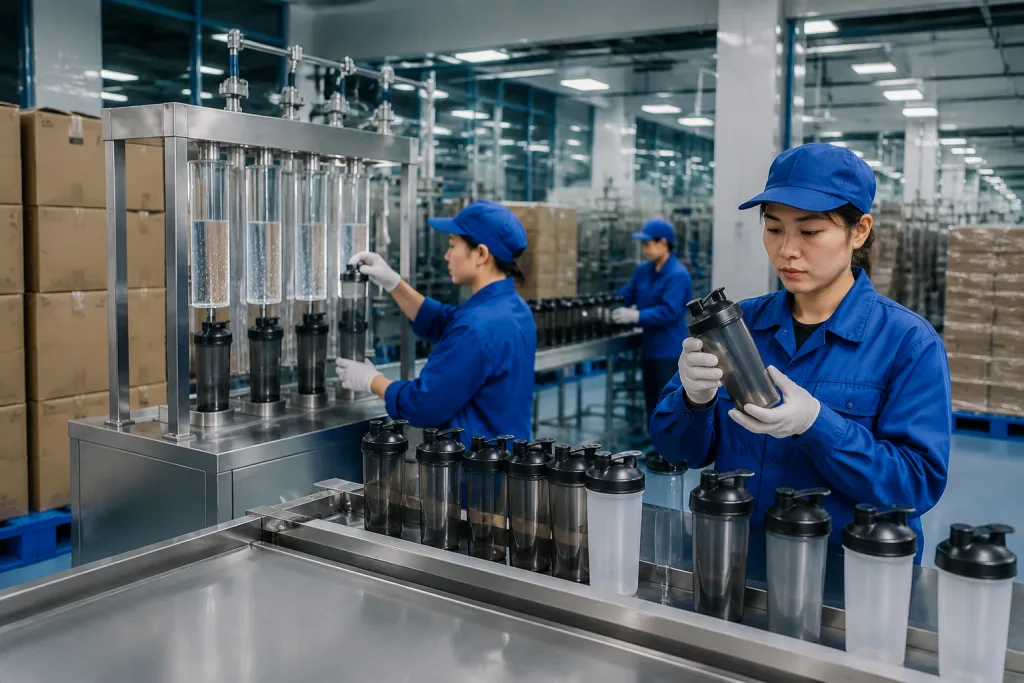
The better news: when you work with a canteen factory or a drinkware factory in Zhejiang, we can hold the spec tight enough to protect margin. We usually see buyers in Europe and North America start at a 3,000-piece MOQ, FOB China pricing around USD 1.85-4.20 depending on material and decoration, and 25-40 day lead times after tooling is locked. QC pulled the sample on the line last week and found a lid torque issue at 1.2 N·m; that is the kind of thing you want caught before shipment, not after the buyer flags it.
What buyers actually need
I’ll rewrite just the prose, keep the HTML structure intact, and tighten it into a more natural sales-engineer voice with concrete factory details.Private labeling blender bottle sourcing is not about chasing the lowest quote. We run the line around the spec sheet: body resin, ball or whisk type, lid torque, seal compound, and print position. Miss one item and the factory fills the gap for you. On our side, QC pulled the sample at 18 N·m and the buyer flagged a loose cap after that, so we know the math does not work when the spec is vague.
For most B2B programs, the useful spec sheet includes:
- Capacity: 500 ml, 650 ml, or 750 ml
- Material: PP, Tritan, AS, or stainless accent parts
- Seal: silicone, 2.0-3.0 mm thickness
- Decoration: one-color silk screen, 360° UV print, laser engraving on metal parts
- Packing: retail box, hang tag, barcode, FNSKU label
That is the difference between a giveaway bottle and a product you can build a brand around. Keep the artwork rules and Pantone control the same if you also buy a custom canteen, custom growler, or another drinkware line. We had a PO typo once on the box barcode, and the whole carton relabel job ate two extra days, so consistency saves real money.
Materials that survive returns
I’ll rewrite the section in-place, keeping the HTML exactly as-is and tightening the prose for a real factory-sales voice.Most returns on shaker-style bottles are not about looks. They come from odor, staining, warping, and leakage. So material choice matters more than buyers want to admit. Tritan is still the safer all-round pick when you need a clear body, better impact resistance, and fewer clouding complaints after 3 or 4 months in market use. PP is cheaper and works for promo runs, but the finish looks plain and the perceived value drops fast. If you want a premium line, a stainless outer shell with internal insert parts can work, though the BOM goes up and the assembly line gets slower.
When you compare options, ask the canteen manufacturer for three things: wall thickness, drop-test method, and seal hardness. A typical clear body runs 1.8-2.4 mm wall thickness, and a lid seal in 50-70 Shore A silicone is normal. QC pulled one sample at 1.6 mm last month, and that bottle came back with a hairline crack after a 1.2 m drop. If the factory cannot quote those numbers, you are not talking to a serious canteen supplier. The same standard applies whether you are buying a customized canteen, customizable canteen, or a private labeling blender bottle program in China.
Practical view: buyers in North America often overvalue transparency in the sample and miss field failure. That is the wrong question to ask. A slightly thicker, less glossy bottle that survives warehouse handling usually gives better margin, and we have seen glossy samples get rejected after the buyer flagged scuffing from a 20-box carton test. Zhejiang factories with stable molding control can hold these tolerances well, but only if you lock the material grade and treat the first sample as a check piece, not the production standard.
Decoration that sells the brand
I’ll rewrite just the prose inside the existing HTML, keep the tags and list structure intact, and make it read like a factory-side sales engineer wrote it.Private label decoration is where buyers burn budget. A logo that looks sharp in a PDF can turn sloppy on a curved plastic body if the ink load, cure temp, or wrap line is off. On a blender bottle, one-color silk screen is still the cleanest call for most brands. If you want more pop, UV print works on wider flat zones, but it can fail on grab points unless the coating is right. Laser engraving belongs on metal parts, not soft plastics.
Ask the canteen factory to show decoration yield, not just sample shots. If they quote 98% pass rate but cannot show how they check registration, ink adhesion, or abrasion, that number is just sales copy. QC pulled the sample on our line with a 1.5 mm gauge before release. For retail-ready custom drinkware, we suggest these controls:
- Logo alignment tolerance within ±1.5 mm
- Rub-test at 50 cycles minimum for screen print
- Color match against Pantone with Delta E under 2.0 if possible
- Heat resistance confirmation at 60-80°C for the print system
That standard matters even more when you run a mixed line of customizable drinkware, customized drinkware, or a canteen promotional program. The artwork has to stay consistent across a custom canteen, customized canteen, or distributor growler. We’ve seen this go sideways when a buyer approved one hero sample and the next PO came with a different Pantone code. If color is part of the brand story, do not let the factory freehand it.
MOQ, pricing, and lead times
I’ll rewrite the three paragraphs in-place, keep the HTML structure unchanged, and make the copy sound like a factory-side sales engineer with concrete numbers and shop-floor detail.This is the business case. A Zhejiang factory we run will usually quote a 3,000-piece MOQ for a private labeling blender bottle with standard tooling, or 5,000 to 10,000 pieces if you want a new mold or a lid with odd geometry. QC pulled the sample on a 0.02 mm feeler gauge last week; that kind of detail shows up fast in pricing. Samples usually land at USD 35-120, depending on tooling and courier lane. Production pricing normally sits in three bands: basic PP at USD 1.85-2.40, Tritan at USD 2.35-3.40, and premium hybrid builds at USD 3.40-4.20 FOB China.
Lead time is usually 7-12 days for samples, then 25-40 days for mass production after sample approval and deposit. If a buyer flagged a 10-day mass run on a customized canteen or a canteen customized with multi-part assembly, the math does not work. We’ve seen that go sideways on the line. It may pass for a rush promo order, but not for a retail launch.
Keep the cost model honest. Add inland trucking, export docs, ocean freight, duty, and a 3-6% defect allowance if this is your first run. A lot of drinkware margins vanish because people quote only FOB and ignore carton size, pallet count, and breakage in transit. The smarter buyer asks for carton quantity, carton gross weight, and the loading plan before sending the PO — we once caught a PO typo that cut carton count by 12 cartons and would have blown the container math.
Quality control that prevents pain
I’ll keep the HTML structure intact and rewrite the prose to sound like a factory-side sales engineer, with concrete QC details and fewer AI-style fillers.QC is not paperwork. On a private labeling blender bottle, we check the parts buyers touch: seal, lid fit, thread engagement, odor, and print wear. AQL 2.5 major and 4.0 minor is a fair starting point for most consumer drinkware orders, but the defect list has to be written in black and white. On one 12,000-piece run, QC pulled the sample and a 0.8 mm lid gap became a major issue because the buyer flagged it as a leak risk.
Ask for these checks before shipment:
- 100% leak test on assembled lids
- Random torque test on cap closure
- Drop test from 1 meter, 6 faces
- Odor check after hot-water wash
- Carton compression review if you ship long distance
If your order includes a canteen customized for a sports channel, use the same control on the line. A canteen manufacturer in China can run 50,000 units per month, but the math does not work if the process drifts. We ship faster when the buyer gives seal lot traceability and pre-shipment photos with production lot numbers; one PO typo on the gasket code can turn into a 3-day delay. That matters when you are dealing with multiple canteen suppliers or canteen vendors and need the reorder to match the first lot.
One weak gasket can cost you more than a 10% price increase on the PO.
That is why experienced buyers in Europe and North America pay for inspection once and avoid the headache later.
How to brief a factory
I’ll rewrite the prose in place, keep the HTML exactly as-is, and make it sound like a real factory-side sales engineer. Next I’m drafting tighter, more specific copy with concrete floor details and fewer AI-style transitions.The best orders are the boring ones. A solid factory brief cuts guesswork and keeps your brand out of the sampling loop. Start with a spec sheet that lists capacity, material, Pantone or RAL color codes, logo artwork, packing, test items, and the destination market. If the product goes to Amazon, add FNSKU placement and carton label rules. If it goes into a distributor canteen channel, state the case pack and shelf barcode format up front.
When you speak to a canteen supplier or canteen manufacturers in China, give them a clear decision path. Say what stays fixed and what can move. A 650 ml Tritan body with a one-color logo and black lid can be locked; the whisk ball material or carton insert can stay open. That saves hours on the line. It also gets you faster cost feedback from the quoting desk.
Do not hide your target price. If you need a landed cost under USD 3.50 and a shelf price of USD 12.99, say it. A good Zhejiang partner can tell you fast whether the margin stack works or whether you need to cut decoration or simplify the pack. We’ve seen this go sideways when buyers wait until sample two to mention price. For buyers also handling custom growler, customizable growler, or distributor growler programs, keep one document format across categories so QA and procurement do not redraw the whole brief every time.
Request a factory quote with real specs
Send your target price, material choice, artwork, and pack format. We’ll reply with a practical quote from Zhejiang, not a vague promise.
Frequently asked questions
What is the usual MOQ for a private labeling blender bottle?
For standard tooling, 3,000 pieces is the common MOQ from a Zhejiang factory. If you need a new mold, special lid, or unique color match, expect 5,000-10,000 pieces. Some canteen manufacturers will quote lower, but the unit price usually rises fast and QC attention gets thinner. If you are testing a market, it is better to pay a slightly higher FOB price than to sit on 1,000 pieces that do not match your retail plan.
How much does a private label shaker bottle cost FOB China?
A realistic FOB China range is USD 1.85-2.40 for basic PP, USD 2.35-3.40 for Tritan, and USD 3.40-4.20 for premium hybrid builds with stronger decoration or more complex lids. That is before freight, duty, and inland trucking. If a canteen supplier quotes far below that, check what is missing: print method, seal material, carton quality, or leak testing. Cheap quotes often leave out one of those items.
What tests should I ask for before shipment?
At minimum, ask for 100% leak testing, cap torque checks, a 1-meter 6-face drop test, odor verification after hot-water wash, and AQL inspection at 2.5 major / 4.0 minor. If you are selling into the EU or North America, also request REACH-related material declarations and packaging compliance as needed. A canteen factory in China can run these checks efficiently, but only if they are written into the PO and sample approval documents.
Can I use the same factory for custom drinkware beyond shaker bottles?
Yes, and that is often smarter. A strong canteen manufacturer can usually support custom canteen, customized canteen, custom growler, and other customizable drinkware lines if the materials and decoration methods overlap. The key is to confirm whether they are a true canteen factory or just a trading company. Ask about monthly output, in-house molding, and whether they handle canteen customized artwork, QC, and packing in one place.
How should I package these for Amazon or retail distribution?
For Amazon, include retail-ready cartons, barcode labels, and FNSKU placement before production starts. For retail or distributor canteen channels, case pack and shelf barcode placement matter as much as the bottle itself. Ask for master carton dimensions, gross weight, and pallet count. If you use a canteen distributor or distributor drinkware channel, you want repeatable packing specs so reorders do not create receiving problems.