Key Takeaways
- A practical MOQ for a pp thermal bottle factory is often 3,000 pcs, with 25-35 day mass production lead time
- PP drinkware usually targets 0.6-1.0 mm wall thickness, depending on size and insulation structure
- For Europe and North America, ask for REACH, FDA, LFGB, and AQL 2.5 inspection data before shipment
- Custom drinkware margins are usually protected by lid standardization, not by chasing the lowest unit price
If you are looking for a pp thermal bottle factory, you are usually solving three things at once: unit cost, compliance, and repeatable output. PP sounds simple, but the wrong resin grade, lid fit, or print method will turn a cheap order into a return claim. For Europe and North America, a quote is not enough. We need the material spec, wall thickness, drop test result, REACH or FDA file, and proof that the color stays on from batch to batch.
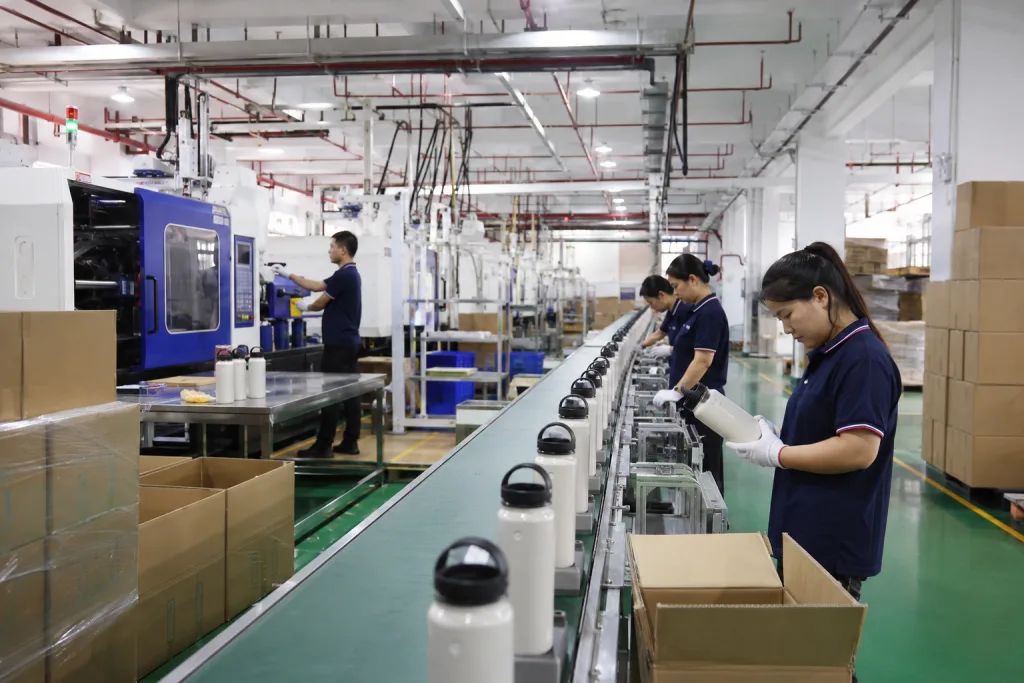
This is where buyers get stuck. A decent canteen factory in Zhejiang can turn a clean sample in 7 days, but the line only holds margin if production is disciplined. QC pulled a sample on our bench last week with a 0.3 mm lip gap, and the buyer flagged it before mass run, which saved a bad lid match. At BottleForge in Hangzhou, Zhejiang, we run 800,000 units a month, with a normal MOQ of 3,000 pieces and a 25-35 day lead time after sample approval. If you buy as a canteen distributor, canteen supplier, or brand owner, this is the wrong question to ask: "Can you make it?" The real one is whether the pp thermal bottle factory can keep the same result on PO 1 and PO 20.
What PP thermal bottles really are
I’ll rewrite the section in-place, keep the HTML tags and list structure intact, and tune the prose to sound like a factory-side sales engineer.PP means polypropylene. In drinkware, we use it because it is light, stable against common chemicals, and easy to mold. A proper pp thermal bottle factory runs food-contact grade PP for the body or inner shell, then matches it with a PP lid, a silicone seal, and sometimes a stainless or vacuum insert when the spec calls for insulation. Do not treat “thermal” as one fixed performance level. A plain PP single-wall bottle does not hold temperature like a vacuum flask. If a buyer wants 6-12 hours of retention, that target has to be built into the structure from the start, not patched after the mold is cut.
For B2B sourcing, the real comparison is PP structure versus the promise on the carton. A 500 ml school promo bottle may only need a basic double-wall shell and a tight seal. A custom growler for outdoor retail needs thicker walls, tighter thread control, and a cap that survives repeated opening. We’ve seen this go sideways when the buyer approved a nice render but ignored the lid torque test—QC pulled the sample at 1.8 N·m and the cap started slipping. In Zhejiang and across China, plenty of factories can mold PP without trouble; fewer keep the lid fit, surface finish, and leak rate steady in a full container load.
- Typical body wall thickness: 0.6-1.0 mm
- Common capacity range: 350 ml to 1,000 ml
- Common lid structure: screw cap, flip lid, or carry lid
- Target use: custom drinkware for promotion, retail, travel, and sports
How to judge the factory
I’ll rewrite the section in-place, keep the HTML exactly as-is, and tighten the language so it reads like a factory-side sales engineer.A real canteen factory answers process questions straight, without hiding behind sales talk. Ask which resin grade they run, what injection machines are on the line, how many cavities each mold has, and how they control shrinkage. We’ve seen buyers skip those points and pay for it later. If a canteen manufacturer cannot tell you the difference between cosmetic rejection and functional rejection, the risk is on your side. The same goes for a canteen supplier claiming “food safe” without documents. You want traceability on incoming resin, lid parts, and packing lot numbers, down to the batch code.
At the shop-floor level, a good canteen manufacturers shortlist comes down to five checks: tooling ownership, QC flow, production capacity, export history, and test reports. A factory in Zhejiang shipping to North America should know AQL 2.5 for major defects and AQL 4.0 for minor defects, plus carton drop tests and vacuum leak checks where the bottle design needs it. On our side, QC pulled the sample first, then the buyer flagged a 1.5 mm logo shift, and that saved a messy PO dispute. If you are buying canteen customized programs, insist on pre-production samples and a golden sample signed by both sides. That is not bureaucracy. The math does not work without it when your brand team asks why the Pantone shade moved by half a step.
“If the supplier cannot show you how they control the first 500 pieces, they will not control the next 50,000.”
For distributor drinkware programs, the factory should also handle mixed packing, barcode labels, and retail-ready cartons. We run these cases all the time. That matters when your warehouse is feeding Amazon FBA, store replenishment, or regional drops, and one wrong carton mark can hold up a whole lot at customs.
Pricing that makes sense
I’ll rewrite the prose in place, keep the HTML structure intact, and tighten the pricing language so it reads like a factory-side sales note.Buyers usually ask for a unit price first, but that number is useless until mold, decoration, and packing are fixed. A plain PP bottle from a pp thermal bottle factory usually lands around USD 0.85-1.40 FOB for a 500 ml model at 3,000 pieces. Add silkscreen printing and the quote moves to USD 1.05-1.65. Want a custom lid, two-color body, or matte finish? The cost goes up again. If a quote sits far below that band, the math does not work; we have seen it end in thin wall spots, low-grade resin, or QC cuts that never should have passed.
For canteen promotional orders, the cleanest saving comes from using an existing mold instead of opening a new one. If you need a canteen customizable shape, mold cost usually runs USD 1,500-6,000, depending on cavity count and part geometry. We had a buyer flag a PO typo once — “5000” became “500” — and that kind of mistake changes the tooling discussion fast. A canteen vendor pushing the cheapest mold often hides the cost in flash, longer cycles, and rework at the line. In practice, landed cost comes down to three things: tooling amortization, decoration method, and carton efficiency. On a 10,000-unit distributor canteen program, we have saved 8-12% just by tightening box size and pallet loading, even when the ex-factory number barely moved.
- Sample lead time: about 7 days
- Production lead time: 25-35 days
- Typical FOB target: USD 0.85-1.65 depending on spec
- Normal MOQ: 3,000 pieces
Customization without ugly surprises
I’ll rewrite the section in-place, keep the HTML tags intact, and tighten the prose so it sounds like a factory-side sales engineer.Custom drinkware gets risky when the buyer treats decoration as an afterthought. PP surfaces are not the same as stainless steel or glass, so the print method has to match the material. We run silkscreen for simple logos and one or two colors. Laser engraving is usually the wrong call on PP. Heat transfer works for graphics, but only if the line has stable curing control. For a canteen customized line or a customizable canteen retail program, ask for printed color proofs, Pantone references, and a straight abrasion test claim, not vague marketing copy.
For a custom canteen or customized canteen meant for sports or school use, cap color, strap strength, and assembly torque matter too. A lot of canteen manufacturers can print a logo. Fewer keep it centered on a curved bottle body after a 48-hour heat cycle and carton compression. We had a buyer flag a 1.5 mm logo shift on a trial run; QC pulled the sample and the issue came from a loose jig, not the artwork. That is why a canteen supplier with in-house printing and assembly usually beats a trading-only canteen vendor on consistency. If your customer is a canteen distributor serving multiple chains, standardize two or three body colors and one lid platform, then vary the branding. The math works better, and spare parts stay simple.
Do not ask for more than two decoration processes on the first launch unless the margin is strong. Every extra process adds scrap, lead time, and approval loops. We’ve seen this go sideways on a 3,000-piece PO where the buyer added pad print plus heat transfer after sample approval. Keep the first run simple, then add complexity after sell-through proves demand.
Compliance for Europe and North America
I’ll rewrite the three paragraphs in-place, keeping the HTML unchanged and tightening the language for a real factory-sales tone.Compliance is where a serious buyer separates a canteen supplier from a risky one. For Europe, ask for REACH and LFGB where they apply, plus migration testing for food-contact materials. For North America, FDA food-contact declarations are standard. If the product has a silicone gasket, ask for the food-grade spec and test results for odor and staining. If it has a vacuum structure, request ASTM-style checks for thermal claim and drop resistance. We had one buyer flag a missing batch number on the report set, and the whole file stalled.
Good China factories in Zhejiang treat compliance as a process, not a PDF. Resin lot, ink batch, and seal batch should all tie back to the production order. On a retail canteen project, the carton and inner bag may also need suffocation warnings, barcode match, and FNSKU labeling if the ship-to is Amazon. For Europe and North America, ask how the factory handles BSCI or social compliance audits. This is not paperwork only; we have seen distributors block a supplier on the first round because the audit file was thin. The math does not work if the traceability stops at the door.
When you compare canteen suppliers, ask straight questions: Can you show test reports from the last 12 months? Do you keep retained samples for at least 2 years? What was your final inspection rejection rate last month? A factory that answers with numbers is usually safer than one that just says “no problem.” QC pulled the sample on one line and found a 1.5 mm cap mismatch, which is the sort of detail that saves a buyer later.
Building a repeat order system
I’ll rewrite the three paragraphs in place, keep the HTML exactly as-is, and tighten the language so it reads like a factory-side sales engineer.The first order is easy. The second order shows whether your canteen manufacturer is set up for repeat business or just chasing samples. For repeat custom canteen programs, lock the golden sample, packing spec, print files, and carton dimensions before you release the PO. We once saw a buyer flag a one-line typo on the carton mark, and that tiny mistake turned into 480 cartons held at the forwarder. If your line includes a distributor growler, distributor drinkware, or a custom growler variant, keep a revision log so a lid change in March does not create a warehouse mismatch in June. Simple discipline saves money.
A mature pp thermal bottle factory should support forecast-based production, spare part packing, and stable lead times through peak season. In April and May, injection machines can get booked solid, especially in Zhejiang where a lot of factories are chasing the same retail calendars. Ask if your slot is reserved and how much buffer they keep for QC recheck and rework. On one 20,000-piece run, QC pulled the sample at 2.2 mm wall thickness instead of the agreed 2.0 mm, and we stopped the line before it became scrap. If you are a canteen distributor, it makes more sense to hold one color and lid spec with quarterly releases than to re-source every season just to save 3%.
We also run a reorder checklist: same resin grade, same print file version, same carton mark, same master carton count, same test standard. That is how a canteen factory keeps your customized drinkware line from drifting. If the PO says 24 pcs per carton and the carton label says 20, the math does not work, and the warehouse will catch it. Boring is good. Boring is what protects margin.
Send your spec and get a factory quote
Share capacity, lid style, print file, and target market. We will quote your custom drinkware program with MOQ, lead time, and compliance details.
Frequently asked questions
What MOQ should I expect from a pp thermal bottle factory?
For a standard PP bottle, 3,000 pieces is a normal MOQ in China. If the design uses existing tooling, some canteen suppliers may accept 1,000-2,000 pieces, but your unit price will usually rise by 10-20%. New molds often need 3,000-5,000 pieces to make the tooling cost sensible. For a canteen customized project with special lid color or print, ask whether MOQ applies per color or per SKU. In Zhejiang, a factory with strong export work will usually give you a clear MOQ by configuration, not a vague promise.
Can a pp thermal bottle be used for hot drinks?
Yes, but only within the material and structure limits. Food-grade PP generally handles hot filling better than many buyers expect, but you still need to check the lid seal, wall thickness, and deformation risk. For many models, 70-90°C is a more realistic operating range than boiling water. If you need true thermal retention, the design should be closer to a vacuum bottle or insulated canteen custom build. Always confirm the test method, because a lab result is only useful if it matches how your customer will actually use the bottle.
What documents should I request before ordering?
Ask for food-contact declarations, REACH or LFGB if you sell in Europe, and FDA-related compliance documents for the US market. You should also request a commercial sample, golden sample approval, and inspection standards such as AQL 2.5 for major defects. For a bigger custom drinkware order, ask for carton drop test results, leak test procedure, and retained sample policy. A serious canteen manufacturer in China should be able to provide batch traceability and photo records from final packing.
How much does customization usually add to cost?
Simple logo printing may add USD 0.10-0.35 per piece, depending on colors and coverage. A special mold, new lid, or custom shape adds much more because of tooling and setup time. For a canteen promotional order, using an existing bottle shape is the cheapest route. For a customizable growler or customized canteen with special graphics, expect a higher MOQ and longer approval time. The cheapest quote is often not the best landed cost once you include scrap, retries, and freight efficiency.
How do I choose between suppliers in China and a local vendor?
Compare by data, not geography. A canteen supplier in China, especially Zhejiang, may offer lower ex-factory cost, stronger molding capability, and faster tooling changes. Your local canteen vendor may offer easier communication and smaller MOQ, but not necessarily better consistency. Ask both sides for sample lead time, monthly capacity, certifications, and defect policy. If a factory can produce 800,000 units per month and still keep the same print standard, that is more useful than a local promise with no QC depth.