Key Takeaways
- Glass-lined vacuum flasks usually start at 1,000-3,000 pcs per SKU, while common stainless thermos bulk programs can start at 500 pcs.
- A 500 ml glass-lined flask often lands around USD 3.20-5.80 FOB China; a similar 18/8 stainless model is often USD 3.80-6.50 FOB.
- Expect 30-45 days mass production after sample approval, plus 7-12 days for pre-production samples and packaging confirmation.
- For outdoor retail, AQL 2.5, REACH screening, and a 1.0 m drop test reduce costly returns far more than chasing the lowest unit price.
If you buy for outdoor retail or promo projects, the phrase glass vacuum flask bulk causes mix-ups fast. One supplier quotes a classic glass-lined vacuum flask with a 3.2 mm inner; another quotes a stainless insulated bottle and calls it the same thing. We see this on POs every month. Last week a buyer typed "glass vacum flask," and the line was one sample approval away from the wrong body. Our merchandiser caught it with a caliper check and a PO note. Start with the structure. If not, you are comparing prices on two different products.
Then the real job starts: breakage in transit, actual logo area on the body, and landed cost per set. For outdoor programs, stainless is usually the safer custom thermos choice; QC pulled a sample last month after a 76 cm drop test, and the glass unit failed at the shoulder while the stainless one passed. Asking only for the lowest unit price is the wrong question. For gifting, office pantry use, or older distributor thermos programs, glass-lined models still fit. Before you approve mass production in Zhejiang, China, match the structure to your sales channel and your complaint tolerance at the target price. We have seen this go sideways after shipping, usually when the buyer flagged breakage after the first container hit the warehouse.
Know what structure you are buying
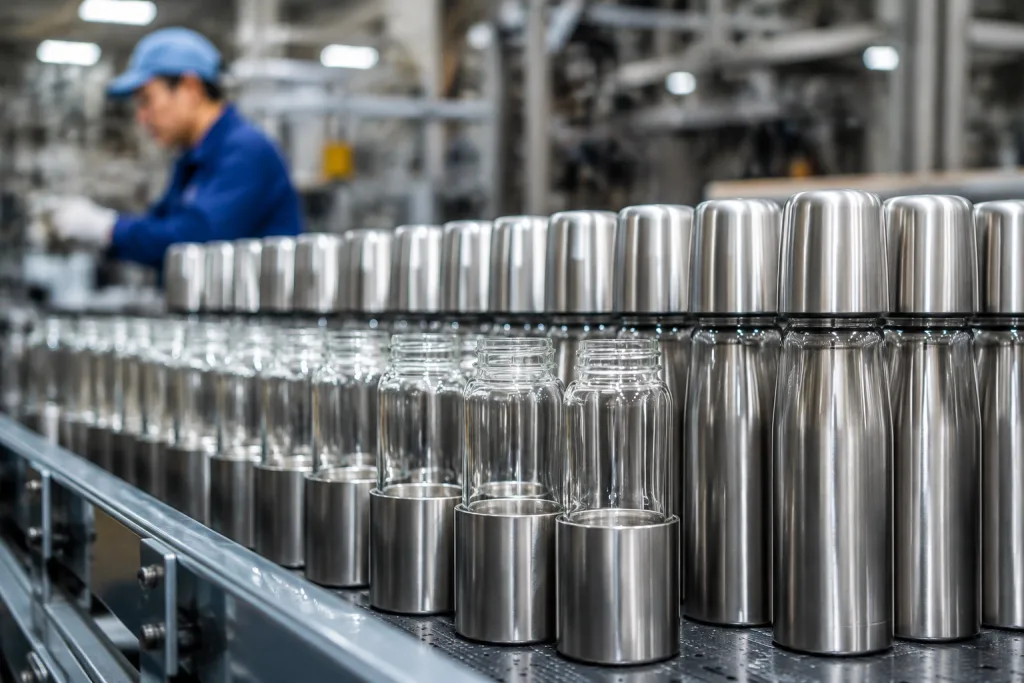
When you request glass vacuum flask bulk, spell out the inner structure in the RFQ and copy the same wording onto the PO. We still get POs that say only "5000 pcs thermos," and then the sample room has to call back before the tech even pulls the 58 mm neck gauge. That short line can mean two different builds. One is a traditional glass-lined vacuum flask: a glass inner bottle fixed inside a plastic or metal shell, usually with a stopper and cup cap. The other is a stainless insulated bottle with a glass-look exterior finish or a glass tea section, while the vacuum body itself is stainless steel.
I’ll say it straight. If the flask is going into hiking packs, daily commuting, school bags, or 74 mm vehicle cup holders, a custom stainless thermos is the better commercial choice. Glass liners hold temperature well and keep taste neutral, but we’ve seen this go sideways after a 60 cm drop test. One buyer flagged 37 broken units in the first 2,000 pcs shipment, and the math doesn’t work once replacements start. We run glass-lined programs in China more often for hospitality and home-gift orders, where the bottle stays on a desk instead of getting knocked around in a backpack.
Ask your thermos supplier for a one-page structure sheet. One A4 page is enough. It should match the drawing packet the line uses for first article approval:
- Inner material: glass liner or 18/8 stainless steel; if the drawing is ready, mark liner wall or body thickness in mm
- Outer shell: PP, ABS, painted steel, or stainless steel, with the finish called out if color or coating is fixed
- Stopper type: screw plug, push-button, or pour stopper, plus thread size if the mold is fixed
- Capacity tolerance: usually plus or minus 3%, and state whether you measure to brim or to fill line
- Net weight and carton drop standard, such as a 1.2 m export-carton test on the packed master carton
If the supplier cannot send this on one page, you are probably not talking to a real thermos factory. This is the wrong question to skip. At BottleForge in Zhejiang, China, we split these two product families at quotation stage because tooling cost changes and QC checks are different; damage rates are nowhere close. QC pulled the sample last month and found a 2 mm mismatch at the neck seat on a glass-lined unit. On a stainless run, that same checkpoint is focused on weld vacuum hold on the leak tester.
Where glass-lined flasks still make sense
Glass-lined vacuum flasks are not obsolete. They sell in the right channel, and first-time buyers miss that on the first RFQ more than they should. We still ship them for office pantry programs, hotel breakfast service, meeting rooms, elder-care use, and seasonal gift sets, with most orders at 3,000 to 5,000 pcs per style. Clean taste is the main reason. The classic shoulder shape still sells in parts of Europe and in some North American promotional thermos programs. On the line, we check the neck seat with a feeler gauge, and the fit stays within 1.2 mm because a loose seat shows up later as leakage or a broken liner.
A typical 1.0 L glass-lined flask in bulk thermos format keeps water above 60 degrees C for 12 hours when we test from 95 degrees C fill temperature at room temperature. That works for desk use and buffet service. Thermal performance is not the weak point. Transit abuse is. Carton design and inner fitment matter more than on stainless, and QC pulled the sample on one run with no flask defect at all, only cracked liners after a drop test because the EPS support was wrong. One buyer cut the EPS wall from 18 mm to 10 mm to save freight. The math didn't work.
Choose glass-lined construction when the channel and the pack-out fit the product. We put that on the spec sheet before the first sample run:
- Your target retail use is indoor, not outdoor, and the flask will sit on a desk, pantry shelf, or hotel tray instead of getting tossed into a bag.
- You need lower taste transfer risk for tea or coffee, and the buyer flagged odor on a PP stopper sample before.
- Your brand accepts a more traditional appearance, such as the classic shoulder body still common in hotel pantry sets.
- Your return tolerance is above 1.5% in exchange for a sharper FOB price.
Move to a customizable thermos in stainless when the product will be tossed into bags, sold through outdoor dealers, or shipped through e-commerce parcel networks. Sample feel is the wrong question to ask. Replacement cost is. We've seen this go sideways. The buyer approved the glass structure, then flagged breakage after parcel shipping and asked why the claim rate jumped past 2%. That is why thermos manufacturers in Zhejiang now steer active-use buyers toward stainless even when the original inquiry says glass vacuum flask bulk. On one PO, the model code was typed as 101B instead of 10LB, and the packing spec got copied from the wrong item. QC caught it at carton print approval. Small mistake. Expensive result.
MOQ, pricing, and tooling reality
Buyers lose days asking 20 suppliers for one number. Wrong question. Ask for a price matrix. SKU, shell color, stopper color, print method, and carton spec all move cost because the line stops at each changeover. On a glass-lined flask line, even a box size change can mean resetting the carton former by 6-8 mm. For glass vacuum flask bulk, MOQ usually sits on those break points. A common starting point is 1,000 pcs per SKU for standard colors, but 2,000-3,000 pcs is closer to factory reality if you want a custom molded stopper or an uncommon shell finish. We normally confirm MOQ only after the Pantone chip and sample box spec are fixed. We’ve had buyers send a PO with “mat silver” typed one way on page 1 and “matt silver” on page 2, and that alone delayed sample booking by a day.
Indicative FOB China pricing for a 500 ml to 1.0 L program usually looks like this once the logo size and box style are locked:
- 500 ml glass-lined flask, standard color shell, 1-color logo: about USD 3.20-4.40 at 3,000 pcs, based on a standard gift box and normal logo position
- 1.0 L glass-lined flask, standard cap and box: about USD 4.10-5.80 at 2,000 pcs, assuming no cap insert change
- 500 ml 18/8 stainless vacuum bottle, powder coat, 1-color logo: about USD 3.80-5.20 at 1,000 pcs, with the usual powder coat line and no second bake
- 750 ml stainless sports style bottle with carry lid: about USD 4.60-6.50 at 1,000 pcs, if the existing lid mold is used and the handle passes pull test
These are usable ranges, not booking prices. The math doesn’t work if a buyer asks for 1,000 pcs, two gift box versions, and three shell colors on one PO. We quote that after checking the print area in mm and carton gross weight, usually under 12 kg for easier packing-line handling.
If you ask for a customized thermos with new lid tooling, expect USD 2,500-8,000 in mold cost. That spread comes from part complexity and from whether silicone, PP, and metal inserts must sit in one tool. We have seen this go sideways after T1. The buyer flagged a 0.3 mm seal change, the mold shop had to rework the shut-off, and the quote moved in one afternoon. A simple silk-screen or laser mark on an existing body usually avoids tooling completely. On the factory side, the mold shop will often check that seal seat first with a pin gauge before cutting the next trial sample.
Lead time is 7-12 days for pre-production samples and 30-45 days for mass production after approval. Ask where the bottleneck is. Last month QC pulled the sample on a stopper leak at 0.03 MPa, and that kind of hold moves a ship date fast. A capable manufacturer thermos setup should also give you monthly capacity in units, not vague promises. A medium Zhejiang plant often runs 250,000-400,000 insulated units per month across stainless and legacy glass-lined lines. If a thermos vendor cannot explain capacity and bottlenecks, treat the quote as a trading offer, not a factory thermos quotation. We ship smoother when the supplier can tell you which step is full: vacuuming, powder coat, or final packing on line 2.
Customization that survives mass production
Decoration is where custom thermos programs fail first. Product-page mockups make every finish look simple. The line says otherwise. Carton rub inside master cartons and a 1.2 m drop test expose weak print fast. Last month QC pulled the sample from the Sutherland rub tester at 60 dry-rub strokes; the red screen print cracked first on the shoulder radius. On glass-lined bodies with plastic shells, we usually run silk-screen on the shell, heat transfer labels on straight panels, IML on some PP lid parts, and gift packing at carton level. Stainless bottles give more options. Powder coat or spray paint on the body, laser engraving under the seam, screen or pad print for simple logos, UV print for short runs, embossed badges, or a full-wrap graphic.
If you buy for outdoor retail, stainless is the safer route for a thermos custom program because the bottle body carries the branding. That shows on shelf. Glass-lined models hide the fragile part inside, so the print has to sit on the shell or cap, and the branding area shrinks fast. We saw one buyer ask for a premium look on a glass vacuum flask, then flag the pilot sample because the cap logo looked small from 1 meter away on a 500 ml body. This is the wrong question to ask. Ask how much clean branding area is left after the parting line and cap radius eat into the panel, or the product starts looking dated.
What to confirm before you approve artwork
- Logo position tolerance: usually plus or minus 2 mm on round bodies once the jig is locked
- Color standard: Pantone reference plus signed physical sample; a screen proof is not enough
- Scratch resistance: dry rub and tape adhesion test standard, with the same tape grade each run
- Packaging: white box, color box, PDQ tray, or mailer-ready carton, based on your drop test target
- Barcode needs: EAN, UPC, or FNSKU for Amazon prep, with the exact PO text checked line by line
Promotional thermos buyers usually ask for 500 pcs, fast launch, custom print. The math does not work if the artwork changes three times. We run those orders on existing molds. Keep decoration to 1 or 2 print positions. Skip metallic inks. Shade shift lot to lot is the complaint that comes back first, even when the drawdown card looked fine in pre-production. If you need a thermos customized gift set for Q4, lock artwork no later than early September. We ship cleaner when the packaging dieline is frozen before holiday rush. We have seen this go sideways over one PO typo on the barcode panel, and then 12 days becomes 18 days because the inserts need reprinting.
Quality control for breakage and returns
The lowest factory quote almost never gives the lowest landed cost. On glass vacuum flask bulk, margin gets eaten by breakage in carton handling, stopper leaks after assembly, weak vacuum at hold test, and shade drift the line catches under a D65 light box. Write the QC gates before you send the deposit. If you compare only piece price, this is the wrong question to ask. A serious thermos manufacturer should accept inline checks with dated records from the vacuum station and packing line, not just one final report with a red stamp.
For glass-lined flasks, these are the minimum controls I would put on the line sheet next to the vacuum test bench:
- AQL 2.5 for major defects and 4.0 for minor defects, with defect photos signed off before production
- 100% vacuum hold check or an equivalent line test at the vacuum station
- 100% leak test after stopper assembly, not by sampling
- Carton drop test from 76 cm to 1.0 m depending on pack weight
- Thermal retention test on each lot, such as 95 degrees C fill and a 24-hour record
For stainless programs, add salt spray if painted parts stay exposed, and check weld appearance at the mouth and base against a signed limit sample board. We run a go/no-go ring gauge on some neck sizes because a 0.3 mm burr becomes a cap-fit complaint after shipping. The buyer usually pushes back on this point. Then the complaint shows up 18 days later. For EU orders, ask for REACH compliance screening on contact materials and decorative coatings where relevant. On children's items or family gifting sets, retailers often push ASTM and LFGB-related checks to the end of the approval chain. We had one gift-set PO with the lid print color note typed wrong, and the buyer flagged it at approval, so do not leave coatings out of the review.
Audits matter, but a framed certificate on the wall proves little. A BSCI or ISO 9001 certificate gets you through supplier screening, but it does not prove your shipment is good. What counts is whether the suppliers thermos team can show CAPA records with close dates, inspection photos tied to the lot number, and defect trend data from the rework log. QC pulled the sample and found stopper torque drifting from 11 kgf·cm to 7 kgf·cm. Returns moved with it. We have seen buyers in Zhejiang cut complaint rates from 2.8% to under 0.9% by tightening stopper torque limits and adding 3 mm thicker inner carton separators. Boring work. It saves money.
Logistics, compliance, and channel fit
The last call is not the flask body. It is the sales channel. A glass-lined flask that runs fine in a 40HQ pallet program can fail fast in parcel e-commerce; one 76 cm drop in carton testing will expose inner support that has even 3 mm of slack. We ship both. Outdoor chains usually ask how the pack survives from factory to DC to store. Promo buyers often flag the gift box window, the print alignment, or a dent on the sample lid before they ask about abuse resistance.
For palletized B2B shipments, glass vacuum flask bulk still works if master cartons stay within 12-14 kg and the dividers are rigid; then the line must not overstack the container. We usually cap stack height after a compression check on the carton tester, because tall 5-layer loads that look safe on paper have crushed corners in transit. For direct-to-consumer parcel channels, be careful. This is the wrong channel to treat like standard wholesale. A 1.2% breakage rate wipes out margin fast unless you run mailer-tested packaging, and that means higher unit cost plus more carton cube. We have seen buyers push back on a $0.28 pack upgrade, then lose the margin on replacements in one month. The math doesn't work.
On shipping terms, most buyers start with FOB Ningbo or FOB Shanghai. A Zhejiang factory can truck to either port from Hangzhou, so the real issue is warehouse cut-off and booking timing, not distance. If your annual volume is under 3 containers, ask your thermos supplier to quote both FOB and ex-works so you can see the forwarder markup before you lock the PO. Do this early. We had one PO typo in carton marks last quarter, and the warehouse held the cargo for a day. If the goods are going to Amazon or a 3PL, confirm pallet rules and carton marks before production. Lock label application at the same time. FNSKU labeling at factory can save 2-4 days at origin, but only if barcode position is fixed before the first carton comes off the line and QC scans it with the handheld gun. We have seen this go sideways when the buyer changed the pallet label size after mass production started.
Here is the straight answer. If you need a classic serving flask for indoor use, glass-lined still fits. If you need a thermos bulk program for outdoor retail and repeated handling, a stainless supplier thermos build is the safer pick. Stainless also gives you a cleaner logo panel. QC pulled the sample on both types last month and ran repeated impact on the bench; after the third hit, the difference was obvious. The glass liner chipped at the shoulder. The stainless sample stayed in shape and the lid thread still closed cleanly.
Compare glass and stainless before you place the order
Send your target capacity, logo method, packaging, and quantity. We will quote the right structure, MOQ, lead time, and FOB China price without mixing unlike products.
Frequently asked questions
What is the normal MOQ for glass vacuum flask bulk orders?
For standard models using existing molds, most factories in China will quote 1,000 pcs per SKU as the practical floor, but 2,000 pcs is more common if you want stable pricing and normal color choice. If you need a custom stopper, custom shell color, or gift box with inserts, expect 2,000-3,000 pcs. Stainless custom thermos programs can sometimes start at 500-1,000 pcs on stock bodies because decoration is easier. Ask the supplier to define SKU clearly: capacity, shell color, stopper color, logo method, and packaging all affect MOQ. If those details are not frozen, the MOQ answer is not real.
Is a glass-lined vacuum flask or stainless thermos better for outdoor retail?
For outdoor retail, stainless wins in most cases. A glass-lined flask can retain heat very well, often matching or coming close to stainless in 6-12 hour use, but breakage risk changes the commercial math. In field use, returns from impact damage can be 2-4 times higher than for a 18/8 stainless bottle, depending on packaging and channel. If your customer carries the product in a pack, vehicle, or school bag, choose stainless with a 0.4-0.5 mm inner wall and 0.5-0.6 mm outer wall. Glass-lined models fit indoor service, office, and gifting better. The question is not only temperature retention. It is how much abuse your channel creates.
How long does production usually take for a customized thermos order?
If you use an existing mold, sample lead time is usually 7-12 days after artwork confirmation. Mass production is commonly 30-45 days after sample approval and deposit, assuming ordinary packaging and no major holiday disruption. Add 5-10 days if you need a color box with new dieline, barcode review, and transit testing. Add 20-35 days more if new tooling is required for a lid or handle. During peak season in Zhejiang, especially before Q4 shipment deadlines, realistic factories will protect schedule by limiting SKU complexity. If a supplier promises 18 days for a fully customized thermos with packaging, ask how they are controlling decoration curing, assembly, and inspection. Most cannot.
What tests and documents should I ask from a thermos factory?
Start with the basics: leak test, vacuum retention result, drop test report, and a signed specification sheet. For regulated markets, ask for REACH screening for EU programs and any retailer-specific contact material declarations your customer requires. If your buyer requests social compliance, BSCI is common. For quality systems, ISO 9001 is useful but should not replace lot inspection. On shipment control, specify AQL 2.5 for major defects and 4.0 for minor defects, with agreed critical defects at zero tolerance. If the item is for Amazon or parcel shipping, require a packaging validation standard such as a 76 cm to 1.0 m drop sequence. Good suppliers will show actual lot records, not just certificates.
What FOB price should I budget for a promotional thermos order?
For a practical budget, use FOB China ranges rather than one exact number. A 500 ml glass-lined vacuum flask with simple 1-color logo often sits around USD 3.20-4.40 at 3,000 pcs. A 1.0 L model is more often USD 4.10-5.80. If you shift to a stainless promotional thermos in 18/8 with powder coating, budget roughly USD 3.80-5.20 for 500 ml at 1,000 pcs, and more for special lids or gift packaging. Packaging can change your cost by USD 0.25-1.20 per unit, which is enough to move margin. The right way to compare quotes is body spec, logo process, packaging type, and inspection level on one sheet.