Key Takeaways
- A real glass bottle manufacturer should quote MOQ from 3,000 pcs and a production lead time of 30-45 days, not vague promises.
- For Europe and North America, ask for REACH, LFGB, and FDA-related food-contact documentation before you place a PO.
- Decoration choice matters: silkscreen is cheaper, laser engraving is permanent, and decals work when you need color accuracy on customized drinkware.
- If you need distributor drinkware or a canteen distributor program, choose a factory with carton-drop testing, export packing, and repeatable QC.
If you are sourcing from glass bottle manufacturers, do not treat every factory like the same price sheet. Clear glass looks simple. The risk sits in the small checks: glass composition, wall thickness, decoration rub resistance, carton strength, and whether the line can repeat the same spec on the next PO. We had a buyer approve a 1.8 mm wall on the sample, then flag breakage after mass production drifted to 1.5 mm. QC found it with a digital caliper, not by looking at the bottle. Price alone is the wrong question. For Europe and North America, one bad tolerance call can turn a launch into a claims file fast.
A capable Zhejiang factory should show more than product photos. Ask for monthly output, test reports, and a realistic MOQ, then check whether the line runs at that number during a normal shift. In China, a serious line can run 3,000,000 units per month, with MOQ around 3,000 pcs and lead time of 30 to 45 days after sample approval. QC pulled the sample with a caliper and a drop tester, not a brochure, and that matters. If you also buy custom drinkware, custom canteen, or a custom growler program, you need a partner that understands export packing specs such as 5-ply cartons, pallet height, and barcode placement. We have seen this go sideways when the buyer flagged crushed outer cartons at destination, even though the bottle itself passed inspection.
What a real manufacturer should show
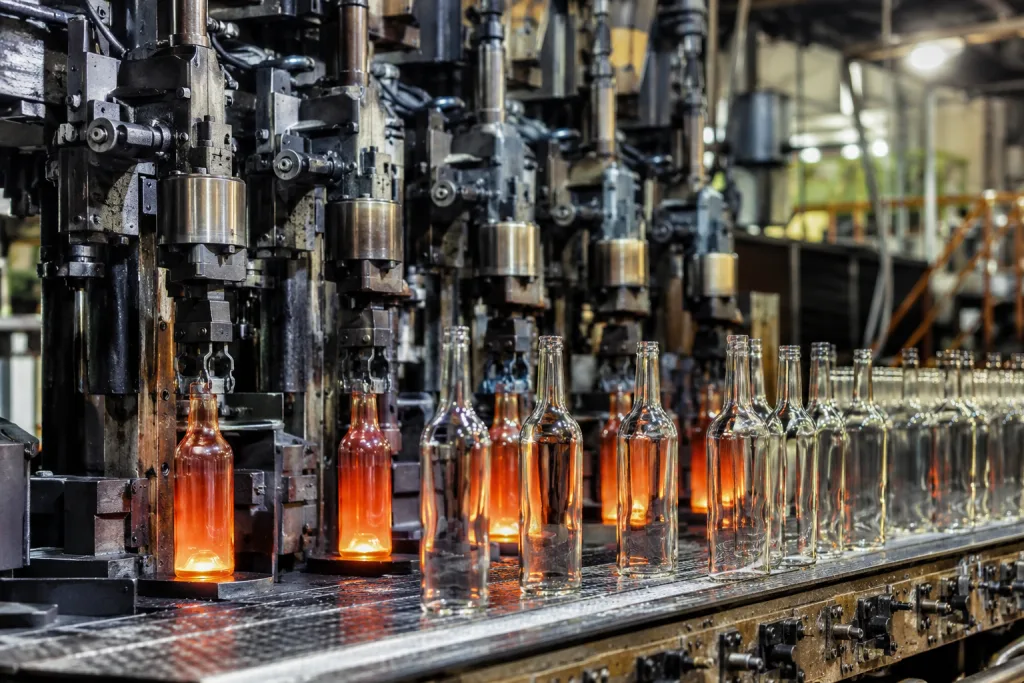
Judge glass bottle manufacturers by what you see on the floor, not by the catalog PDF. A real canteen factory or glass line should show the furnace temperature log, forming speed by cavity, inspection checkpoints, and last month's defect rate without a sales speech. Ask how they control bubbles, neck finish, and wall thickness. If the answer stays vague, you are not buying from a manufacturer. You are buying from a trader with a sample room. We run the line, and QC still marks bubbles with a wax pencil before the shift leader signs off, so that difference matters.
For custom drinkware shipped to Europe and North America, I want a buyer to ask for these three items on the first call:
- Monthly output by line and by SKU, not a polished factory photo. If line 3 can only run 18,000 pcs a day, say so. One buyer flagged a 12 mm neck finish because the cap sat loose after filling, and the real capacity number mattered more than the brochure.
- QC standard, with AQL 2.5 for critical defects and clear rework rules. QC pulled the sample, checked the rim with a caliper, and the numbers should match the paper. If they cannot show the gauge, the math does not work.
- Traceability on raw materials, especially for food contact or hot-fill use. Ask which batch the soda-lime came from and how the pallet labels tie back to the melt. We have seen this go sideways after one wrong label on a 24-pallet lot.
In Zhejiang, stronger plants talk in tolerances because they know the buyer is comparing more than price. That is the right question. It matters for a canteen customized program, a distributor canteen line, or a private-label glass bottle range that has to keep the same body shape across repeat launches. A canteen manufacturer with export discipline will give you wall thickness in mm, not slogans. We have seen a PO typo on the neck finish stop the line after the first 5,000 pieces, and nobody wants that bill.
MOQ, lead time, and sampling
MOQ is where 6 out of 10 glass bottle RFQs start to break. For standard clear bottles, a serious China supplier often starts around 3,000 pcs per SKU, or 5,000 pcs when the order needs special molds, color glass, or custom closures. If a glass bottle manufacturer offers 500 pcs with full customization, ask where the cost moved: mold amortization with the CNC shop, screen-print setup, inner tray spec, or 5-layer export carton. The math does not disappear. On our line, even a 500 pcs order still needs a mold check, first-article sample, and carton drop-test setup. Somebody pays for that machine time.
Sampling needs a schedule, not a promise. A good Zhejiang canteen supplier will normally provide pre-production samples in 7 to 15 days, then start production after approval in 30 to 45 days. If your program includes a customized growler or a canteen customizable SKU for retail, add 5 to 7 days for drop testing and artwork signoff. QC pulled one sample last month because the logo shifted 1.8 mm after firing; small on the table, ugly on a shelf. Skip this step and you find color mismatch, logo drift, or closure leakage after the line is already running.
For distributors, “What is the MOQ?” is the wrong question to ask by itself. Ask, “Can you hold the same spec for the next container?” That is the difference between a one-off factory and a real canteen manufacturer. If you need distributor drinkware or distributor growler volume, ask for the same mold number and same ink batch across reorders, then put both on the PO. We have seen this go sideways: the buyer approved cap code G12, but the repeat PO showed C12 by one letter, and the warehouse flagged it only after 38 cartons were packed.
Glass type and product fit
Glass choice decides the job, not the catalog photo. For cold-fill beverage bottles, we usually quote soda-lime first because the unit cost stays sane and the line holds steady; borosilicate only makes sense when thermal shock is written into the use case, such as hot tea filling or rapid temperature change. Start with the filling method. That is the right question. We had one buyer request borosilicate for a 20,000 pcs retail promo, then drop it after the mold quote and export carton CBM pushed the landed cost too high. Fair call. On the first-off sample, QC pulls a Mitutoyo digital caliper and checks wall thickness at the shoulder, body, and base before anyone gets excited about the glossy rendering.
Check these specs before you approve tooling:
- Wall thickness, usually 2.0 to 3.5 mm; for a 500 ml bottle in a gift box, we often ask for a stronger base than we would use for bulk carton packing.
- Neck finish match for the exact closure type, such as cork, stainless cap, or flip-top hardware; the gasket seat and thread gauge need to match the buyer's sample, not just the drawing.
- Capacity tolerance, especially if the bottle is sold as 500 ml, 750 ml, or 1 L and the buyer checks the fill line with a measuring cylinder during incoming inspection.
For custom growler programs, shape has to survive the truck, not just look good in a render. A wide-mouth glass growler can sit nicely on a shelf, but a sharp shoulder or thin base pushes breakage up fast in transit. We've seen this go sideways. On our line, we run a 1 m drop test and a stacking check before release; last season QC pulled one sample where the base drifted by 1.5 mm, and the buyer flagged it before the retail chain even saw the carton.
Decoration that survives export
Decoration is where roughly 30% of custom drinkware complaints appear after the sample room signs off. The logo passes under the D65 light box, then carton rub, cold-water sweat, and hand oil start lifting one corner. QC pulled a 500 ml glass bottle sample last month after 3M tape removed part of a red print after 24 hours of drying. That failed. On glass, we normally quote silkscreen, decal transfer, frosted etching, or laser marking where the material can take it. Each process has its own price, MOQ, and failure point.
Use silkscreen for tight cost control and one- or two-color logos, mainly when we run 3,000 pcs or more with a 320 mesh screen. Use decal transfer when the artwork has gradients, small text under 1.5 mm, or a Pantone color the buyer will match against a paper swatch. Etching gives a cleaner premium feel and will not rub off in normal handling. Laser engraving can work on lids, sleeves, or metal accessories. Not the glass body. That is usually the wrong question to ask, because the fixture time and breakage risk push the quote where the buyer does not want it.
If you are also sourcing a customizable canteen, check whether the same artwork team controls glass, stainless, and packed sets. We run proofing with PDF artwork, Pantone codes, and a signed pre-production sample before mass print, because a 2 mm typo on the PO can become 18 cartons of wrong stock. We have seen this go sideways: the PO said matte black on the bottle, but the insert card file said glossy black. For canteen promotional orders, speed matters, but logo consistency across cartons and inserts matters more. Cheapest print is not the target. The target is decoration that still looks right after export handling and a 1.2 m drop test.
Compliance for Europe and America
Compliance is not paperwork you staple on after production. For Europe, ask for REACH declarations and LFGB test reports where the bottle body, silicone seal, or any contact surface touches the drink. For North America, the food-contact declaration should name the resin grade, ink code, gasket material, and closure spec, not just say "food grade." Decoration counts. On our line in Hangzhou, QC pulled a sample after a 72-hour soak test; one ink lot bled 1.5 mm at the logo edge, and the full batch went back for reprint. Cheap became expensive fast.
Buyers stare at the bottle and forget the pack. Wrong move. The outer carton, inner divider, and pallet pattern need to survive export handling, not just look neat on a PDF. Ask for carton compression data, 1.2 m drop-test results, and a written AQL inspection plan. If the supplier cannot show them, they are not ready for a retail account. We ship 18 kg master cartons every week, and a 3 mm divider spec can decide whether the shipment arrives clean or with chipped rims. We once caught a PO typo on pallet count before loading: 26 pallets typed as 20. That saved a full rerun.
This is where a Zhejiang glass bottle factory separates itself from a trading office. A real plant knows one failed migration test or one broken neck in transit can wipe out the margin on the container. We have seen this go sideways on a 12-day lane that should have been 18 days because the neck finish was off by 0.4 mm and the buyer flagged it after pre-shipment photos. The better suppliers push for signoff on the bottle, closure, artwork, and pack-out before mass production starts. That pushback is not delay; it is how we keep the line from making 30,000 wrong pieces.
Packaging for retail and FBA
If your customer sells on Amazon or a retail shelf, packaging is part of the SKU, not a side item. A glass bottle manufacturer should freeze the FNSKU panel, scan distance, and master carton size before mass packing starts. We run barcode checks with a Zebra handheld scanner at 300 mm, then QC signs the carton drawing in red pen. For FBA, set the FNSKU label area at least 30 x 50 mm, add suffocation warnings on polybags if used, and keep inbound cartons near 15 kg so warehouse staff are not fighting split tape on arrival.
For a custom growler or branded bottle set, the pack-out has to match the breakage risk and unit price. Cheap bottle, simple pack. Premium set, stronger protection. We usually choose molded pulp trays when each cavity needs grip, 5-layer corrugated at 6 mm for heavier sets, or a separate PE foam sleeve when the logo print sits proud on the glass. Buyers sometimes push back on 0.12 USD extra packaging cost. I get it. But the math does not work if that saving turns into cracked glass, reshipment, and damage photos with red circles from the end customer.
This is where distributor canteen programs go sideways. The sample looks clean, then the retailer receives crushed corners or scuffed logos because the pack-out was made for a showroom table, not a 40HQ container with 980 cartons stacked for 18 days. QC pulled a clean bottle from the top layer, while the bottom layer failed the corner drop after the carton edge collapsed by 22 mm. If your canteen distributors need mixed SKUs, ask for pallet configuration, carton count, and box drop test results before you approve the PO. That is the right question.
Source your next bottle run with fewer surprises
Send your spec, target MOQ, and market destination. We will match you with a Zhejiang production plan that fits export reality.
Frequently asked questions
What MOQ should I expect from glass bottle manufacturers?
For standard clear bottles, a realistic MOQ is usually 3,000 pcs per SKU, sometimes 5,000 pcs if you want a new mold, color glass, or premium decoration. If a supplier offers 500 pcs with full customization, you should ask how they are covering tooling and setup. In China, a serious export factory will be transparent about where the cost sits: mold amortization, print setup, or closure sourcing. For a canteen customizable program or a custom growler range, expect higher MOQs if the shape is special or if you need multiple packaging versions.
How long does production usually take?
Typical production time is 30 to 45 days after sample approval for a standard glass bottle order. If the project includes custom artwork, special closures, or export packaging changes, add another 7 to 10 days for proofing and signoff. For a Zhejiang factory with strong line capacity, the bottleneck is often not forming the bottle, but coordinating decoration, inspection, and pack-out. If you are sourcing customized drinkware for Europe or North America, build in time for compliance documents and carton testing before mass production starts.
Which decoration method is best for branded glass bottles?
It depends on the logo and the price target. Silkscreen is usually the most economical for one or two colors. Decal transfer is better when you need richer artwork or tighter Pantone control. Frosted etching gives a more premium feel and is durable, but it raises cost. For a canteen promotional order, a canteen vendor may push the cheapest print method, but that is not always the right choice. If the product will be handled frequently, pay more for a decoration method that survives abrasion and moisture.
What compliance documents should I request?
For Europe, ask for REACH declarations and LFGB testing where relevant. For North America, request a food-contact declaration and clear information about inks, coatings, and closures. If the item is a customized growler or a glass bottle with printed graphics, ask whether the decoration materials were tested separately, not only the blank glass. A good supplier in China should also provide QC records, batch traceability, and carton test data. If they cannot produce basic documentation, they are not ready for a retail or distributor account.
Can one factory handle bottles, canteens, and growlers?
Yes, but only if the factory has separate production control for each category. A capable canteen manufacturer may also support glass bottles, custom canteen sets, and customized drinkware packaging, but you still need to verify that each line has its own QC standard. Do not assume a canteen supplier that handles stainless steel automatically understands glass breakage, neck finish tolerance, or export cartons. If you are a canteen distributor or distributor drinkware buyer, ask for references from similar programs and check whether they can keep the same spec across repeat orders.