Key Takeaways
- A practical MOQ for custom stainless bottles is usually 1,000-3,000 pcs per SKU
- For Germany, ask for LFGB, REACH, and food-contact declarations before paying a deposit
- Laser engraving is slower but safer than multi-color printing for small repeat B2B orders
- A 30-45 day production lead time is normal after artwork and pre-production sample approval
If you search for wholesale water bottle deutschland, you are not hunting for a pretty catalog. You need a supplier call that survives EU checks, retail margin pressure, pallet drops, and the buyer who flags a cap leak after 3 weeks. The hard part is not finding bulk drinkware. The hard part is knowing which spec is worth paying for.
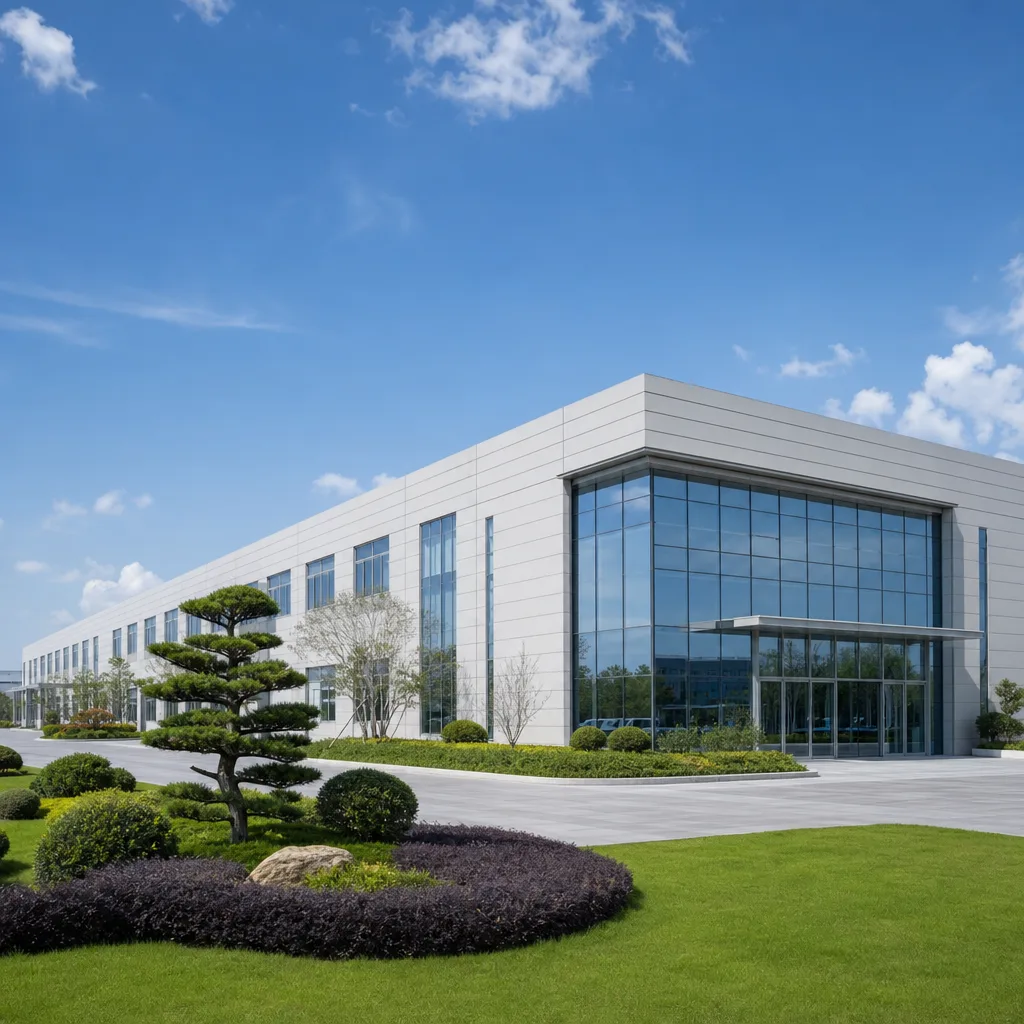
From our factory in Hangzhou, Zhejiang, we see German buyers make the same four calls first: material, capacity, decoration, and packing route. A 500 ml bottle with a laser logo and retail box behaves differently from a 750 ml bottle in a plain carton, and the quote changes fast. Get those right and the quotation is useful. Get them wrong and a low FOB number from China turns ugly once testing, relabeling, repacking, and a 12-day slip on launch are counted.
Start With The Use Case
I’ll rewrite the section in place, keep the HTML unchanged, and tune the prose to sound like a buyer-facing factory note with a few concrete details.The first sourcing call is not price. It is use case. A bottle for a German insurance giveaway, a cycling brand, a brewery gift pack, and a school merch run should not share one spec. They all sit under wholesale drinkware, but the failure points are different.
For office and event programs, 500 ml or 750 ml stainless vacuum bottles usually do the job. For outdoor retail, 750 ml to 1,000 ml makes more sense, and buyers will ask about grip, cap tethering, and whether the body clears a car cup holder. For hospitality and brewery channels, we compare water bottles with beer tumbler wholesale, beer growler wholesale, or bulk growler projects. A 1.9 L beer growler needs different wall thickness, thread tolerance, and carton packing than a 600 ml sport bottle. The math does not work any other way.
Procurement teams in Deutschland often ask for the best wholesale drink bottle as if there were one answer. There isn’t. The right bottle protects the channel. If you sell on Amazon or through marketplace fulfillment, skip fragile coating and odd carton sizes. If you sell to corporate buyers, put color match, logo placement, and repeat order speed first. If you sell through outdoor distributors, cap leakage and drop resistance matter more than saving a few cents FOB. We’ve seen that go sideways fast.
Our Zhejiang production line runs about 450,000 stainless drinkware units per month, but we still start with these questions before we quote. QC pulled a 5,000 pc sample last week because the buyer flagged a lid typo on the PO, and that kind of mistake costs more than the bottle. Wrong lid, wrong carton, wrong shelf life for the order. That is not a deal. It is stock you will discount later.
Choose Material Before Decoration
I’ll keep the HTML exactly as-is and rewrite only the prose, with tighter sourcing language and a few factory-floor details per paragraph.Material sets cost, compliance, weight, and print options. For Germany and the wider EU, 304 stainless steel is still the safest mainstream pick for wholesale water bottles. We usually spec 304 for the inner wall, with 201 or 304 on the outer wall depending on the price target. 316 shows up on premium orders, but the buyer often flags it as overkill; the math does not work if 304 already clears the job.
For vacuum bottles, check the wall build, not just the sales sheet. A common double-wall bottle runs 0.4 mm to 0.5 mm on the inner wall and 0.5 mm to 0.6 mm on the outer wall. On the line, a 0.1 mm cut can save a few cents, but QC pulled the sample and the dent mark showed up after carton vibration testing. That is the wrong place to chase margin. For event merch, a lighter wall can pass if the drop test stays clean and the carton holds up for 12 days in transit, not 18.
Plastic still works for sports-bottle programs, but the declaration has to be clean: Tritan, PP, PE, and silicone gaskets need to be listed by material. For glass bottles, ask for the borosilicate grade, sleeve material, and thermal shock result in degrees. Alcohol flask wholesale is a separate lane: pocket flasks usually run 304 stainless steel, 4 oz to 8 oz capacity, and passivation matters because residue complaints spike when the polish is weak. We saw that go sideways on a PO with a typo on the finish code.
If your plan includes canteen wholesale, canteen bulk, or a military-style bulk canteen, spell out which one you mean: flat canteen, outdoor water canteen, or insulated bottle. Chinese suppliers use the word canteen loosely, and that creates bad quotes fast. Send a reference drawing, capacity, cap type, and end user. We ship better when the buyer gives us the full spec up front, and a 1 mm mismatch on the neck size can kill the sample round.
Price Is A Specification Result
I’ll rewrite the four paragraphs with tighter sales-engineer language, keep the HTML untouched, and bake in concrete factory details and clearer pricing logic.A usable quotation shows more than an FOB Ningbo or FOB Shanghai figure. We need the full spec line: material, capacity, lid type, coating, logo method, packing, MOQ, sample cost, lead time, and payment terms. If those fields are missing, the number is not comparable. You are just comparing guesses. On the line, the buyer flags this fast when a PO says “logo included” but never says laser or silk print.
For a typical 500 ml double-wall stainless bottle from Zhejiang, a realistic FOB range sits around USD 2.80-5.20, depending on finish, lid complexity, and order volume. A powder-coated 750 ml bottle with custom laser logo, individual kraft box, and EU documentation may land around USD 4.20-6.80 FOB at 3,000 pcs. Beer tumbler bulk orders run lower when the shape is simple; beer growler wholesale bulk projects go higher because the body is larger and carton CBM climbs fast. QC pulled one sample last month at 430 g instead of 385 g, and the freight math changed immediately.
MOQ matters because setup cost is real. For stock shapes with custom logo, 1,000 pcs per color usually works. For custom color coating, plan on 2,000-3,000 pcs. For a new mold, you may need 5,000-10,000 pcs plus tooling cost. If someone offers 200 pcs custom color at a very low price, the math does not work; ask how they control coating waste, color matching, and reject rate. We have seen that go sideways. One typo on a PO can do it too: a buyer wrote 2,000 pcs in the email and 200 pcs on the order.
Germany-bound wholesale drinkware buyers should separate product price from landed cost. A bottle that is USD 0.25 cheaper but uses bulky packaging can lose the saving in ocean freight. For Amazon or 3PL handling, stronger cartons and correct barcodes save more than hard bargaining on unit price. A 5-layer export carton with a 48 mm barcode placement sounds small, but it protects margin. Good sourcing is not chasing the lowest FOB. It is controlling the cost you actually carry.
Compliance For Germany Is Not Optional
I’ll rewrite the section in-place, keep the HTML tags untouched, and tighten the prose so it sounds like a field-tested sales engineer wrote it.For Germany, compliance comes before the sample invoice. Ask for food-contact documents tied to EU rules, LFGB test reports where they apply, REACH declarations for coatings and accessories, and a full material list. If the bottle is for children, raise age grading and safety checks at the start. On a mixed Europe and North America program, ASTM and CPSIA can also come up.
Do not treat a test report as proof until you check the scope. A report for a plain stainless bottle does not cover a powder-coated bottle with a printed logo, silicone straw, PP lid, and colored handle. The test sample has to match the run. We have seen buyers approve one spec, then the PO says another. That is the wrong question to ask.
Factory audits are a separate call. Some German retailers ask for BSCI, Sedex, ISO 9001, or their own social compliance form. Not every China factory keeps every audit active because audits cost money and expire, and a BSCI file from 18 months ago may already be dead. If you need BSCI, say it before price talks. If you only need a factory profile, production photos, and QC steps, say that too.
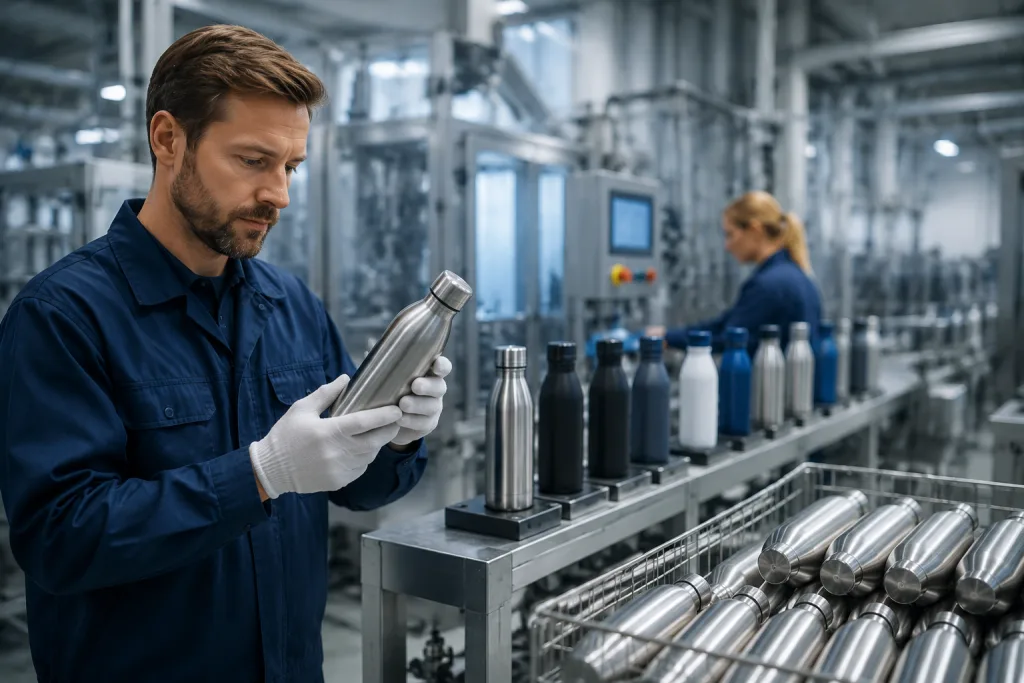
For QC, use AQL, not loose language. A common setup is AQL 2.5 for major defects and 4.0 for minor defects, with critical defects not accepted. For vacuum bottles, QC should check leak test, vacuum retention, coating adhesion, logo rub test, odor, carton drop condition, and barcode scan if required. We run this on the line with a drop tester and a torque gauge. A serious supplier will not push back. They know the math works.
Decoration Choices Carry Risk
I’ll rewrite the HTML in place, keeping every tag and the heading structure intact, and sharpen the copy with concrete shop-floor detail and fewer AI-like phrases.Logo method is where a lot of brand owners waste time on looks and miss the real issue: durability. For stainless bottles, we run laser engraving, silk screen printing, heat transfer, UV printing, water transfer, and full-wrap powder coating with custom color. Each one carries a different failure point.
Laser engraving is the safest choice for repeat corporate orders. It stays put, needs no ink, and QC does not have to worry about migration claims later. The trade-off is clear: no full-color artwork, and on some coated bottles the contrast is light. Silk screen printing works well for 1-2 color logos and simple artwork. Once you go multi-color, the line needs tighter registration control, and the buyer flagged it on the last round because the 0.5 mm shift was visible at arm’s length. UV printing can look sharp in full color, but adhesion depends on surface prep and the coating recipe.
If you are building a premium wholesale water bottle Deutschland program, ask for a pre-production sample, not just a digital mockup. A mockup will not show logo stretch on a curved body, color drift after curing, or a mark placed too close to the bottom radius. For a 3,000 pc order, spending USD 80-150 and waiting 7-10 days for a real sample is cheap insurance.
The same logic applies to alcohol flask in bulk, alcohol flask wholesale bulk, and beer tumbler wholesale bulk. Small curved surfaces are unforgiving. A 1 mm logo shift looks fine on a screen and wrong on a polished flask. For growler bulk or beer growler bulk orders, check the printable area near the shoulder and handle. We’ve seen this go sideways when a 42 mm logo got pushed into a tighter zone and had to be split into two passes.
Packing Decides Your Real Margin
I’ll rewrite the section in-place, keep the HTML exactly as-is, and make the prose sound like a real export sales engineer wrote it.Packing is not an afterthought for Germany-bound bulk drinkware. It changes breakage, warehouse labor, customs paperwork, shelf impact, and freight cost. A normal export pack is one bottle in a polybag, then a white box or kraft box, then 24 pcs per master carton. That works for B2B giveaways. It falls apart for retail shelves or marketplace fulfillment.
If you sell into retail, lock down box material, print, barcode, recycling marks, instruction sheet, and language text before the line starts. If you sell online, lock down FNSKU or EAN position, suffocation warning if you use polybags, carton weight, and drop-test target. We have seen 16.8 kg cartons get flagged by warehouse teams even when the shipment survived transit. For glass bottles or bulk growler orders, inner dividers and a 5-ply carton are worth the extra cost.
FOB price can hide weak packing. A thin individual box may save USD 0.05, but crushed corners create returns and retailer complaints. On a 5,000 pc wholesale drinkware shipment, a 2% cosmetic damage rate means 100 units to replace, discount, or explain. The math does not work. Better paperboard from day one is cheaper.
Ask your supplier in Zhejiang to quote two packing versions: one cost-driven bulk pack and one retail-ready pack. Then compare landed cost per sellable unit, not just unit FOB. For canteen wholesale or wholesale canteen programs aimed at outdoor stores, hang tags, instruction inserts, and spare gasket bags look small on paper, but they cut support tickets later.
Set The Timeline Backwards
I’ll rewrite the section in place, keep the HTML intact, and tighten the sales-engineer voice with concrete factory details and cleaner timing language.Work backward from the delivery date in Deutschland. For a custom stainless bottle, the usual clock is 5-7 days for quotation and artwork sign-off, 7-10 days for the pre-production sample, 30-45 days for mass production after deposit and sample approval, then ocean freight and customs clearance. If the launch date is fixed and you switch to rail or air, the math changes fast.
For a first order, we freeze four items before the deposit lands: final artwork, Pantone color, packing layout, and the compliance document scope. A typo on the PO, like the wrong sleeve size or carton mark, can cost 5-15 days, and we’ve seen that go sideways on the line. If you need split shipment, say it before carton labels are printed. If mixed SKUs must ship in one master carton, bring it up before packing starts.
Payment terms are usually 30% deposit and 70% balance before shipment on the first China order. Repeat buyers can negotiate different terms after 3 clean shipments. If your team needs supplier onboarding, bank checks, or PO approval, start early. A factory cannot hold 20,000 pcs of capacity on an informal email.
A good supplier will push for decisions. That is not impatience. Steel buying, tube forming, vacuuming, coating, printing, inspection, and packing all run on separate slots, and one late call blocks the next. QC pulled the sample, found a 1.5 mm logo shift, and the rework added 4 days. That is the gap between sourcing drinkware bulk professionally and just picking bottles from a catalog.
Send Your Germany Drinkware Brief For A Real Quote
Share capacity, material, logo, MOQ, packing, and delivery date. We will reply with practical options, not a vague catalog price.
Frequently asked questions
What MOQ should I expect for wholesale water bottle Deutschland orders?
For stock stainless bottle shapes with a custom logo, expect 1,000 pcs per SKU or color as a practical starting point. Custom powder coating is usually better at 2,000-3,000 pcs because coating setup and color loss need to be absorbed. New mold projects can require 5,000-10,000 pcs plus tooling fees. If your launch order is smaller, ask for stock colors with laser engraving or one-color silk screen printing. That keeps risk down and still gives you a branded product for the German market.
Which documents do German buyers usually request?
For Germany, request food-contact declarations, LFGB test reports where relevant, REACH declarations for coatings and accessories, and a material breakdown for stainless steel, plastic, silicone, and paint. If selling to children, confirm age grading and safety requirements before sampling. Retailers may also ask for BSCI, Sedex, ISO 9001, or a factory self-assessment. Make sure reports match the actual production version, including lid, gasket, coating, and logo method. A report for a different bottle is not enough.
Can I combine water bottles, canteens, and beer growlers in one order?
Yes, but treat them as separate SKUs with separate QC points. A 750 ml vacuum bottle, bulk canteen, beer growler wholesale item, and alcohol flask bulk product use different tooling, packing, and leak-test methods. You may combine them in one shipment to save freight handling, but MOQ is usually counted by SKU, not total order quantity. For example, 1,000 bottles plus 500 growlers may not satisfy a 1,000 pc MOQ for each model. Ask clearly before planning your purchase order.
Is laser engraving or printing better for a German brand logo?
Laser engraving is usually safer for B2B repeat orders because it is permanent, clean, and avoids ink durability concerns. It works well for stainless bottles, canteen wholesale programs, and alcohol flask wholesale projects. Printing is better when you need Pantone colors or a full-color logo. For silk screen printing, keep artwork simple and avoid tiny text below 5 pt. For UV or heat transfer, request adhesion testing and a real pre-production sample. The best choice depends on artwork, surface finish, and order volume.
How long does production and shipping take from China to Germany?
After artwork and sample approval, mass production normally takes 30-45 days for custom stainless drinkware. Pre-production sampling adds about 7-10 days. Ocean freight to Germany can add several weeks depending on port, season, and routing. If you need delivery for a fixed trade show or retail launch, plan at least 90 days from confirmed specification to warehouse arrival. Air freight is possible for urgent orders, but it can destroy margin on heavy items such as beer growler in bulk or large vacuum bottles.