Key Takeaways
- Typical FOB pricing for a 500 ml stainless thermos starts around USD 2.10-2.80 at 3,000 pcs and drops 8-15% above 10,000 pcs
- Most custom thermos orders need 25-35 days for production after sample approval, plus 30-45 days ocean transit to Europe
- A simple one-color logo adds about USD 0.08-0.20 per piece, while laser engraving is usually USD 0.18-0.35 depending on area
- For wholesale vacuum bottle deutschland buyers, MOQ often begins at 500-1,000 pcs for stock models and 3,000 pcs for fully customized builds
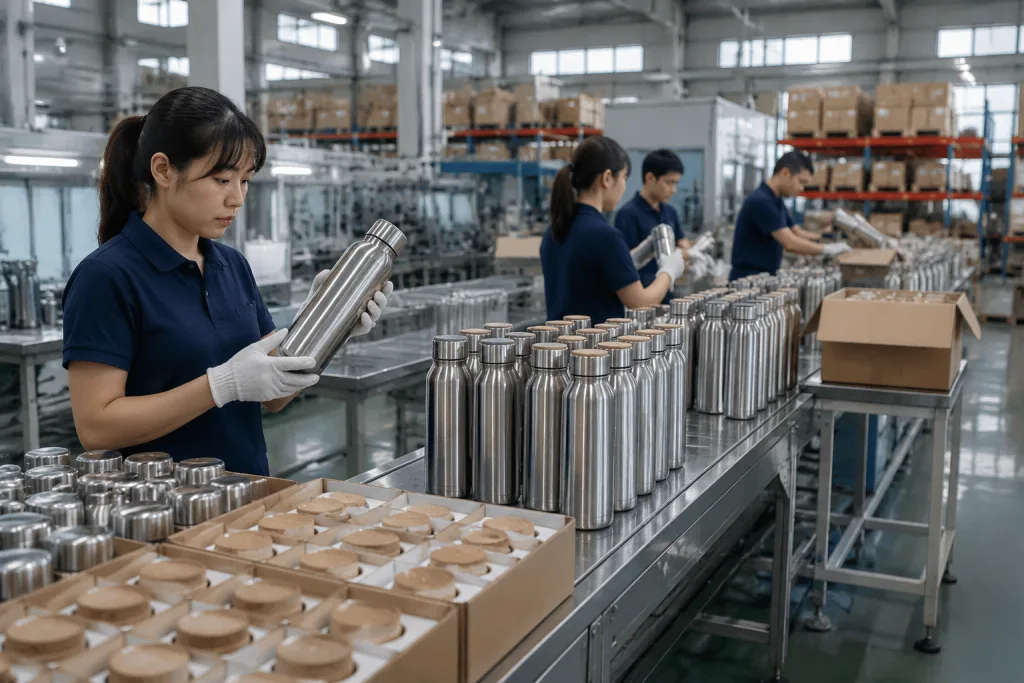
If you are sourcing wholesale vacuum bottle deutschland stock for outdoor retail or a promotion program, the hard part is not finding a stainless thermos. The hard part is getting the right cost, the right lead time, and a decoration method that holds up after 200 washes. A 500 ml double-wall bottle can look cheap on paper, then the quote jumps once you add a 304 stainless liner, lid upgrade, logo work, cartons, and EU paperwork. We run that math every week on the line.
Buyers in Germany and wider Europe usually want a plain buying model: what drives unit price, what MOQ tier actually improves value, and how many days you need from sample approval to shipment. We manufacture in Zhejiang, China, and this is the same way our sales team quotes a factory thermos order for a distributor thermos program or a custom thermos campaign. QC pulled a sample last week with a 1.2 mm wall spec, and the buyer flagged a PO typo before the cartons were printed. Start with the cost drivers; the math does not work any other way.
What actually sets the unit price
I’ll rewrite the prose only, keep the HTML structure intact, and make the pricing section sound like a factory-side sales engineer wrote it.For a stainless thermos, we build the quote from five buckets: body material, lid system, decoration, packaging, and compliance testing. The shell is not where the quote usually jumps. A 304 stainless body at 0.4-0.5 mm wall thickness is our standard mid-range spec, and the spread versus 201 stainless or thinner stock can look small on paper. The lid and finish move the number.
A plain PP screw lid with a silicone seal is steady and low cost. Add a push-button lid, tea infuser lid, or one-handed lock lid, and the tooling gets more complex, with more hands on the line. Powder coating, matte paint, or a rubberized finish can add USD 0.15-0.45 per piece, depending on color and surface prep. For custom thermos branding, one-color silk screen stays the cheapest route; laser engraving costs more, but it holds up better on outdoor retail stock. QC pulled a sample once after a buyer flagged a 2 mm logo shift, and that kind of miss is what pushes rework.
- Base body: 304 stainless, usually 0.4-0.5 mm wall
- Lid upgrade: +USD 0.10-0.60 depending on mechanism
- Logo decoration: +USD 0.08-0.35 per piece
- Packaging: +USD 0.12-0.55 for printed box, mailer, or inserts
For wholesale vacuum bottle deutschland programs, buying on body price alone is the wrong question. We’ve seen a quote look USD 0.30 cheaper, then turn pricier once the cartons, inserts, and drop-test packing needed for retailer acceptance get added. The math does not work if the box fails the buyer’s spec.
MOQ tiers that change your quote
I’ll rewrite the section in place, keep the HTML exactly intact, and tighten the sales-engineer tone with concrete MOQ and factory details.MOQ is where a lot of first-time buyers bleed margin. At 500 pcs, you pay setup and short-run waste. At 3,000 pcs, the line settles into a normal run. At 10,000 pcs, the unit price usually moves enough to show up on the retail math. For a standard 500 ml vacuum bottle, stock-color MOQs often start around 500-1,000 pcs, while a fully customized thermos with dedicated artwork or molded lid parts often needs 3,000 pcs or more.
Our Zhejiang factory runs about 250,000 units per month across stainless drinkware, and we keep the tooling shelf organized by lid mold code and body diameter. That is what keeps a thermos bulk order from getting messy when you are shipping for a seasonal promo or a distributor rollout. Smaller runs work, but they squeeze color matching and carton planning. If you need 4 SKUs, the smart move is one production window, not four separate POs. The buyer flagged one PO typo last month—“5000” on the item line, “500” in the remarks—and that kind of slip burns a day.
Practical MOQ ladder
- 500-1,000 pcs: stock model, one-color logo, fast start
- 3,000 pcs: standard custom thermos order with cleaner unit cost
- 5,000-10,000 pcs: best value for custom thermos or promotional thermos campaigns
“If your program depends on a retail launch date, do not chase the lowest MOQ. Chase the MOQ that keeps lead time and packing spec under control.”
For outdoor retailers, the right move is a thermos customizable enough for brand identity, but simple enough to run without delay. We see this go sideways when buyers insist on extra lid colors at 1,000 pcs; the math does not work, and QC will tell you the same after the first sample pull.
Lead time from sample to shipment
I’ll keep the HTML exactly as-is and rewrite only the prose, tightening the lead-time language with concrete factory details and cleaner buyer-facing phrasing.Lead time is a chain, not a single number. On our line, a standard sample usually takes 7-12 days; if the buyer changes the lid, coating, or carton layout, it moves to 15-20 days. We had one PO last month with a typo on the box size, and QC pulled the sample back for a reprint. Once the pre-production sample is signed off, normal stainless thermos production usually runs 25-35 days. If the order needs special finishes, printed cartons, or a multi-part lid, plan another 5-10 days.
Ocean freight from China to northern Europe often takes 30-45 days port to port, depending on routing and port congestion. If you are shipping to Germany for a sales season, build that into the plan early. A fast factory thermos quote means little if the goods miss the promotion window. We’ve seen that go sideways more than once. Most buyers who keep stock on time leave 60-80 days from confirmed artwork to warehouse receipt. Air freight cuts transit to 5-10 days, but on bulk orders the freight bill can eat the margin fast; that is the wrong question to ask if the carton count is high.
- Sample lead time: 7-20 days
- Production lead time: 25-35 days
- Ocean transit: 30-45 days to Europe
- Total planning window: 60-80 days typical
That is the gap between a reliable thermos supplier and a thermos quote that looks fine until the booking date.
Decoration choices and cost impact
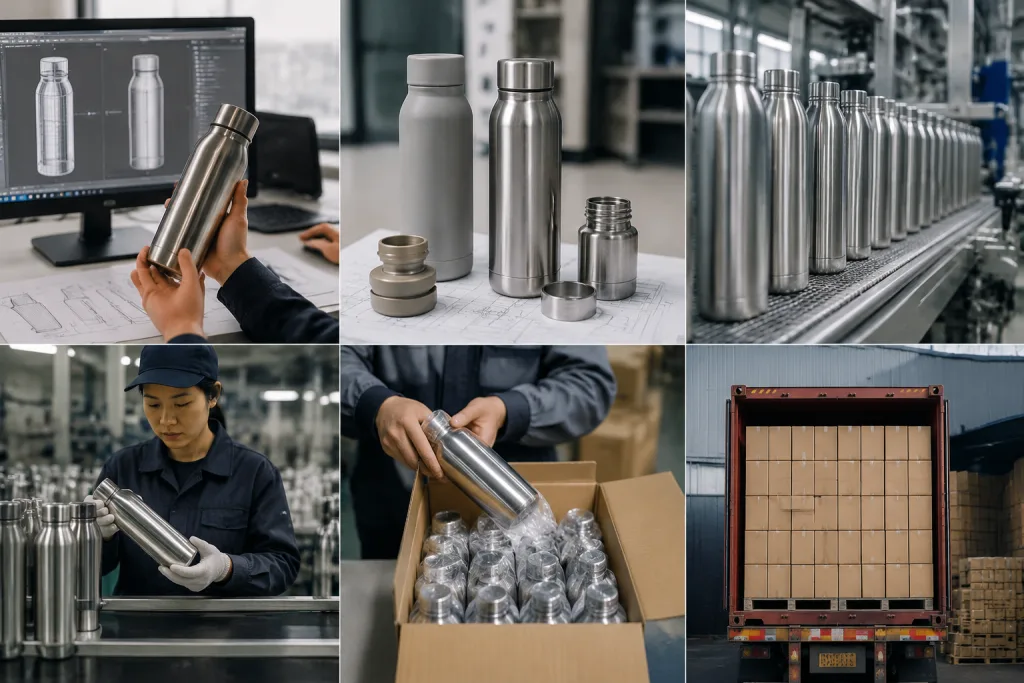
I’ll rewrite just this HTML section, keeping the tags and list structure intact while making the copy sound like a factory-side sales engineer wrote it.Decoration is where a custom thermos either sells itself on the shelf or gets returned after the first promo round. Silk screen printing stays the cheapest route for one logo in 1 or 2 colors. Laser engraving looks sharper on brushed stainless and holds up better on outdoor carry, but it is not the low-cost choice. Full-body UV print or a wrap graphic can lift a promotional thermos into premium territory, yet the setup bill and the scrap rate both go up.
If you need a customized thermos for a brand program, ask for logo placement on the body, lid, and base as separate items. The body print is standard. The lid area is smaller, and the tolerance window is tighter; we have seen a buyer flag a 2 mm offset and reject the whole lot. A base stamp works for batch coding, not for brand display. Also check whether the finish gets painted before or after decoration, because that changes adhesion and scratch resistance. We run that test with tape pull and a 1 m drop on the line.
- Silk screen: low cost, best for simple logos
- Laser engraving: durable, works well on stainless finish
- Pad print: suits curved parts and small print areas
- UV print: premium look, higher setup cost
For wholesale vacuum bottle deutschland jobs, the thermos still has to look clean after backpack carry and cupholder knocks. If the decoration chips after 3 or 4 uses, the complaint goes to your brand, not to the thermos line. That is the wrong place to save 0.2 USD per piece.
Compliance and testing you should ask for
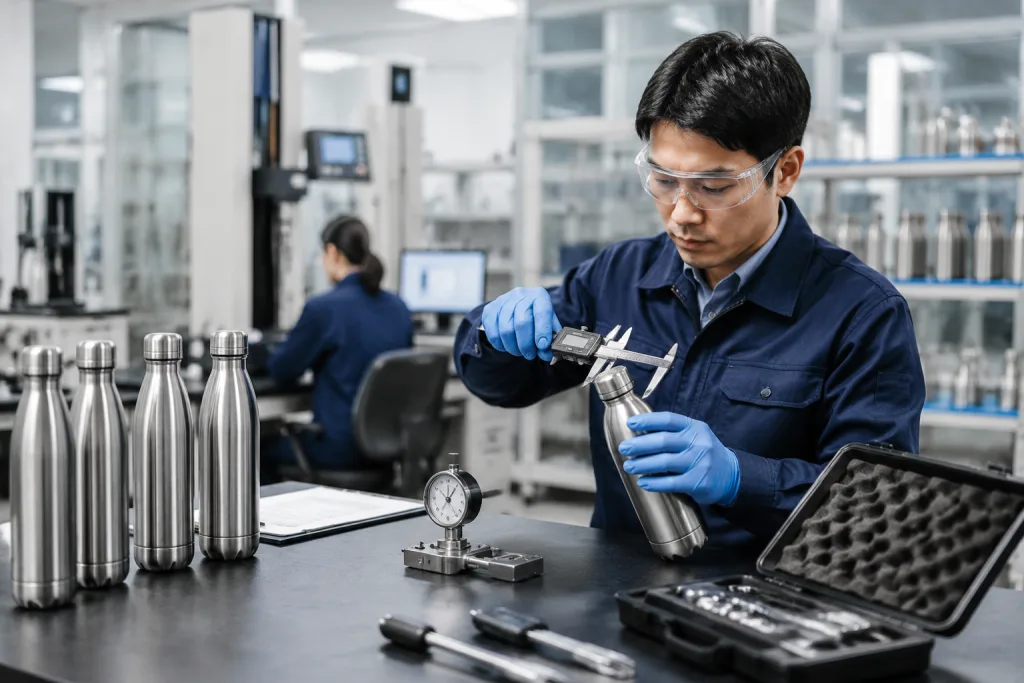
I’ll rewrite the section in-place, keeping the HTML structure unchanged and tightening the sales-engineer tone. Then I’ll sanity-check that the prose still covers compliance, batch testing, and pack marks without the AI filler.European buyers should not leave compliance for later. For stainless thermos goods, ask for a 304 stainless steel declaration, food-contact papers for seals and lids, and REACH test reports for the parts that touch the drink. If the bottle has paint, get coating safety and abrasion resistance on paper. On one 500 mL line, we had a buyer flag a lid typo on the PO because the cap finish changed from matte to gloss; that kind of miss turns into a claim fast. For retail promo orders, drop testing, leak testing, and temperature retention data should sit in the quote, not in a follow-up email.
We run a leak test on every batch and AQL sampling for appearance and function. Our normal call is AQL 2.5 for major defects and AQL 4.0 for minor defects on a branded consumer order, but the channel sets the real bar. A distributor order with 3,000 cartons can survive a small cosmetic mark; a retail chain with shelf-ready packs will not. If the box prints the wrong EAN or quantity, the warehouse stops the pallet. That is not a decoration issue.
- Ask for: material spec, food-contact docs, leak testing, drop testing
- Use: AQL 2.5 major / AQL 4.0 minor as a practical baseline
- Check: carton marks, barcode accuracy, and retail pack dimensions
Good thermos manufacturers put these details in the quote. Serious buyers in China and Europe want numbers, not a nice speech. QC pulled the sample, checked the gasket at 1.2 mm, and that told us more than a page of claims.
How to quote a better deal
I’ll keep the HTML intact and rewrite only the prose, with tighter buyer-language and concrete factory details.If you want a sharper price for wholesale vacuum bottle deutschland sourcing, don’t open with “give me a discount.” Lock the spec first. Fix the capacity, lid type, logo count, carton spec, and your 12-month forecast, then ask the thermos factory for three quotes: 1,000 pcs, 3,000 pcs, and 10,000 pcs. We run it this way on the line because vague specs make the unit price look fake.
For a plain 500 ml bottle, a normal FOB China range is about USD 2.10-2.80 at mid-volume, depending on lid and finish, and roughly 8-15% lower at 10,000 pcs if nothing changes in the structure. That math works only if the buyer keeps the same vacuum bottle wall thickness and body finish; we’ve seen it go sideways when someone adds a soft-touch spray after the quote. Ask each supplier thermos offer to break out material, labor, decoration, and packaging. QC pulled the sample and the buyer flagged it once because one quote hid the print cost inside “other charges.” Then you can compare manufacturer thermos pricing without guessing. From there, choose bulk thermos stock, private-label retail pack, or a fully customized thermos set.
If the order is for a distributor thermos program, leave space for local labeling and German carton art from the start. It costs little on our side, but a typo on the PO or a late artwork change can add 3-5 days and a reprint charge after goods leave Zhejiang.
Request a factory thermos quote today
Send your capacity, logo method, and target MOQ. We’ll return a clear cost-and-timeline breakdown from Zhejiang within one working day.
Frequently asked questions
What is a realistic MOQ for wholesale vacuum bottle deutschland orders?
For stock stainless thermos models, MOQ often starts at 500-1,000 pcs. If you want custom color, logo placement, or a special lid, 3,000 pcs is the more realistic threshold. For fully customized thermos tooling, 5,000 pcs is safer. A good supplier thermos quote should separate stock MOQ from custom MOQ so you can see where the price changes. If your channel is outdoor retail, one SKU at 3,000 pcs is usually easier to manage than three SKUs at 1,000 pcs each.
How much does a custom thermos usually cost FOB China?
A standard 500 ml custom thermos with 304 stainless body, basic lid, and one-color logo often lands around USD 2.10-2.80 FOB at 3,000 pcs. Add USD 0.15-0.45 for special coating, USD 0.08-0.35 for decoration, and more if you want a premium lid or gift box. At 10,000 pcs, the same build may drop 8-15% if the spec stays stable. Exact pricing depends on wall thickness, lid complexity, and carton requirements.
How long does production take in Zhejiang, China?
For a normal factory thermos order, sample making takes 7-12 days and mass production takes 25-35 days after sample approval. If you need new tooling, a unique lid, or special packaging, add 5-10 days. Ocean transit to Germany usually takes 30-45 days, so total planning time is often 60-80 days. Zhejiang factories can move quickly, but only if your artwork and carton specs are final before production starts.
Which logo method is best for a promotional thermos?
For low cost and simple branding, silk screen is usually the best option. For a durable finish on stainless steel, laser engraving holds up better on outdoor use and repeated washing. If you want a full retail look, UV print or multi-color decoration is possible, but it costs more and can add setup time. On a promotional thermos, the smart choice is the one that survives transport, backpack wear, and repeated handling, not just the one that looks best in a proof.
What quality checks should I request from thermos manufacturers?
Ask for leak testing, appearance inspection, and material confirmation for 304 stainless and food-contact seals. For a branded order, AQL 2.5 for major defects and AQL 4.0 for minor defects is a practical baseline. You should also confirm barcode placement, carton dimensions, and export marks before shipping. A good thermos manufacturer should share test data for temperature retention and drop resistance, especially if you are selling through outdoor retailers or distributors.