Water Bottle Supplier RFQ Checklist for B2B Buyers
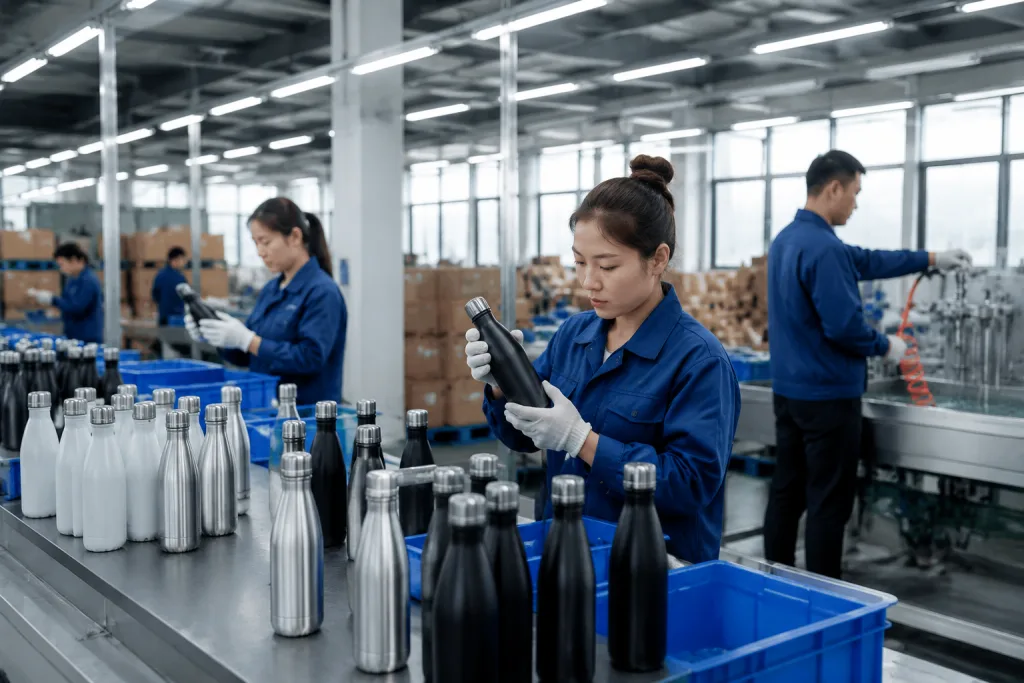
Water Bottle Supplier RFQ Checklist for B2B Buyers
A water bottle supplier RFQ should separate the product specification from the price request. The goal is to define what is being quoted, identify the evidence each supplier must provide, and make assumptions visible before purchase order approval.
The phrase water bottle supplier can describe different B2B buying needs, from reusable drinkware and promotional bottles to packaging bottles for filled beverage operations. The supplied wholesale drinkware guide is useful context for reusable bottle buying, and the bottled-water sourcing guide is useful context for filled-water projects cited wholesale drinkware guide cited bottled-water sourcing guide. This checklist does not assume capability from any specific supplier. It gives procurement, product, quality, and operations teams a consistent RFQ structure.
1. Define the Buying Scope
Open the RFQ with a short project brief. Suppliers should know the product type, sales channel, destination market, and buying stage before they quote.
Include these fields:
- Product category: stainless steel bottle, insulated bottle, tumbler, plastic bottle, glass bottle, kids bottle, sports bottle, promotional bottle, or packaging bottle.
- Commercial use: retail, ecommerce, corporate gift, promotional campaign, gym or fitness program, outdoor product line, coffee shop merchandise, or bottled-water operation.
- Destination market: country or region where the product will be sold, imported, distributed, or filled.
- Sales channel requirements: retail shelf pack, ecommerce shipper, bulk pack, barcode, insert, hang tag, or other packaging requirement.
- Order profile: first-order quantity, annual forecast if known, number of SKUs, color count, decoration count, and reorder expectations.
- Launch timing: sample deadline, approval deadline, production deadline, and required delivery window.
- Reference material: drawings, photos, existing samples, packaging examples, artwork files, or buyer specifications.
For filled-water or beverage packaging projects, state whether the RFQ covers an empty bottle, a packaging component, or a filled-water operation. If filling is in scope, identify the water type, treatment or filling context, packaging format, logistics requirement, and destination-market compliance questions. The supplied bottled-water guide frames sourcing around factory type, packaging, quality control, logistics, regulatory compliance, sustainability, and supply chain risk cited bottled-water sourcing guide.
2. Specify the Product Before Requesting Price
Ask every water bottle supplier to quote against the same measurable specification. If a detail is not fixed, ask suppliers to quote their standard option and explain what changes for a custom option.
| Specification area | What to request from the supplier | |---|---| | Bottle format | Category, nominal capacity, usable fill volume, height, diameter, mouth diameter, base diameter, target weight, and lid type | | Compatibility | Cup holder fit, retail shelf fit, vending or filling-line fit, accessory fit, or carton-size limit | | Construction | Single wall, double wall, vacuum insulated, molded plastic, glass, silicone component, sleeve, handle, straw, or spout | | Tolerances | Capacity, height, diameter, weight, thread fit, color, decoration placement, and cosmetic limits | | Drawings | 2D drawing, 3D file if available, exploded lid view, and marked dimensions | | Samples | Available sample, custom sample, decorated sample, pre-production sample, and approval sample |
Use the RFQ to name the exact category in scope instead of asking suppliers to infer it from a photo or brief description. The supplied wholesale guide provides context for wholesale reusable drinkware buying cited wholesale drinkware guide.
3. Request Materials by Component
Do not ask only for the bottle material. Request the material for each part that ships with the finished product.
Ask for:
- Body material, including grade or resin type where applicable.
- Inner wall and outer wall material for insulated bottles.
- Lid, cap, straw, spout, handle, hinge, button, and gasket materials.
- Coating, paint, powder coat, plated finish, sleeve, label, liner, or printed decoration materials.
- Packaging materials, including individual pack, insert, master carton, inner carton, tape, labels, and pallet requirements.
- Recycled-content requirement if it is part of the buyer specification.
- Material declarations and food-contact documentation required for the destination market.
For stainless steel bottles, ask the supplier to identify the steel grade used for each relevant wall or component, the finish type, and the quoted decoration method. For plastic or glass bottles, ask for the resin or glass specification, colorant information where relevant, wall-thickness information if available, and closure compatibility.
4. Separate Finish and Decoration From the Base Bottle
Decoration can change cost, lead time, sampling, documentation, and inspection requirements. Quote the plain bottle and decorated bottle separately when the buyer needs to compare those differences.
Include these decoration details in the RFQ:
- Decoration method: print, laser mark, label, sleeve, embossing, debossing, coating, or another method.
- Logo size and placement.
- Artwork file format and proofing process.
- Color reference or physical color standard.
- Finish type and gloss level if controlled.
- Approval sample requirement.
- Decoration durability test if required by the buyer.
- Reorder color matching requirement.
Ask the supplier to identify decoration limits before sample approval. Useful limits include maximum print area, minimum line thickness, artwork placement tolerance, color matching method, and whether different colors or finishes require separate setup costs.
5. Define Testing and Acceptance Criteria
A test request is most useful when it includes the method, sample size, acceptance criteria, and responsibility for cost. Ask suppliers to separate tests included in the quote from tests that require added cost, added time, or third-party lab work.
| Test or check | Define in the RFQ | Evidence to request | |---|---|---| | Leak test | Fill condition, orientation, duration, lid state, and pass-fail rule | Supplier test method, sample result, or inspection checklist | | Insulation test | Starting liquid temperature, fill volume, ambient condition, time interval, and pass-fail threshold | Internal test data or lab test plan if required | | Capacity check | Nominal capacity, usable fill volume, and allowed tolerance | Measurement method and sample result | | Drop test | Drop height, surface, product condition, packaging condition, and pass-fail rule | Test record, photo record, or agreed inspection method | | Coating or decoration | Adhesion, abrasion, wash cycle, or other buyer-required method | Method, result, and acceptance limit | | Lid or closure | Torque, thread fit, gasket fit, straw or spout function, and replacement-part requirement | Component drawing, sample check, or inspection record | | Packaging | Unit pack, master carton, barcode scan, carton drop test, and pallet pattern | Packaging specification, dieline, carton spec, or pallet plan |
Not every project needs every test. The RFQ should state which tests are required for the current project and which are optional or reserved for later qualification.
6. Match Documentation to the Destination Market
Ask for documents that match the exact product, material, color, finish, facility, and destination market being quoted. If a supplier references a certificate or compliance claim, request the certificate, scope, issuing body, expiration date, and covered facility or process.
Common document requests include:
- Product drawing or specification sheet.
- Bill of materials.
- Material declarations.
- Food-contact documentation where required.
- Restricted-substance documentation where required.
- Packaging specification and carton marking details.
- Artwork proof and approved sample record.
- Pre-shipment inspection report.
- Traceability or batch record if required by the buyer.
- Corrective-action process for nonconforming goods.
For product development planning, start documentation review early enough to support design, packaging, compliance, and buyer presentation timelines. When customization, sustainability topics, or roadmap features are being evaluated, keep those questions separate from the base RFQ unless they are part of the current purchase supplied manufacturer guide.
7. Build the RFQ Worksheet
Use this worksheet as the working structure for supplier outreach.
- [ ] Project overview: buyer, product type, destination market, sales channel, launch timing, first order, and forecast.
- [ ] Bottle category: stainless steel, insulated, tumbler, plastic, glass, kids, sports, promotional, or packaging bottle.
- [ ] Dimensions: nominal capacity, usable fill volume, height, diameter, mouth opening, base diameter, and weight.
- [ ] Tolerances: capacity, height, diameter, weight, lid fit, color, decoration placement, and cosmetic defect limits.
- [ ] Components: bottle body, inner wall, outer wall, lid, gasket, straw, handle, coating, liner, sleeve, and packaging.
- [ ] Lid system: thread type, gasket design, straw or spout detail, leak expectation, torque guidance, and spare-part requirement.
- [ ] Finish and decoration: method, color reference, print size, placement, artwork format, finish type, and approval sample.
- [ ] Performance tests: leak, insulation, drop, coating adhesion, abrasion, wash cycle if required, capacity, barcode, and carton test.
- [ ] Packaging: individual pack, retail pack, ecommerce pack, master carton, barcode placement, insert, pallet pattern, and shipping marks.
- [ ] Compliance documents: food-contact reports, material declarations, restricted-substance documents, certificates, and destination-market records.
- [ ] Sampling plan: available sample, custom sample, decorated sample, pre-production sample, sample cost, approval timing, and sample freight terms.
- [ ] Inspection plan: inspection standard, AQL level if used, sample size, cosmetic standards, functional checks, buyer inspection rights, and corrective action.
- [ ] Commercial terms: unit price basis, MOQ, tooling cost, lead time, payment terms, Incoterms, currency, quote validity, and repeat-order capacity.
- [ ] Change control: approval process for material, mold, component, finish, packaging, facility, or subcontractor changes.
- [ ] After-sales terms: spare lids or gaskets, defect handling, credit process, replacement process, and warranty terms if offered.
8. Compare Supplier Responses
Use a decision table to compare more than unit price. A complete response should answer the RFQ directly and disclose assumptions.
| Decision area | What to compare | Evidence to request | |---|---|---| | Product fit | Capacity, dimensions, weight, lid type, accessory fit, and channel fit | Drawing, spec sheet, and physical sample | | Material fit | Body, lid, gasket, straw, finish, liner, and packaging materials | Bill of materials, declarations, and test reports if applicable | | Performance fit | Leak, insulation, drop, coating, wash, capacity, and packaging tests | Test method, sample result, and acceptance criteria | | Decoration fit | Logo method, print area, color matching, finish options, and artwork process | Artwork proof, decorated sample, and color standard | | Compliance fit | Destination-market documents and scope of claimed certificates | Certificates, lab reports, declarations, and scope details | | Quality fit | Inspection stages, AQL if used, sample approval, and defect definitions | QC plan, inspection checklist, and approved sample record | | Packaging fit | Unit pack, master carton, barcode, insert, pallet pattern, and shipping marks | Dieline, carton spec, pallet plan, and photos if available | | Commercial fit | MOQ, tooling, lead time, payment terms, Incoterms, quote validity, and capacity | Formal quotation and production schedule |
Normalize assumptions before comparing unit prices. Clarify whether each quote includes the same packaging, decoration, documentation, sampling, inspection, tooling, freight terms, and payment terms.
9. Keep Roadmap Features Separate
Do not mix future features into the base bottle quote unless they are part of the current purchase. If a trend discussion or product roadmap introduces smart, electronic, or other functional features, ask suppliers to quote them separately so the current bottle specification remains comparable supplied manufacturer guide.
10. Confirm the Purchase Order Package
Before issuing the purchase order, align the controlled documents that will govern production and inspection.
Confirm:
- Final quotation and Incoterms.
- Approved product specification.
- Approved drawing or spec sheet.
- Approved materials and components.
- Approved finish and decoration proof.
- Approved physical sample or golden sample process.
- Packaging specification and shipping marks.
- Inspection checklist and acceptance criteria.
- Required documentation list.
- Production schedule and shipment plan.
- Change-control process.
Treat the water bottle supplier RFQ as the first structured quality document for the project. When the buyer and supplier agree on the controlled specification, the RFQ can become the reference for sampling, production, inspection, and repeat orders.