Water Bottle Sourcing Business Continuity Planning for United States Buyers
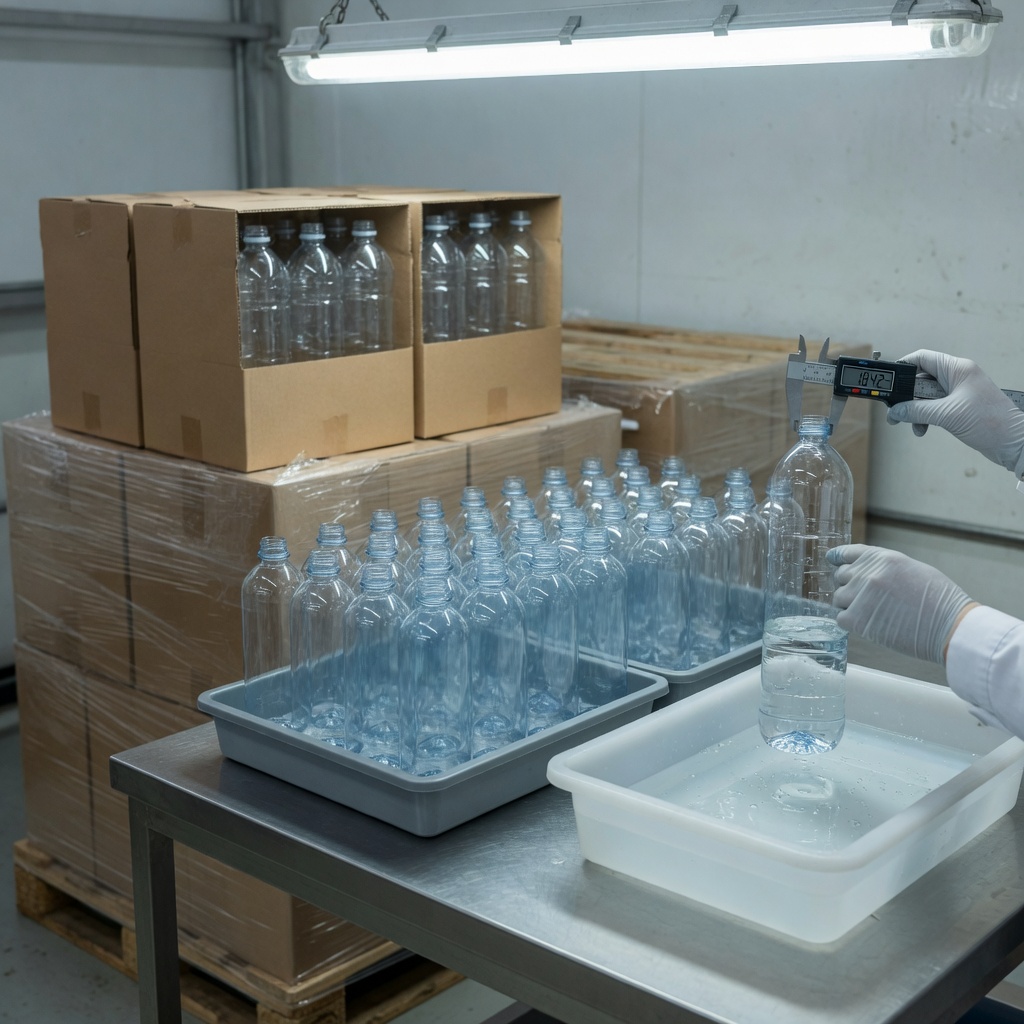
For United States B2B buyers, water bottle sourcing business continuity planning belongs in the RFQ, not in a slide after award. Do not release a continuity-sensitive purchase order until the bid file names two validated bottle and closure sources, states spare capacity with a unit and as-of date, requires lot-release leak and dimensional tests, sets safety-stock rules, and defines pallet delivery to a named United States receiving node. Lowest unit price does not keep a filling line, campus program, private-label run, or emergency pallet program running when a mold, resin lot, or outbound lane fails.
Award rule. Score bidders on landed cost to that named United States node plus documented continuity controls. Hold the award if a bidder cannot name plants and tools, state spare capacity with a unit and as-of date, or produce current food-contact and origin documents scoped to the SKU. Single-source volume discounts are residual-risk decisions, not defaults.
Write the same gates into the RFQ and the purchase order: who ships the standing forecast, who is the passive source, how much idle or surge capacity is reserved, which leak and dimensional tests are lot-release gates, where safety stock sits, and how pallets move inland after arrival. Price dual-sourcing, stockholding, and supplier scheduling as measurable trade-offs against piece price.
By Vincent Xi, Editorial Author BottleForge Industrial · jobTitle: Editorial Author · Author profile
This page is a United States water bottle procurement brief on business continuity planning. It does not report BottleForge factory tests, certifications, prices, lead times, or customer results, and it does not claim first-hand plant visits.
Dual-sourcing validated water bottles as business continuity planning
A June 2022 International Journal of Current Science Research and Review paper on a packaged mineral-water producer described dual-sourcing of validated packaging materials as a business contingency plan against production downtime. As published, that plant’s golden rules required a minimum of two validated producers per plant, one domestic source, 20% spare capacity, and active and passive sources per line so operations could continue when a single supplier failed (IJCSRR dual-sourcing BCP paper).
Those four figures are that company’s documented BCP rules as of the June 2022 paper. They are not a universal standard, not United States law, and not a BottleForge production claim. United States buyers can still copy the control structure into water bottle procurement.
- Two validated producers (case rule; plant scope; as of the June 2022 paper). Two bottle tools or two qualified converters that have passed the same drawing, resin or body-material window, and leak protocol. Qualification cost and split MOQs rise; unplanned changeover risk falls.
- One geographically distinct source (case rule; plant scope; as of the June 2022 paper). The paper required one domestic source for that plant. For a United States program, define “domestic” in writing (United States manufacture, USMCA origin, or a second overseas manufacturing region). Do not assume the paper’s “domestic” equals “Made in USA.”
- 20% spare capacity (case rule; plant scope; as of the June 2022 paper). If stated capacity is 100,000 bottles per week (example unit for illustration only; verify in the supplier quote), 20% spare means 20,000 bottles per week of unused or reservable capacity (example calculation from that percentage, not a surveyed industry floor). Confirm the denominator—line hours, molds, or warehouse slots—and the as-of date in the quote.
- Active and passive sources per line. The active source ships the standing forecast. The passive source holds validated tooling and a minimum call-off so it can start without a new first-article delay.
- Tooling location and ownership. Name which party owns each mold, where the steel sits, and whether the passive source already holds a validated duplicate. A second commercial invoice is not dual-sourcing if both plants wait on the same tool.
The paper’s method used risk assessment, PDCA, and decision trees to justify capacity redundancy. That is a case methodology, not a substitute for the buyer’s own risk register. Dual validation usually costs more in samples, third-party inspection, and split production lots. Require a written allocation policy for resin, preform, or mold shortages so priority production is a contract term.
Quality-control gates United States procurement teams should require
A published wholesale water bottle sourcing guide frames production stability, leak testing and inspections, and long-term scheduling and priority production as buyer evaluation criteria (Yeway wholesale water bottle sourcing guide). For continuity, convert those themes into gates that can be scored on a bid tab. The guide is a buyer-facing sourcing page, not a test method, not a certification, and not evidence of any plant’s current capability.
Repeat-order stability. Require the same neck finish, gram-weight window, and color standard across lots. Freeze the neck finish on the shared drawing (example callout to specify and verify, not a universal water-bottle standard: a named finish and thread style on the print). Ask for the process used when a mold insert or resin lot changes. Informal substitution is a continuity failure even if the invoice price is unchanged.
Leak testing. Name the method (vacuum, pressure, or inverted fill), the pass/fail limit, and whether release is 100% in-line or lot sampling under a stated AQL. AQL here is a sampling plan specified in the RFQ; it is not a claim that a named plant holds a management-system certificate. A cheaper bottle that skips leak gates can halt a filling line or generate returns that erase the unit-price gap.
Incoming inspection and retention. Specify dimensional checks on thread, height, and wall; visual criteria for contamination; and lot-coded retention samples stored for a defined period. Example period to verify against the complaint cycle: 180 days. Do not copy that period as a regulation or as this publisher’s factory practice.
Closures as a second continuity SKU. Dual-source the cap, liner, and bottle, or record why a single closure source is accepted residual risk. A validated bottle with an unvalidated cap still fails leak and fill-line continuity.
Scheduling and priority. The sourcing guide notes that long-term relationships can improve scheduling, consistency, cost control, and priority production. Put those mechanics in the contract: forecast freeze windows, surge lead time, and the capacity share received if the supplier’s book is full.
United States food-contact use—bottles intended to hold drinking water—is not proven by a marketing “BPA-free” line. Request current food-contact documentation for the resin and colorant as applicable to the intended use and temperature, and keep the documents with the item master. That is a buyer verification step. It is not a claim that any named plant is certified, and it is not the same thing as a third-party management-system certificate.
Warehousing, replenishment logistics, and emergency stockholding
Utility-style continuity buying shows the logistics half of the same problem. Yorkshire Water’s early market engagement for bottled drinking water sought suppliers able to support secure stockholding and supply, with timely pallet delivery to a fixed logistics centre, plus warehousing, replenishment logistics, delivery, and emergency stockholding during disruptions (Water Briefing on Yorkshire Water bottled water procurement).
That engagement sits under United Kingdom statutory continuity duties (SEMD in the published description). It is not a United States regulation and it does not set US inventory law. It remains a useful specification pattern for United States buyers who must keep water bottles—or bottled water built on those bottles—available when a municipal, campus, hospital, or brand fill is interrupted:
- Name the receiving node (one warehouse or DC, not “US wide”).
- Name pallet pattern, TI-HI, and truck type so emergency loads fit the dock.
- Separate cycle stock, safety stock, and emergency hold with min/max levels and FIFO or FEFO rotation.
- State replenishment SLA (restore to minimum within a defined number of calendar days). That day-count is an assumption to set from demand variability, not a clause to copy from a UK notice.
- State who owns title during holding (buyer, supplier, or 3PL) and who insures the goods.
Emergency stockholding ties up cash and warehouse cube and creates aging risk, especially if bottles are pre-filled. Dual-sourcing without stock is cheaper on the balance sheet but slower when ocean lanes or a single mold slip. A practical United States option is modest safety stock at a named domestic node plus a validated second source, rather than relying on only one lever.
United States labeling, landed cost, and delivery controls
Continuity fails in receiving as often as in molding. Build United States-specific controls into the same water bottle procurement RFQ. The items below are buyer specification and verification steps. They are not quoted statutory text, not a customs classification, and not a food-contact legal opinion; confirm labeling, origin, entry, and duty treatment with counsel and the customs broker before award.
Labeling and identity. If bottles enter commerce, specify country-of-origin marking as it applies to the imported or domestic article, English contents or care copy where retail rules apply, lot and date coding that matches the certificate of analysis, and any California Proposition 65 assessment if that state is in the distribution footprint. Do not print unsubstantiated recyclability or health claims. Distinguish a marking or warning requirement that may apply to the SKU from any supplier’s marketing line.
Food-contact and import file. For water-contact bottles, keep resin identity, colorant, and supplier food-contact letters or equivalent in the item file, with issue dates and use-temperature scope. For imported goods, require a commercial invoice, packing list, and origin documents sufficient for U.S. Customs and Border Protection entry. Name the importer of record and who files entry. If an origin is subject to additional forced-labor documentation expectations, ask for the supply-chain map and evidence as a condition of award—not after a detention.
Landed cost, not factory price. Compare dual sources on total landed cost to the named United States node: unit price, export packaging, inland and ocean or air freight, duties and merchandise processing fees as quoted, warehousing, and the carrying cost of extra weeks of stock. Do not use an unpublished duty rate in this article. Require each bidder to quote duty as a separate line or to state the HTS they believe applies, then have the broker verify. A bidder’s HTS suggestion is not a classification ruling.
Delivery and disruption clauses. Specify Incoterms, transit time as a range rather than a single optimistic day-count, and what happens in allocation (percentage split between active and passive sources). A “flexible customization” claim is not a lead-time guarantee.
Example calculation (assumption to verify in the supplier quote and with finance, not a market price, not an offer, and not BottleForge data): if annual demand is 240,000 bottles and extra safety stock is 6 weeks versus 2 weeks, extra on-hand inventory is 240,000 bottles × 4 weeks ÷ 52 weeks ≈ 18,462 bottles. Multiply by landed unit cost and the carrying-rate assumption (example: 20% per year—verify internally) to compare against the dual-source qualification budget.
Buyer decision table: continuity controls for water bottle procurement
| Control | Specify in RFQ / PO | How to verify before award | Hold the award if | Trade-off United States buyers should price |
|---|---|---|---|---|
| Dual validated producers | Two sources, same drawing and resin or body-material window; named active vs passive | First-article reports from both; side-by-side leak and dimension data | Only one plant, or plants share one mold | Extra qualification cost vs single-source downtime |
| Spare capacity | Numeric spare and unit (the 2022 case used 20% at plant level as of that paper—set your own figure) | Written capacity calendar, mold count, and surge lead time, with as-of date | Percentage with no denominator or no date | Paying for unused hours vs lost fill days |
| Geographic split | At least one non-correlated origin; define “domestic” if required | Origin affidavits and ship-from addresses | Both sources use the same port, resin broker, or tool shop | Possible duty/freight premium vs regional shock |
| Leak and dimensional QC | Method, limit, AQL or 100% in-line, retention period | Witnessed test or lab report on production lots | Brochure claim only; no lot-release method | Higher piece cost vs field leaks and line stops |
| Closure continuity | Cap/liner sources and the same leak protocol | Cap first-article plus assembled leak data | Bottle dual-sourced, closure single-sourced with no sign-off | Extra SKU control vs fill-line stops |
| Emergency stockholding | Min/max pallets at a named US node; rotation rule | Warehouse SOP plus cycle-count evidence | “US wide” ship-to; no min/max | Inventory cash and cube vs faster recovery |
| Replenishment SLA | Restore-to-min in defined calendar days; pallet build | Past on-time-in-full on comparable SKUs; dock-slot proof | Single optimistic transit day with no range | Expedite freight vs stockouts |
| Food-contact file | Current documents for resin, colorant, and use temperature | Document date and scope match the SKU | Undated letter or wrong temperature/use | Admin time vs receiving or retailer rejection |
| Allocation / priority | Contracted split and forecast freeze windows | Redlined capacity clause, not a sales email | “Best effort” or relationship language only | Less supplier flexibility; more predictable supply |
| Landed cost to US node | Incoterm, HTS for broker review, freight, fees | Comparable quotes to the same warehouse | Factory price only; duty assumed, not stated | Apparent factory savings may reverse after duty and dwell |
| Lot traceability | Lot on bottle or case and on the COA | Mock recall: locate a lot within 24 hours (target to test, not a claimed result) | No lot format; cannot map COA to cases | Labeling cost vs narrower recall scope |
Every row is a specify–compare–verify action. Approve when both sources have matching drawings, current QC and food-contact files, a numeric spare-capacity statement with as-of date, and a landed-cost quote to the same United States node. Hold when plant addresses, tooling, leak method, or HTS/duty lines are missing. Single-source only with a written residual-risk approval, stockholding at a named United States node, and a dated plan to qualify a second source.
RFQ checklist for water bottle sourcing business continuity planning
Use this list to specify, compare, verify, approve, or order. Delete lines that do not apply to empty bottles versus filled emergency water, but do not skip dual-source and QC without a written residual-risk sign-off.
- Issue a single drawing package (bottle, cap, liner, label) and require both sources to freeze revision letters.
- State annual volume, weekly run-rate, and the surge volume that may be called in a disruption, in bottles per week, not “flexible.”
- Require named active and passive producers, with plant addresses and the tooling each will use.
- State mold/tooling ownership, storage location, and whether the passive source already holds validated duplicate tooling.
- Ask each producer to state spare capacity as a number and unit (bottles per week or line-hours per week) and the date that number was measured; if they cite a percentage, require the denominator.
- Define whether a United States or USMCA manufacturing origin is mandatory, optional, or not required.
- Dual-source the cap/closure and liner under the same leak protocol, or document why a single closure source is accepted residual risk.
- Specify leak-test method, pass/fail limit, and sampling plan; require a recent production-lot report, not a brochure claim.
- Specify neck finish, gram-weight range, and allowable color delta; require incoming inspection at origin or at the United States DC.
- Require change-control: no resin, masterbatch, or mold-insert change without written approval and a new first article.
- Request current food-contact documentation scoped to drinking-water contact and intended fill or storage temperature, with issue dates.
- Require lot-coding format and a 24-hour mock-trace exercise as a condition of the first bulk PO; the buyer witnesses pass/fail (24 hours is a test target to set, not a sourced industry result).
- Name the United States ship-to warehouse, pallet pattern, maximum pallet height, and appointment rules.
- Set min/max inventory if the supplier or 3PL will hold stock; state title, insurance, and FIFO or FEFO.
- Set replenishment: trigger, restore-to-min time, and approved expedite mode (air versus extra truck).
- Require Incoterms, planned transit-time range, and a duty/HTS statement for broker review.
- Name the importer of record and who will file U.S. Customs entry for each nominated origin.
- Include an allocation clause: the percentage of remaining capacity received if the supplier rations output.
- Require packaging that survives the named lane (export carton, pallet wrap, moisture protection) and a damage allowance with a replacement SLA.
- Collect two comparable on-time repeat-order references under NDA; do not rely on unsourced testimonials.
- Score bids on landed cost to the named United States node plus documented continuity controls, not unit price alone, and record who approved any residual single-source risk.
Methodology, source contexts, and limitations
Source contexts. This page draws on three published contexts. First, a June 2022 International Journal of Current Science Research and Review paper describing dual-sourcing of validated packaging materials for a packaged mineral water producer, including plant golden rules of two validated producers, one domestic source, 20% spare capacity, and active/passive sources per line (IJCSRR PDF). Second, a B2B wholesale water bottle sourcing guide that frames production stability, leak testing and inspections, and long-term scheduling and priority production as buyer evaluation criteria (Yeway guide). Third, Water Briefing coverage of Yorkshire Water’s early market engagement for bottled drinking water, emphasizing timely pallet delivery to a fixed logistics centre, warehousing, replenishment logistics, and emergency stockholding for continuity obligations (Water Briefing).
Concrete data points used. (1) Minimum of two validated producers per plant—unit: producers per plant; scope: that mineral-water producer’s plant-level BCP rules; as-of: June 2022 paper; source: IJCSRR PDF. (2) 20% spare capacity—unit: percent of stated plant capacity; scope: same plant-level rules; as-of: June 2022 paper; source: IJCSRR PDF. (3) One domestic source per plant—unit: count of domestic sources; scope: same plant-level rules; as-of: June 2022 paper; source: IJCSRR PDF. Derived illustrations (100,000 bottles per week, 20,000 bottles per week spare, 180-day retention, 240,000 bottles per year, ≈18,462 extra bottles, 20% per year carrying rate, 24-hour mock trace) are example calculations or RFQ assumptions to verify in the supplier quote, warehouse SOP, and finance model.
How the data were derived. The three numbered figures above are taken from the 2022 case’s stated BCP rules, not from a survey of United States water bottle plants and not from BottleForge production data. Logistics capabilities (fixed centre, pallet delivery, emergency stockholding) are taken from the published utility market-engagement description. Editorial structure maps those published controls onto a United States water bottle procurement RFQ: dual source, QC, stock, landed cost, labeling, delivery, and award holds. Inventory math (weeks of stock × annual units) is labeled as an assumption for the buyer’s quote model.
What to verify. The Yorkshire Water example is a United Kingdom utility procurement pattern, not United States statutory text; do not copy SEMD language into a US contract without counsel. The 20% spare-capacity rule is case-specific and dated to the 2022 paper; capacity changes. Food-contact, origin, HTS, duty, and marking documents expire or fail scope-match; demand current files and broker review. This article does not claim factory audits, certifications, prices, lead times, or customer outcomes for BottleForge Industrial or for any supplier discussed in the sources. Confirm every number that will govern payment or inventory in the supplier quote, broker file, and warehouse SOP before approving the award.
Discuss Your Requirements
Review our manufacturing capabilities, then share your specifications for a supplier-fit review.