Water Bottle Manufacturer RFQ Guide: Buyer Specification Checklist
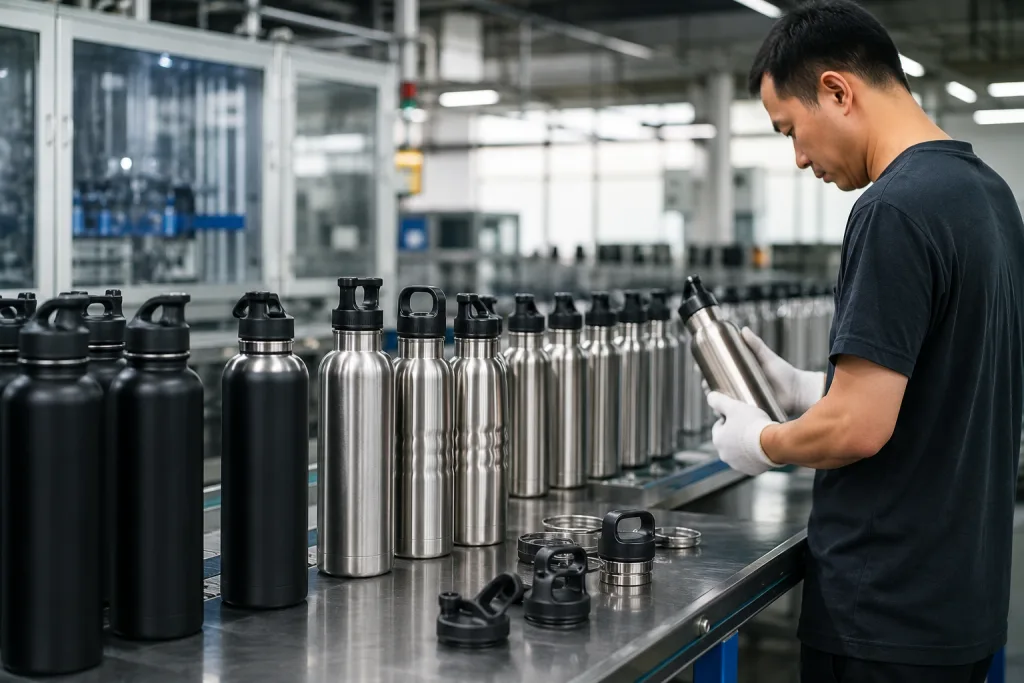
Water Bottle Manufacturer RFQ Guide: Buyer Specification Checklist
A useful water bottle manufacturer RFQ makes supplier replies easier to compare. It tells each supplier what is being sourced, where the bottle will be used or sold, which details must be priced, and which evidence is needed before approval.
This guide stays inside the cited source boundaries. The outdoor bottle sourcing source identifies selection factors such as insulation, dent resistance, lid durability, carry comfort, coating grip, leak control, and retail or e-commerce packaging fit JOOYO Drinkware. The bottled-water sourcing source covers water source, purification, packaging choices, supplier qualifications, compliance, logistics, and distribution Food Machinery CH. The smart-bottle source discusses hydration reminders, temperature display, UV cleaning, apps, sensors, electronics integration, PCBA control, and power management Mountop.
The checklist below is buyer request language. It does not claim that every manufacturer can provide every option, document, feature, or test. Ask each supplier to confirm what it can quote, what it cannot support, and what product-specific evidence is available.
1. Define the Buying Scenario
Set the commercial and use-case context before asking for price. Use these fields as RFQ inputs.
| RFQ field | Buyer input to provide | Supplier response to request | |---|---|---| | Target user or application | Intended user group, usage pattern, and handling environment | Recommended bottle format, capacity range, lid style, and stated assumptions | | Use environment | Desk, gym, vehicle, trail, school bag, warehouse, outdoor worksite, or other setting | Durability, leak-control, grip, and carry-feature recommendations | | Sales channel | Retail shelf, e-commerce parcel, distributor catalog, promotional order, employee issue, hospitality use, or other channel | Packaging format, labeling options, carton data, and channel limitations | | Purchase model | One-time order, seasonal SKU, reorder program, or long-term line | MOQ, sample timing, production timing, spare-part availability, and quote validity | | Main risk to control | Leakage, insulation, denting, coating wear, decoration accuracy, document gaps, packaging damage, or logistics constraints | Proposed test method, document list, sample plan, or inspection checkpoint | | Target market | Countries or regions where the bottle will be sold or distributed | Product-specific documents available for those markets, with any exclusions stated |
Because the outdoor sourcing source identifies insulation, dent resistance, lid durability, carry comfort, coating grip, leak control, and packaging fit as selection factors JOOYO Drinkware, the RFQ should convert each relevant factor into a specification, sample-review item, evidence request, or inspection checkpoint.
2. Write the Bottle Body Specification
Ask suppliers to quote a defined item. If the buyer has not selected the final construction, request separate quote lines and require the supplier to state the assumptions behind each option.
| Specification area | What to include in the RFQ | What to compare in supplier replies | |---|---|---| | Product scope | Empty reusable bottle, filled-beverage packaging component, smart bottle, replacement part, or other defined scope | Whether the quote matches the stated sourcing problem | | Capacity | Nominal volume and acceptable tolerance | Stated capacity, tolerance, and measurement method | | Dimensions | Height, diameter, mouth opening, target weight, and any carton or holder constraints | Dimensional drawing, sample dimensions, and packaging impact | | Material | Buyer-specified material, grade, resin, glass, silicone, coating, or approved alternative | Material description and documents the supplier can provide for the quoted item | | Construction | Single-wall, double-wall, insulated, molded, coated, sleeved, assembled, electronic-cap, or supplier-defined construction | Construction details, tooling assumptions, and production limitations | | Insulation | Required only if the bottle is being quoted for temperature retention | Test method, test conditions, sample size, and pass criteria proposed by the supplier | | Dent or impact concern | Where dent resistance or handling durability matters | Sample-review method, defect definition, and packaging protection proposal | | Finish | Matte, gloss, polished, brushed, coated, painted, sleeved, or uncoated, as required by the buyer | Finish method, color-control approach, sample approval process, and durability check |
If the buyer intends to make claims about recycled content, food contact, insulation, durability, coating performance, or decoration durability, the RFQ should ask what documents or test reports are available for the exact product, material, coating, lid, decoration, and packaging configuration.
3. Specify Lid, Closure, and Leak Expectations
The cited outdoor bottle source treats lid durability and leak control as sourcing factors JOOYO Drinkware. Quote the lid system separately from the bottle body so closure details are not hidden inside a generic bottle price.
Request these lid details when relevant:
- Lid type: screw cap, chug cap, straw lid, flip lid, push-button lid, sports spout, loop cap, carry-handle cap, child-use lid, smart cap, or supplier-recommended alternative.
- Component list: cap shell, gasket, straw, hinge, latch, button, thread, handle, loop, sensor module, or other parts included in the quote.
- Gasket details: material description, gasket placement, replacement-gasket availability, and assembly method.
- Cleaning access: straw removal, gasket removal, mouth opening access, and any restricted cleaning areas.
- Spare parts: lid, gasket, straw, cap, electronic module, and other replacement-part pricing for reorder programs.
Define leak expectations with testable language.
| Buyer requirement | RFQ wording to use | Supplier evidence to request | |---|---|---| | Upright desk use | Spill resistance while upright | Supplier test description, sample quantity, and pass criteria | | Bag carry | Leak resistance during normal carrying orientation changes | Inversion or movement test method, fill level, duration, and sample result | | Parcel handling | Leak-control expectation after packing and transit handling | Packaging test proposal and pre-shipment inspection point | | Outdoor use | Leak control plus carry-feature durability | Lid durability method, handle or loop assumptions, and sample review criteria |
Do not use spill-resistant, leak-resistant, and watertight as interchangeable terms unless the supplier defines them. Ask for orientation, fill level, liquid temperature if relevant, duration, movement condition, sample quantity, pass criteria, and the lot stage tested.
4. Control Decoration, Finish, and Packaging
Decoration should be quoted as a production process, not only as a logo request. Ask the supplier to state the decoration method, setup cost, placement tolerance, color-control approach, and sample approval steps.
RFQ fields for decoration and finish can include:
- Decoration method: supplier-stated method, setup cost, production limits, and whether the method matches the selected bottle shape and finish.
- Artwork files: vector file format, logo size, logo location, rotation, and safe area around curves, tapers, handles, or part lines.
- Color standard: buyer-specified standard, buyer master sample, or approved supplier color chip.
- Finish review: dry-hand grip, wet-hand grip, finish feel, visible scuffing after handling, carton-rub marks, and logo durability after cleaning.
- Sample approval: finish sample, decoration sample, pre-production sample, and approved reference sample if required.
The cited outdoor sourcing source supports coating grip as a selection factor JOOYO Drinkware. It does not by itself establish a specific coating performance level for a quoted bottle. The RFQ should ask the supplier to propose or confirm the review method.
Packaging should be specified before price approval because packaging fit is also cited for retail and e-commerce channels JOOYO Drinkware.
| Packaging item | Buyer input | Supplier output | |---|---|---| | Unit packaging | Bulk pack, white box, printed box, gift box, mailer, display tray, or no unit box | Unit pack dimensions, material description, and cost | | Retail needs | Barcode, hang tag, instruction insert, country label, warning label, or retail mark if required | Artwork template, label placement, and packing method | | E-commerce needs | Mailer, protective insert, parcel-pack requirement, or buyer-specified drop expectation | Packaging structure and test proposal | | Master carton | Units per carton, carton size limit, gross weight limit, and shipping marks | Carton dimensions, gross weight, net weight, and pallet data if available |
5. Separate Empty Bottle, Filled Beverage, and Smart Bottle RFQs
Do not combine different sourcing problems into one vague RFQ.
For empty bottle sourcing, focus on the bottle body, lid, material, decoration, packaging, product-specific documents, samples, inspection, and commercial terms.
For filled beverage or bottled-water sourcing, clarify whether the bottle, closure, label, carton, storage condition, logistics route, and distribution model must be reviewed together. The bottled-water source discusses water source, purification, packaging choices, supplier qualifications, compliance, logistics, and distribution as sourcing variables Food Machinery CH. Use that source only for filled-water or beverage-related sourcing scope, not as evidence that an empty-bottle supplier can support filling operations.
For smart bottle sourcing, separate the mechanical bottle quote from the electronic lid or cap quote. The cited smart-bottle source discusses hydration reminders, temperature display, UV cleaning, apps, sensors, electronics integration, PCBA control, and power management Mountop. If any of those features are included, request a separate feature list, component list, power or charging details if applicable, app or firmware scope if applicable, sensor list, electronics integration details, PCBA control details, replacement-part policy, and QC checkpoints for electronic components.
6. Ask for Quality, Compliance, and Document Evidence
Ask for the supplier proposal on inspection and for the documents available for the exact quoted configuration. Keep each document request tied to the target market, sales channel, product version, material, lid, coating, decoration, packaging, and electronics if present.
| RFQ area | What to request | Why it helps comparison | |---|---|---| | Material confirmation | Material declaration, resin or metal description, coating details, and supplier document list | Shows whether the supplier can support the quoted material configuration | | Capacity and dimensions | Measurement method, tolerance, sample report, and drawing | Makes samples easier to compare against the same criteria | | Lid fit | Thread engagement, gasket fit, hinge or latch check, straw fit, and cleaning-access review | Separates bottle-body quality from lid-system quality | | Leak control | Test method, orientation, fill level, duration, sample quantity, pass criteria, and lot-stage timing | Prevents vague leak claims from driving approval | | Insulation | Test method, starting condition, ambient condition, duration, sample size, and pass criteria if insulation is quoted | Makes retention claims easier to evaluate on the same basis | | Finish and decoration | Adhesion check, color tolerance, logo placement tolerance, print durability, and scuff review | Connects branding expectations to production checks | | Packaging | Count verification, barcode check if required, carton dimensions, carton weight, and transit test if required | Links packaging approval to the sales channel | | Compliance | Target-market documents, product-specific reports, material declarations, and electronic documents for smart caps where relevant | Keeps certificates tied to the actual product and market | | Smart bottle electronics | Feature list, app or firmware scope if applicable, sensor list, PCBA control details, and power management details | Keeps smart-cap requirements separate from the mechanical bottle quote | | Final inspection | Buyer-approved inspection standard, defect categories, photo report, and corrective-action process | Makes shipment approval criteria explicit |
The bottled-water source treats supplier qualifications and compliance as sourcing variables Food Machinery CH. For a bottle RFQ, apply that as a document-control principle: ask whether each document is product-specific, market-relevant, current, and tied to the final configuration.
7. Compare Water Bottle Manufacturer Quotes With One Scorecard
Use the same scorecard for every supplier so the shortlist is based on fit, assumptions, and evidence.
| Decision area | What to request in the RFQ | Strong response | Needs clarification | |---|---|---|---| | Product fit | Bottle format, capacity, use case, and channel | Supplier maps the quoted item to the stated use case | Generic catalog quote with no assumptions listed | | Material | Material description and document list | Clear material description and available product-specific documents | Vague material terms or unsupported claims | | Lid system | Lid type, gasket, straw, hinge, handle, and leak expectation | Component breakdown and test method | No distinction between spill resistance and leak resistance | | Insulation | Construction and test method if insulation is quoted | Defined test conditions and sample size | Broad retention claim without method | | Decoration | Method, color standard, placement, and tolerance | Production-ready decoration plan | Logo included with no method, tolerance, or approval step | | Packaging | Unit pack, master carton, retail needs, or e-commerce needs | Carton details, labeling plan, and packing quantity | Packaging left until after price approval | | Compliance | Target markets and requested documents | Product-specific documentation path | Old, unrelated, or unclear certificates offered as proof | | QC | Inspection criteria, sample stages, and final inspection method | Written checkpoints and pass criteria | QC described only in broad quality language | | Smart features | Feature list, sensors, app or firmware scope, PCBA control, and power management if quoted | Mechanical and electronic scopes separated | Smart-bottle claim with no component or control detail | | Lead time | Sample, tooling if any, production, inspection, and shipping stages | Stage-by-stage timeline with assumptions | Single delivery date with no stage detail | | Commercial terms | MOQ, price breaks, tooling, sample fees, packaging, spare parts, payment terms, and Incoterms | Costs separated by category | Hidden charges or unclear tooling ownership |
8. Practical Water Bottle RFQ Checklist
1. Project context: buyer type, target market, launch date, order type, expected volume, and whether the project is new development or reorder.
2. Product scope: empty bottle, filled-beverage packaging component, smart bottle, replacement component, or other defined scope.
3. Capacity and dimensions: nominal capacity, tolerance, height, diameter, mouth opening, target weight, and carton limits.
4. Material requirements: buyer-specified material, coating, food-contact expectations, recycled-content requirement if any, and documents requested.
5. Construction: wall structure, insulation requirement if any, molded or assembled components, coating, sleeve, or electronic-cap construction.
6. Lid and closure: lid type, gasket, straw, spout, handle, hinge, button, thread, replacement parts, cleaning access, and spare components.
7. Performance requirements: leak expectation, insulation test method if relevant, coating review, dent-resistance review, cleaning expectation, and transit packaging expectation.
8. Decoration: logo files, decoration method, color standard, number of colors, wrap coverage, placement tolerance, finish texture, and sample approval process.
9. Packaging: bulk pack or unit pack, printed box if required, mailer if required, retail carton, instruction insert, barcode, master carton, pallet data if available, and labeling requirements.
10. Compliance and documents: target sales markets, requested test reports, material declarations, product-specific certificates, safety data where applicable, and electronic-device documents for smart caps.
11. Quality plan: sample approval, approved reference sample, in-line check if required, final inspection, buyer-approved inspection standard, defect categories, photo reporting, and corrective-action process.
12. Commercial terms: MOQ, price breaks, tooling cost, sample cost, decoration setup cost, packaging cost, spare-part cost, payment terms, Incoterms, production lead time, and quote validity.
13. Logistics: port, carton dimensions, gross weight, net weight, units per carton, pallet configuration if available, shipping marks, destination requirements, and e-commerce parcel testing if required.
14. Change control: how changes to material, lid, coating, supplier, packaging, electronics, or process will be communicated and approved after sample sign-off.
Sample RFQ Language Buyers Can Adapt
Use direct, measurable language.
> Please quote a water bottle for B2B distribution. Target capacity is 750 ml. Required scope: leak-resistant screw or chug lid for bag carry, matte exterior finish, one-color logo decoration, individual retail box, and export master carton. Please separate assumptions from confirmed specifications. Provide material details, lid component details, decoration method, sample lead time, production lead time, MOQ, price breaks, packaging dimensions, product-specific documents available for the target market, and proposed inspection criteria.
For a smart bottle, add:
> Please separate the mechanical bottle quotation from the electronic lid or cap quotation. Include the feature list, electronic component list, PCBA control scope, power management details, app or firmware scope if applicable, sensor list, target-market documents available for the quoted electronics, replacement-part policy, and electronic QC checkpoints.
For a filled beverage or bottled-water project, add:
> Please confirm whether the bottle, closure, label, carton, storage condition, logistics route, and distribution model must be reviewed together with the water source, purification process, and packaging requirements.
Final Takeaway
A strong water bottle manufacturer RFQ asks for more than a unit price. It defines the use case, bottle body, lid system, finish, decoration, packaging, documents, inspection method, and commercial assumptions clearly enough that each supplier can respond on the same basis.
Keep factual claims bounded to documents, samples, tests, and supplier responses for the exact configuration being purchased. When a feature or claim matters, turn it into a specification, document request, sample requirement, or inspection checkpoint before the purchase order is issued.