Tumbler OEM Subtier Vendor Oversight for Malaysia Buyers: Manufacturing Controls
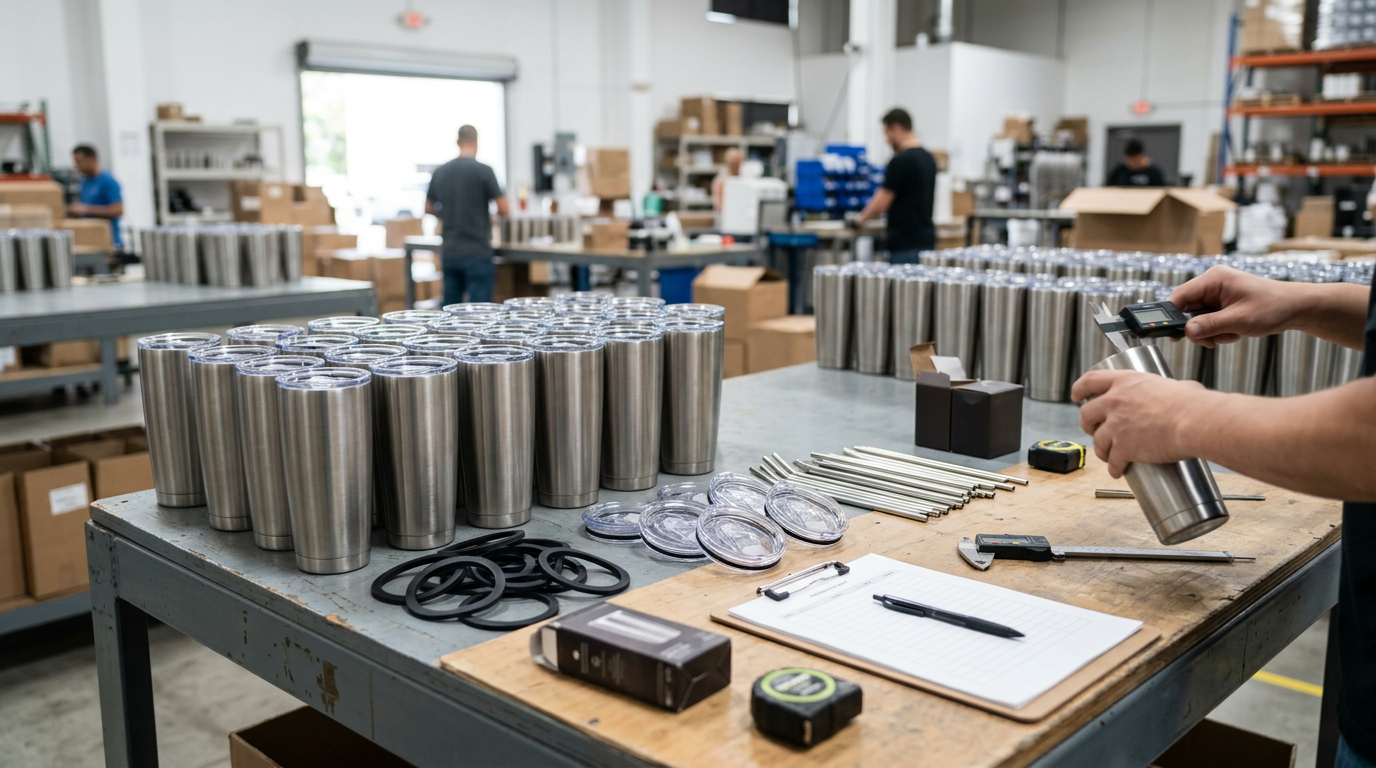
Tumbler OEM Subtier Vendor Oversight for Malaysia Buyers
For Malaysia buyers, tumbler oem subtier vendor oversight is the discipline of knowing who else, beyond your direct supplier, contributes materials, components, decoration, or packing to your tumbler, and agreeing in advance how those contributors will be identified, approved, monitored, and changed. The direct supplier remains your contracting party, but the finished tumbler reflects work and inputs that may come from subtier vendors you never meet directly. Oversight closes that gap with process, not assumption. It asks the buyer to define what must be disclosed, what needs prior approval, what evidence of agreement should be kept, and what happens when a subtier vendor, material source, or process step changes. A vendor map or an approval record is a business control. It is not, by itself, evidence about the finished drinkware product, and it should not be treated as a substitute for agreeing the tumbler specification and checking the product against that specification.
What Counts as a Subtier Vendor in a Tumbler Program
A subtier vendor is any separate business that supplies an input or performs a step for your direct supplier rather than selling the finished tumbler to you. In a tumbler program, that scope can be discussed in categories the buyer and supplier agree to list, such as the source of the body material, the maker of lids, seals, straws, or other components, the provider of surface finishing or decoration, and the provider of inner or outer packing. The exact categories matter less than making the list explicit for your order, because a vague promise to use approved sources leaves the buyer unable to tell what was actually approved.
Buyers should separate three questions that are often blurred together. Who contributes to the tumbler? What exactly does each contributor supply or do? And which contributions could change the agreed appearance, function, packing, or documentation if the contributor changed? Oversight is strongest when each subtier vendor is tied to a specific input or step, not recorded as a general name with no link to the order. If a contributor only provides a general business service that does not touch the product, material, decoration, or packing, agree with the supplier whether it belongs on the product-related vendor map at all, and record that decision so the scope stays consistent from enquiry to shipment.
Mapping Subtier Vendors Before You Approve the Order
Start the mapping conversation before sampling is treated as final and before a purchase order is placed, while changes are still easier to discuss. Ask the direct supplier to present the subtier picture in the same structure you will later use for approvals and changes, so you are not reconciling different formats at shipment stage.
- Ask the supplier to list each product-related subtier vendor by legal business name, location as agreed for the record, and the exact input or process step it provides for this tumbler.
- Ask the supplier to link each listed vendor to the relevant part of the specification, such as body, lid, seal, decoration, or packing, so the map can be checked against the approved sample and order documents.
- Ask which inputs or steps have an alternative source under consideration, and mark those alternatives as unapproved until you have reviewed and agreed them in writing.
- Require the supplier to state how it will notify you if a listed vendor becomes unavailable or if it proposes a different vendor, material source, or process location.
- Agree the approval record format, including who approves on the buyer side, who confirms on the supplier side, and where the agreed version will be kept for the order.
This mapping exercise does not prove that a subtier vendor performs well or that a material meets your specification. It creates the reference point against which later claims, changes, and questions can be checked. Keep the map specific to the tumbler, colour, decoration, and packing configuration in the order, and ask for an updated map when any of those elements change, rather than assuming an earlier map carries over to a new configuration.
Tumbler Manufacturing and Subtier Vendor Oversight in Malaysia
For tumbler manufacturing supplied to Malaysia, subtier vendor oversight should be written into the buying process rather than left to informal updates. Malaysia buyers can keep the focus on decisions they control: which disclosures are required before order confirmation, which changes need written approval before production continues, and which records must accompany the shipment paperwork that buyer and supplier agree to exchange. Avoid relying on general statements about origin, climate, or local practice that neither party has documented for the specific order. Instead, put the order-specific requirements into the specification and the approval record, including the agreed packing configuration, labelling content the buyer supplies or approves, and the delivery documents the buyer needs to receive goods and reconcile them with the purchase order.
Where a requirement depends on information you have not yet verified, treat it as a question to resolve with documentation, not as a fact to assume. Ask the supplier to provide the document it relies on, name the document in the order record, and record any point that remains open before production starts. That approach keeps the Malaysia buying decision centred on the tumbler and its manufacturing chain, rather than turning oversight into a generic country discussion that does not change what gets approved, produced, or shipped.
Buyer Decision Table for Subtier Vendor Oversight
Use the table below as a working comparison tool when you review a supplier response. Each row is a buyer-defined process check. A complete answer helps you compare suppliers on the clarity of their oversight, while a vague answer signals a point to clarify before you commit, not a conclusion about product quality.
| Decision area | What to ask the supplier to show | Agree before ordering | Warning sign to clarify |
|---|---|---|---|
| Vendor identity | Legal name of each subtier vendor and the input or step it provides | The approved vendor list for this tumbler configuration | A vendor described only by a trade nickname or general category |
| Link to specification | Which part of the tumbler specification each vendor affects | How the approved sample and specification refer to that input or step | A listed vendor with no clear link to any part of the order |
| Alternative sources | Any alternative vendor or source the supplier may want to use | Whether alternatives are unapproved until reviewed in writing | Alternatives presented as already interchangeable without buyer review |
| Change notification | How and when the supplier will notify the buyer of a proposed change | The notice method, timing as agreed by both parties, and approval holder | Change notice promised only after production has started |
| Substitution control | What the supplier will do if a listed vendor cannot supply | The pause, review, and approval steps before a substitute is used | Substitution treated as a routine internal decision for the supplier |
| Records and traceability | How order, batch, or packing records link back to the vendor map as agreed | The record fields both parties will keep and share | Records that cannot be matched to the approved vendor list |
| Packing and decoration vendors | Who provides decoration and packing inputs for the order | The approved artwork, packing configuration, and vendor for each | Decoration or packing handled by an unnamed party outside the map |
| Escalation route | Who the buyer contacts when a vendor issue affects the order | Named contact roles and the response steps both parties will follow | No clear contact or step when a vendor problem is raised |
Read the table row by row against the written supplier response, not against sales conversation. Where a supplier answers clearly on identity but weakly on change control, record that difference. Oversight risk often sits in the handover between an approved starting point and an unapproved mid-order change, so the rows on notification, substitution, and records deserve the same attention as the initial vendor list.
Controls to Agree During Manufacturing
Once production is underway, oversight becomes a matter of keeping the actual order aligned with the approved vendor map and specification. Agree how the supplier will confirm, at points you both define, that the vendors in use still match the approved list. Those confirmation points can be tied to events in the order itself, such as before a material or component is committed to the order, before decoration begins, and before packing is closed, with the exact points recorded in the order documents rather than assumed.
Agree also what the supplier should do when reality differs from the plan. If a subtier vendor delivers an input that does not match what was agreed for the order, the supplier should be required to hold the affected input or work, inform the buyer through the agreed route, and wait for the buyer's written direction before using it, reworking it, or replacing the source. The buyer, in turn, should define who can give that direction and how quickly decisions will be returned, so a hold does not become an informal workaround. Keep the language focused on the affected input, quantity as recorded in the order documents, and the specific tumbler configuration, so decisions are traceable to the order they affect.
Sampling needs the same discipline. If a sample was made using a particular vendor for a component, finish, or decoration, ask whether the production order will use the same vendor for that element, and record the answer. A sample approves what the buyer saw and agreed; it does not automatically approve a different source for the same element in production.
Change, Substitution, and Escalation Controls
Change is where an approved starting point can drift from what was agreed. The risk is rarely the first vendor list alone. A vendor becomes unavailable, a component source shifts, a decoration step moves, or packing is sourced differently, and the buyer learns about it late. Prevent that pattern by defining change in plain terms in the order: a change includes a different subtier vendor, a different source for the same input, a different location for the same process step, or a different material or component presented as equivalent. Each of those should follow the same review path the buyer and supplier agreed before production.
For each proposed change, ask the supplier to describe what is changing, why it is proposed, which part of the specification or approved sample it could affect, and what checking the supplier proposes before the change is used in production. The buyer can then approve, reject, or ask for a revised sample or further documentation, and that decision should be recorded against the order. If the buyer and supplier disagree, the escalation route agreed in advance should name the decision holders on both sides and state that the approved arrangement stays in place until a change is agreed in writing. That single rule, consistently applied, does more for oversight than a long vendor list with no change discipline behind it.
Documentation to Request Before Production and Shipment
Documentation is the memory of the oversight system. Before production, ask for the current vendor map, the approved specification, the approved sample reference, and the written record of any alternatives that have been reviewed. Before shipment, ask the supplier to confirm in writing that the vendors used for the shipped tumblers match the approved map, or to list every agreed change that was applied to the order, so the shipment can be reconciled with the purchase order and packing documents both parties agreed to use.
Keep document requests proportionate and specific. Name each document, its purpose in the buying decision, and the point at which it should be provided. If a document cannot be provided, record that openly and decide whether the gap affects approval, rather than letting an unprovided document be treated as if it had been reviewed. Retain the agreed versions for the order so later questions about a component, finish, decoration, or packing point can be traced to the version that was actually approved, not to a later revision that was never part of the order.
RFQ Checklist
- Ask the supplier to provide a product-related subtier vendor map that names each vendor and the exact tumbler input or process step it supplies for your order.
- Require the supplier to identify any alternative vendor, material source, or process location under consideration and to mark it as unapproved until you agree it in writing.
- Specify which subtier changes, including vendor, source, location, material, and component changes, require your written approval before production continues.
- Ask the supplier to state its change notification method, the notice timing you both agree, and the contact roles responsible for raising and deciding vendor changes.
- Require the supplier to confirm how its order and packing records will link the shipped tumblers back to the approved vendor map and specification version.
- Specify the documents you require before production and before shipment, including the vendor map, approved specification reference, and written confirmation of vendors used or agreed changes applied.
- Ask the supplier to describe the hold and escalation steps it will follow if a subtier input does not match the agreed specification, including who waits for your written direction.
- Require the supplier to confirm whether the vendors used for sampling each component, finish, and decoration will be the same vendors used for the production order.
Closing the Oversight Loop Before You Commit
Subtier vendor oversight is not an extra layer of paperwork for its own sake. For a Malaysia buyer sourcing tumblers, it is how the buyer turns an unseen supply chain into a set of named contributors, agreed controls, and recorded decisions that can be checked at sampling, during manufacturing, and at shipment. Keep the scope on this facet alone: map the vendors, link them to the specification, control changes and substitutions, and keep the records that show what was agreed for the order. Suppliers who can answer those points clearly give the buyer a firmer basis for comparison, and points that remain unclear become specific questions for the RFQ rather than assumptions carried into production.
Discuss Your Requirements
Review our manufacturing capabilities, then share your specifications for a supplier-fit review.