Tumbler OEM Defect Escalation Protocol for Europe Manufacturing Buyers
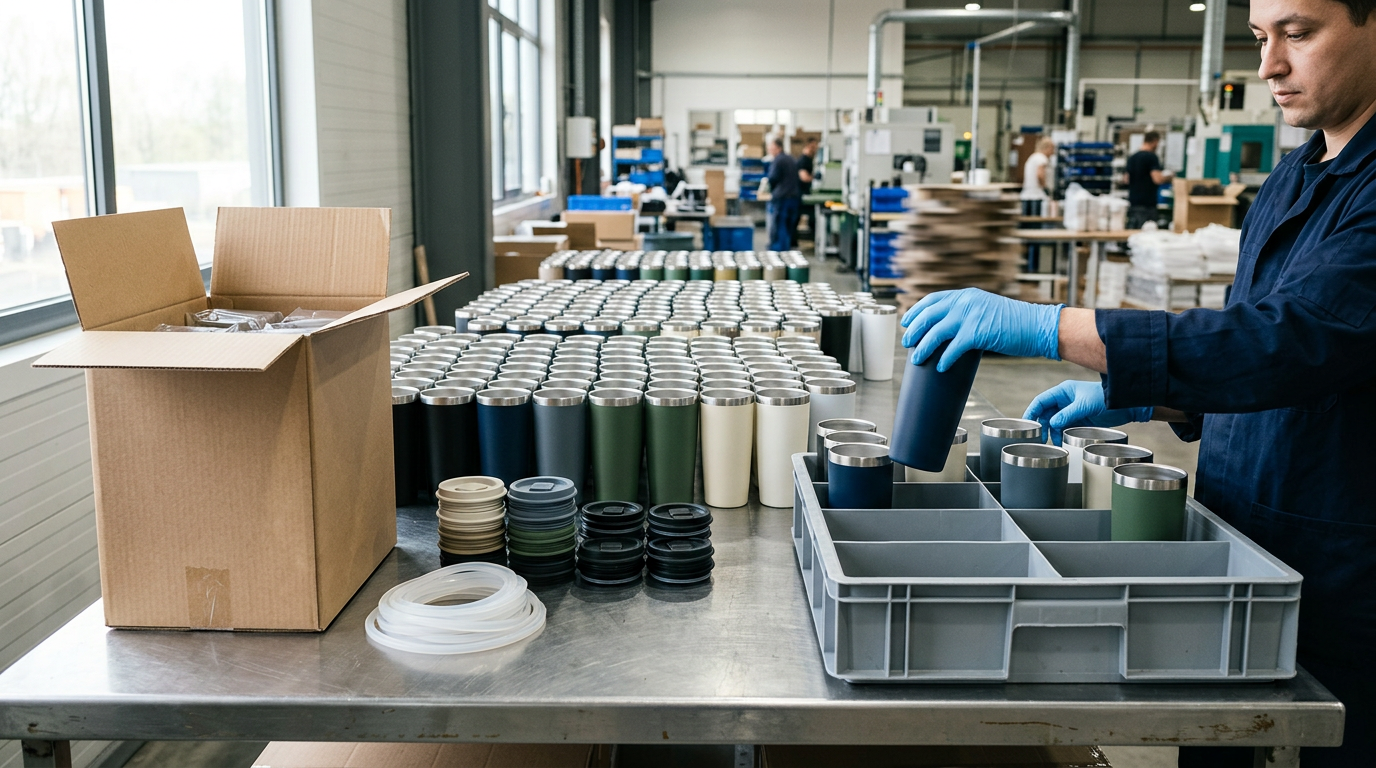
A tumbler OEM defect escalation protocol is the agreed route a buyer and supplier follow when a defect is found before, during, or after production. For Europe buyers sourcing a tumbler for OEM manufacturing, the protocol should be agreed before the purchase order is confirmed, not improvised after a problem appears. It defines what counts as a defect, who receives the report, what evidence is shared, how affected units are held or separated, how the cause is reviewed, and what must happen before the case is closed. The value is procedural: both sides work from the same definitions, contacts, and decision points, and neither side has to negotiate the process while also disputing the product.
Building the Defect Escalation Protocol Before Tumbler Manufacturing Starts
Start by agreeing the scope in writing. Specify which tumbler components the protocol covers, such as the body, lid, seal, straw if included, surface finish, decoration, and packaging, and state whether it applies to samples, pre-production units, bulk production, and delivered cartons. A defect found on a decorated sample may need a different decision from a defect found across bulk stock, so keep the scope tied to the stage where the issue is observed.
Next, define defect categories using buyer-approved reference material. Ask the supplier to work from agreed product specifications, approved samples, artwork files, and packing instructions, and require both sides to use the same terms when describing an issue. Categories can be buyer-defined, for example surface marks, colour variation, lid fit, leakage concern raised by the buyer, print placement, print legibility, or carton damage. Avoid relying on single words such as minor or serious without a written description of what each category means for acceptance, rework, replacement discussion, or rejection discussion.
Agree also what does not trigger escalation. Normal variation that falls inside the approved specification and matches the approved sample should be handled as a specification question, not as a defect case. Recording this boundary reduces repeated disputes and keeps escalation for issues that fall outside what was approved.
Document the protocol as part of the order paperwork. Require the supplier to confirm the version of the specification, the approved sample reference, and the escalation contacts that apply to that order, so a later case can be linked to the exact agreement in force when the goods were made.
Tumbler Manufacturing Roles and Escalation Ownership
Name one accountable contact on each side for each stage of the case. The buyer side should identify who reports the defect, who approves containment decisions, who reviews evidence, and who authorises closure. The supplier side should identify who receives the report, who coordinates the internal review, who proposes corrective action, and who confirms the agreed outcome. Using role titles rather than only personal names helps when staff change during a long programme.
Separate reporting from decision-making. The person who finds a defect should be able to raise a case with clear evidence, while acceptance, rework, or disposition decisions should sit with the named buyer contact. This separation prevents informal comments in messages from being treated as final approval.
Agree the communication channel for escalation. Specify whether cases are raised by email, through a shared tracker, or in the order management system the parties already use, and require a single case reference for each defect issue. All photos, comments, decisions, and revised documents for that issue should carry the same reference, so the record stays complete and searchable.
Define escalation levels by decision need, not by assumption. A first level can cover clarification and evidence exchange between the named contacts. A higher level can involve buyer and supplier managers when the parties disagree on classification, disposition, cost responsibility, or the timing of a replacement or rework plan. State what triggers a move to the higher level, such as a disagreement that remains unresolved after the agreed review step, a defect affecting an entire batch as identified by the buyer, or a repeat of a previously closed issue.
Europe-Specific Agreement Points for Tumbler Orders
Treat Europe as the sales market for the order, but do not assume that one set of destination details covers every European delivery point. Ask the supplier to confirm, for the specific destination named in the order, which product information, labelling information, packaging information, and documentation the buyer needs to supply or approve. Require the buyer and supplier to record the destination, delivery address, consignee details, and language requirements for supplied information as order fields to be agreed, rather than assuming they are interchangeable between destinations.
Where the buyer sells onward in more than one European destination, specify whether the same tumbler specification, decoration, and packing configuration applies to each destination or whether variants are needed. If variants exist, link each variant to its own approved specification and sample reference, and make sure defect reports identify the variant involved. A defect report that mixes variants is harder to classify and can lead to a containment decision that is wider or narrower than intended.
Agree how time zones, working calendars, and language for case documents will be handled. These are practical points, but they affect response coordination. Record the working language for escalation reports, who translates supporting documents if translation is needed, and how urgent containment messages are acknowledged when the named contact is unavailable. The protocol should name a deputy contact for absence cover on both sides.
Step-by-Step Escalation Workflow
Use a consistent sequence for every case, regardless of where the defect is found.
- Log the case by opening a record with the case reference, order reference, product variant, batch or carton identification as supplied, date the issue was observed, and the name of the person reporting it.
- Describe the defect in the agreed category terms, stating where it appears on the tumbler, how many units the buyer has observed with the issue, and whether the observation comes from samples, production units, or delivered goods.
- Share evidence by attaching clear photos or video that show the defect in context and in close view, together with photos of identifying labels or carton marks as supplied, without adding unsupported claims about cause.
- Contain the affected goods by agreeing which units, batches, or cartons are held, separated, or left untouched pending review, and record who authorised that containment and where the goods are held.
- Classify the case using the buyer-defined categories agreed before production, and record any disagreement about classification as an open point rather than treating it as settled.
- Review the possible cause by asking the supplier to explain, with supporting records the buyer requests, which production, decoration, assembly, or packing step could relate to the observed defect, and to separate confirmed findings from points still under review.
- Agree corrective action and disposition by deciding, case by case, whether the outcome is acceptance as agreed, rework, repair discussion, replacement discussion, resorting, or rejection discussion, and record the commercial terms for that outcome separately from the technical finding.
- Verify the result by checking the agreed evidence for the corrected units or the next production, using the same specification and sample reference that applied to the original case.
- Close the case only when the buyer contact confirms that the evidence, disposition, and any agreed preventive action have been recorded, and note any condition that would reopen the case, such as recurrence of the same defect on a later batch.
Keep the sequence the same for repeat cases. Consistency makes trends visible across orders without needing to claim a cause that has not been reviewed.
Buyer Decision Table for Tumbler Manufacturing Escalation
Use this table to agree decision points before production. Each row is a buyer-defined process check, not a statement about a specific supplier or product.
| Decision point | Buyer question to agree | Evidence to request | Closure condition |
|---|---|---|---|
| Defect definition | Which specification, sample, or artwork reference decides whether this is a defect? | Copy of the agreed specification and sample reference for the order | Both sides confirm the same reference version applies |
| Severity classification | Which buyer-defined category applies and what decision follows from it? | Written category description matched to photos of the observed issue | Category and resulting decision are recorded on the case |
| Notification route | Who receives the report and who is the deputy if that person is unavailable? | Named contacts, roles, and the agreed case reference format | Supplier acknowledges the case under its reference |
| Containment | Which units, batches, or cartons are held or separated pending review? | List of affected identifiers as supplied and the holding location | Buyer authorises release, rework, or further holding in writing |
| Cause review | Which production or packing step is linked to the finding, and what remains unconfirmed? | Supplier explanation separating confirmed findings from open points | Buyer accepts the review or lists the points still open |
| Corrective action | What change will be made, where, and how will the buyer see that it happened? | Written action plan linked to the case reference | Agreed action is completed and evidenced to the buyer |
| Disposition and commercial terms | How are the affected units handled and how are related costs treated? | Written disposition decision recorded separately from the technical finding | Both sides confirm the disposition and terms in writing |
| Verification and closure | What check confirms the corrected result matches the approved specification? | Verification evidence using the original specification and sample reference | Named buyer contact confirms closure or reopens the case |
Evidence, Containment and Disposition Decisions
Good evidence is specific, dated, and linked to identifiable units. Ask for photos that show the whole tumbler, the defect area in close view, and any lid, seal, or decoration detail relevant to the report. Where the buyer reports a functional concern, describe the test the buyer performed, the conditions the buyer used, and the result the buyer observed, and ask the supplier to respond on the same basis rather than introducing a different method without agreement. Do not present a buyer observation as a measured result unless the method and conditions are recorded and both sides accept them.
Retain samples where the parties agree it is useful. Specify how many defective and conforming units will be kept, who holds them, and how they are labelled with the case reference. Retained units give both sides a shared reference if the same issue is discussed again on a later order.
Keep containment reversible until disposition is agreed. Holding or separating stock protects the option to inspect further, while early disposal or alteration of the affected units can remove the evidence needed to classify the case. Record any exception, for example where the buyer agrees that damaged packaging can be replaced before the main case is closed.
Record disposition and commercial discussion separately. The technical record should state what was found and what action was agreed for the product. Price, credit, replacement, or reshipment discussion should be recorded as a commercial decision linked to the case, so a later reader can distinguish the product finding from the settlement reached.
RFQ Checklist
- Ask the supplier to provide the named escalation contacts, deputy contacts, and the case reference format that will apply to the order.
- Require the supplier to confirm the specification version, approved sample reference, and artwork version that will decide whether an issue is a defect.
- Specify the buyer-defined defect categories and the written description and decision that follow from each category.
- Ask the supplier to state the evidence format required for a case, including photo views, unit and carton identification, and retained sample arrangements.
- Require the supplier to describe the containment process for holding or separating affected units, batches, or cartons pending buyer decision.
- Specify how cause review findings will be reported, separating confirmed findings from points still under review.
- Ask the supplier to set out the disposition options that can be discussed case by case, including rework, resorting, replacement, or rejection, and how commercial terms are recorded.
- Require the supplier to confirm the verification evidence that will be supplied after corrective action and the buyer contact who must confirm closure.
- Specify the destination-specific information, labelling, and packing fields for the named European destination that must be agreed before production.
- Ask the supplier to confirm how a repeat of a previously closed defect will be linked to the earlier case and reopened for review.
Closing the Case and Learning for the Next Order
Close cases formally, even when the outcome is simple. A short closure record that names the case reference, the finding, the disposition, and any agreed change for future production prevents the same discussion from restarting without context. If no change is needed, record that decision as well.
Before a repeat order, review open and closed cases together. Ask whether specification wording, sample approval, artwork checks, or packing instructions should be clarified based on what earlier cases revealed, and update those documents by agreement rather than relying on memory. Carry forward only changes that both sides have confirmed in writing, and keep earlier case records linked to the order they belonged to.
A clear tumbler OEM defect escalation protocol does not promise that defects will not occur. It gives Europe buyers and their supplier a shared, documented way to report, contain, review, decide, verify, and close each case, so product questions and commercial questions are handled in order and with a complete record.
Discuss Your Requirements
Review our manufacturing capabilities, then share your specifications for a supplier-fit review.