Flask Wholesale Supplier Artwork Proofing Signoff for Europe
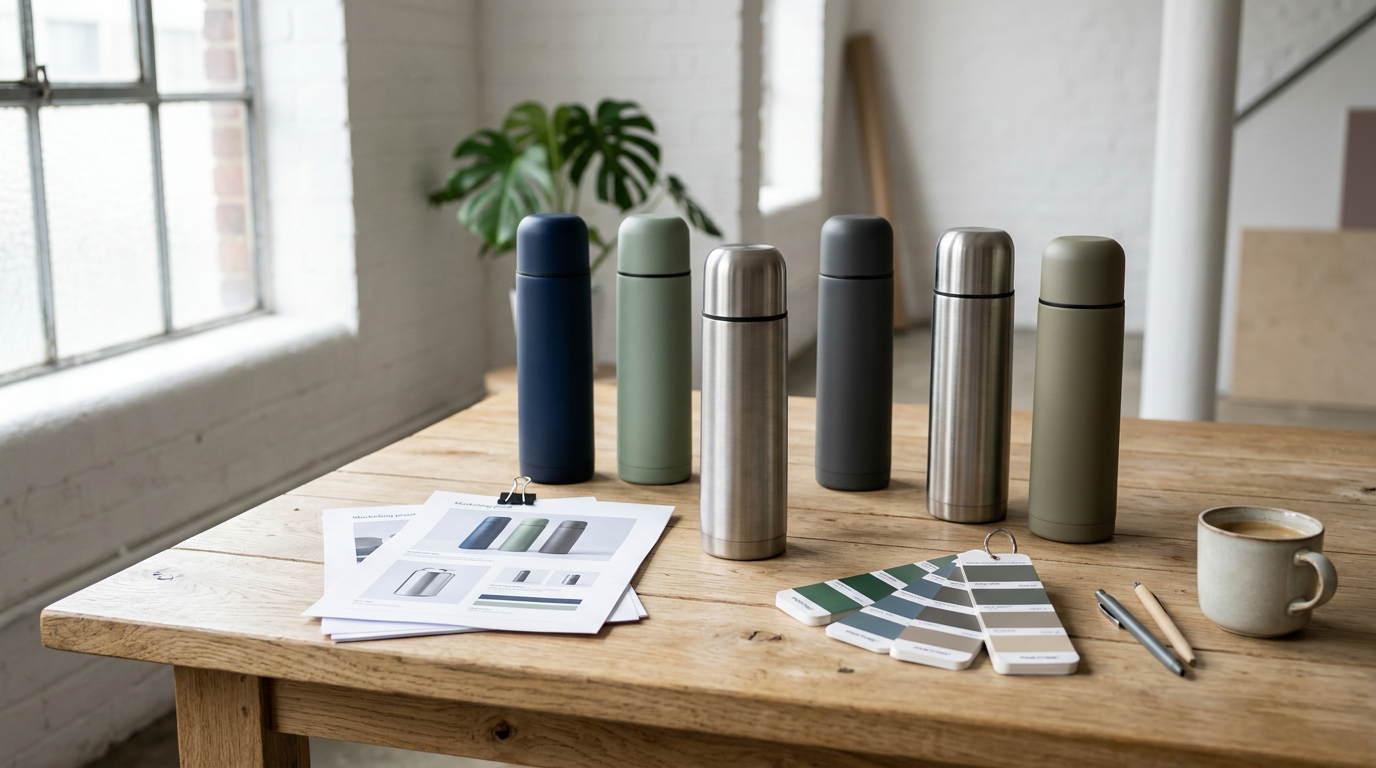
A flask wholesale supplier artwork proofing signoff is the recorded buyer approval that confirms the artwork shown on a proof is the artwork to be used for production. For a thermos flask wholesale supply order in Europe, that approval should cover the design, the wording, the colours, the placement, the size of the decoration relative to the flask, and the version of the artwork file that the supplier will use. The signoff is not a general agreement to proceed with an order. It is a specific agreement about the visible artwork, and it should be kept separate from agreements about quantity, packaging, delivery, and payment so that each point can be checked on its own.
Europe buyers often work with several destination countries, different languages, and different local expectations for product information. A single proof may therefore need to be checked against the requirements that apply in each destination country, rather than treated as suitable for every European destination by default. The buyer should confirm which destination countries are covered by the order, which languages and product details are needed for each destination, and who is responsible for checking those details before approval. The proofing process should leave a clear record of what was reviewed, who approved it, and which version was approved.
What artwork proofing signoff means for a thermos flask order
Artwork proofing signoff means that the buyer has reviewed a proof, compared it with the agreed artwork brief, and confirmed in writing that the proof is accepted for production. The proof may be a digital image, a printed sheet, or a decorated flask sample, and each form shows different information. A digital proof can show layout, wording, and relative placement, while a printed proof or a physical sample can show how the artwork appears on the shape and surface of a flask. The buyer should agree with the supplier which form of proof will be used for approval, and what that form is expected to show.
The signoff should name the artwork version, the date of the proof, and the exact files or images that were reviewed. If the supplier changes the artwork after approval, the change should be treated as a new proof and should require a new signoff. Small changes can affect spelling, spacing, alignment, colour, and the position of a logo or message, so the buyer should not rely on a verbal confirmation that a change is minor. Every approved version should be saved by both parties, and the production artwork should be traceable back to that approved version.
A useful signoff also records the limits of the proof. A proof is a representation of the intended decoration, and the buyer should ask the supplier to state what the proof does and does not show. That question helps the buyer decide whether a digital proof is enough, whether a printed proof is needed, or whether a physical sample should be reviewed before production. The buyer should also ask how the supplier will handle a difference between the proof and the finished flask, and what record will be kept if the production artwork needs to be corrected.
The buyer should keep the artwork brief and the proof together. The brief should describe the artwork, the colours, the wording, the placement, the orientation, and any text that must appear in a particular language. The proof should then be checked line by line against that brief. If a detail is missing from the brief, the buyer should add it before approval, rather than assuming that the supplier will interpret an unclear point in the same way. A clear brief reduces the need for repeated proofs and makes the signoff easier to defend if a question arises later.
Artwork proofing signoff steps for Europe buyers
A clear sequence helps the buyer and supplier agree on the same artwork before production begins. The sequence below can be used as a working process, and the buyer can adapt it to the size of the order and the number of artwork versions involved.
- Prepare an artwork brief that describes the design, the wording, the colours, the placement, the orientation, and the destination countries for the order. Ask the supplier to confirm that the brief has been received and understood, and to list any points that are unclear before a proof is prepared.
- Agree the proof type, the proof fields, and the approval route. Ask the supplier to state whether the proof will be digital, printed, or a physical sample, what each proof will show, and who will review and approve the proof on the buyer side. Agree how many reviewers are needed and how approval will be recorded.
- Request a proof that shows the artwork at the agreed placement and scale, with the artwork version clearly marked. Ask the supplier to include the colour references, the wording, and the orientation shown on the proof, so that the buyer can compare the proof with the brief without needing to ask for missing information.
- Review the proof against the brief, checking spelling, wording, language, punctuation, spacing, alignment, colour, placement, and orientation. Ask a second reviewer to check the same proof when the artwork includes text in a language that the first reviewer does not use every day, or when the artwork will be used in more than one destination country.
- Record the decision for each proof version, noting whether it is approved, approved with changes, or not approved. If changes are needed, ask the supplier to list the changes, prepare a revised proof, and mark it as a new version. Do not approve a revised proof by reference to an earlier version without seeing the revised artwork.
- Give a written signoff only when the proof matches the brief and the agreed proof fields. Ask the supplier to confirm the approved version, the artwork files to be used for production, and the record that will be kept of the approval. Keep a copy of the signed proof, the brief, and the approval message in the order file.
- Confirm the production artwork after signoff, before production moves beyond the point where artwork can be corrected without rework. Ask the supplier to confirm that the production artwork matches the approved proof, and to raise any production issue that could affect the artwork before production continues.
Comparing digital, printed and physical proofs
A digital proof is useful for checking layout, wording, and relative placement, and for sharing a proof quickly between reviewers. The buyer should ask the supplier to state the scale of the digital proof, the background used for the image, and whether the image shows the artwork on a flat surface or on a flask shape. A digital image can make a colour appear different from the colour on a finished flask, so the buyer should not treat a screen image as a complete check of colour.
A printed proof can help the buyer check wording, spacing, and layout on paper, and can be kept as a physical record of the approved design. The buyer should ask the supplier to state the size of the printed proof, whether it is printed at the intended size, and how the printed colours relate to the colours that will appear on the flask. A printed proof does not show how the artwork will sit on a curved surface, so the buyer should ask what additional check will be used for placement.
A physical sample can show how the artwork appears on the shape, surface, and finish of a flask, including how it sits around a curve and how it aligns with a lid, a base, or a handle where those features are present. The buyer should ask the supplier to state whether the sample uses the same decoration method and the same placement as production, and whether the sample is intended as an artwork check, a product check, or both. A single sample may not show variation across a larger order, so the buyer should ask how artwork consistency will be checked during production.
The buyer should choose the proof type that matches the risk of the order. A simple repeat of artwork that has already been approved may need a lighter check, while a new design, a new language, a new placement, or a new colour combination may need a more complete check. The choice should be recorded in the order, together with the reason for the choice, so that the proofing process can be reviewed later if a question arises.
Common artwork risks to check before signoff
Spelling and wording errors are a common cause of artwork rework, especially when the artwork includes a brand name, a product name, a place name, or text in more than one language. The buyer should check every word on the proof, including small text, and should ask the supplier to confirm the exact wording that will be used. If the artwork includes a claim, a message, or a direction for use, the buyer should check that the wording is the version that has been agreed for each destination country.
Placement and orientation also need careful checking. A design that looks correct on a flat proof may appear rotated, off centre, or partly hidden when it is placed on a flask. The buyer should ask the supplier to show the placement from more than one view where the flask shape makes that useful, and to mark the top, the front, and the centre line of the decoration. The buyer should also check how the artwork aligns with any seam, opening, or functional part of the flask.
Colour is another area where a proof and a finished flask can differ. The buyer should agree the colour references with the supplier, ask how the colours will be shown on the proof, and ask what check will be used to compare the proof colours with the production colours. If the artwork uses more than one colour, the buyer should check the order of the colours, the spacing between them, and the contrast between the artwork and the flask surface.
The buyer should also check the artwork file itself. Ask the supplier to confirm the file version, the file format agreed for production, and whether any part of the artwork has been redrawn, resized, or repositioned after the proof was prepared. If the supplier supplies a new file after approval, the buyer should ask for a new proof that shows the artwork from that file, rather than approving the file on the basis of an earlier proof.
Buyer decision table for artwork approval
Use the table below to record the decisions that must be agreed before signoff. Each row describes a decision, the information the buyer should agree with the supplier, and the check that should be completed before approval.
| Decision | What to agree with the supplier | Check before signoff |
|---|---|---|
| Proof type | Whether approval will use a digital proof, a printed proof, or a physical sample, and what each proof will show | Confirm that the proof type matches the artwork risk and the destination countries covered by the order |
| Artwork version | The version number, the date of the proof, and the files or images that were reviewed | Confirm that the approved version is marked clearly and saved by both parties |
| Wording and language | The exact wording, spelling, punctuation, and language for each destination country | Check every word on the proof against the agreed brief, including small text |
| Colours | The colour references, the order of colours, and how colours will be shown on the proof | Confirm how proof colours will be compared with production colours |
| Placement and orientation | The placement, size relative to the flask, alignment, and orientation of the artwork | Confirm the placement from the views agreed with the supplier and check alignment with the flask shape |
| Production artwork | The files and settings that will be used for production after approval | Confirm that the production artwork matches the approved proof and that any change requires a new proof |
| Approval record | Who approves the proof, how approval is recorded, and where the record will be kept | Confirm that the signoff names the approver, the version, and the date of approval |
RFQ Checklist
- Ask the supplier to list the proof type, the proof fields, and the artwork version that will be used for approval.
- Require the supplier to confirm the exact wording, colours, placement, orientation, and destination countries covered by the proof.
- Specify the artwork files, the file version, and the record that will be kept for each approved proof.
- Ask the supplier to state how a revised proof will be marked, reviewed, and approved after any artwork change.
- Require the supplier to confirm how the production artwork will be checked against the approved proof before production continues.
- Specify who will review and approve the proof on the buyer side, and how that approval will be recorded in writing.
- Ask the supplier to describe how artwork consistency will be checked across the order, and what record will be kept if a difference is found.
A complete artwork proofing signoff gives the buyer a clear record of what was approved and gives the supplier a clear instruction for production. The buyer should keep the brief, the proof, the approval record, and the production confirmation together in the order file, and should refer to the approved version if any question about the artwork arises after delivery. A careful proofing process takes time at the start of an order, and that time helps the buyer avoid rework, delay, and disagreement about the finished decoration.
Discuss Your Requirements
Review our manufacturing capabilities, then share your specifications for a supplier-fit review.