Drinkware Wholesale Supplier Tooling Amortization Terms for Europe
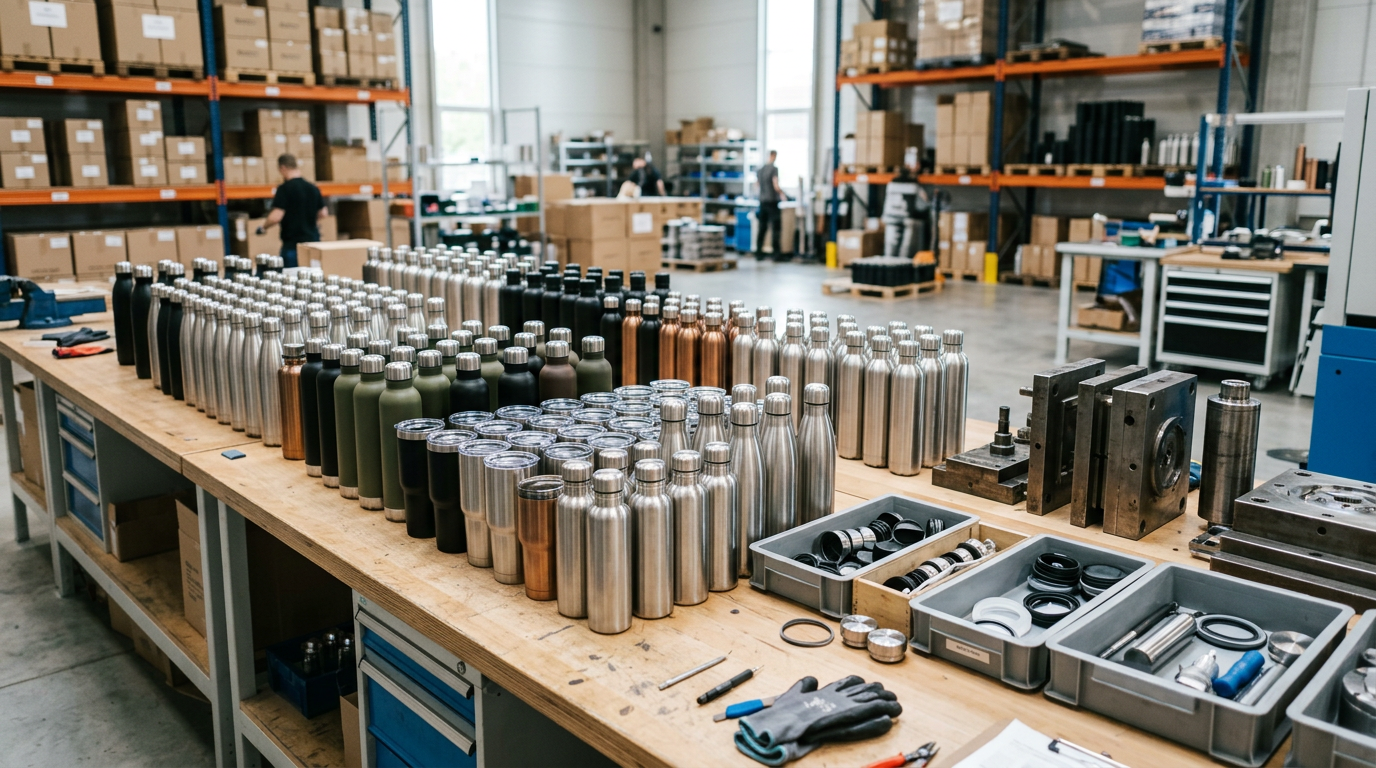
Drinkware wholesale supplier tooling amortization terms set out how the cost of tooling for reusable drinkware is shared between buyer and supplier across an order or a series of orders in Europe. The terms should state what tooling is included, how payment is timed, who owns the tooling, and what happens when designs, volumes, or ordering plans change. A clear written agreement helps a buyer compare offers on the same basis and helps both sides record decisions before production begins. The focus here is on process, comparison, and agreement fields, not on a single price or a single supplier practice.
Tooling for drinkware can cover moulds, forming tools, printing plates, and other items made for a particular shape, size, finish, or decoration. A buyer needs to know whether each item is included in the quoted tooling scope, whether it is made for one product only, and whether it can be used again for a later order. Without that list, two offers can look similar while covering different work. The buyer should ask for the scope in writing and keep it with the order record.
Amortization in this context means spreading an agreed tooling amount across agreed orders or units, rather than treating tooling as an unexplained part of a unit price. The buyer and supplier need to agree the starting amount, the basis for spreading it, the point at which it is treated as paid, and the record that shows progress. They also need to agree what happens if the order plan changes. A useful agreement leaves no part of that logic to memory or to a verbal understanding.
What Tooling Amortization Terms Mean in Drinkware Wholesale Supply
In drinkware wholesale supply, tooling amortization terms describe the link between tooling cost and ordering. The terms should answer practical questions about scope, timing, ownership, use, care, and end of use. A buyer can use those questions to test whether an offer is complete. If an offer leaves one of those areas open, the buyer should ask for the missing detail before confirming the order.
The first area is scope. The buyer should ask the supplier to list each tool, the product it serves, and the design or decoration it supports. The list should make clear whether artwork preparation, colour matching, surface treatment, or packaging tooling is included or separate. It should also make clear whether a change to shape, capacity, lid, handle, finish, or printed design would require new tooling or a change to existing tooling. A scope list helps the buyer see what is being paid for and what would trigger further discussion.
The second area is payment timing. The buyer should ask when tooling amounts become payable, whether payment is tied to approval of a sample, to start of production, to delivery, or to another agreed event, and how the amount is shown on order documents. The buyer should also ask how a tooling amount is handled if an order is reduced, delayed, split, or cancelled by agreement. Payment timing should be recorded in the same document as the scope, so the commercial record and the production record match.
The third area is ownership and use. The buyer should ask who owns each tool after payment, who may use it, whether it is held for the buyer only, and whether it may be used for another buyer or another product. The buyer should also ask where the tooling is stored, who is responsible for its care, and how the buyer can confirm its condition and location. Ownership without a clear record of storage and use can be difficult to apply later, so the agreement should state the practical arrangements as well as the ownership position.
A simple process helps a buyer work through these areas in order:
- Define the drinkware product, decoration, and tooling scope in writing.
- Agree the tooling amount, the amortization basis, and the payment events.
- Agree ownership, exclusive use, storage, care, and access.
- Agree what happens on design change, volume change, replacement, and end of use.
- Record all points in the order documents and keep a shared copy.
Each step should produce a written point that both sides can check. If a point is still open, the buyer should keep it open in the record rather than treating it as agreed. That approach supports comparison between suppliers and supports later reordering without reworking the same questions.
How to Compare Tooling Amortization Terms for Europe
Comparison works best when every offer is tested against the same fields. The buyer can prepare a short comparison sheet with scope, payment timing, amortization basis, ownership, use, care, replacement, and end of use. The buyer can then ask each supplier to complete the same sheet. Offers that use different definitions for the same word should be clarified before comparison, because a difference in definition can change the meaning of the whole offer.
The buyer should ask for a breakdown that separates tooling from unit cost, delivery, and other charges. The breakdown should show what is included in tooling, what is excluded, and what would be charged if a design change required new work. The buyer should also ask how the supplier records amortization progress and what document the buyer receives to show the remaining balance. A clear record helps the buyer plan later orders and helps both sides avoid disagreement about whether tooling has been fully covered.
Volume and reordering need careful attention. The buyer should ask what happens if later orders are smaller than planned, larger than planned, or spaced over a longer period. The buyer should ask whether amortization continues across later orders, whether it pauses, and whether a change in volume changes the unit treatment. The buyer should also ask whether tooling can be reused for a repeat order without further tooling cost, and what conditions apply to reuse. These points matter for drinkware programmes that grow in stages or that repeat a design across seasons.
For Europe, the buyer should ask the supplier to confirm which arrangements apply to the buyer delivery location, and to record that confirmation in writing for that location. Arrangements can differ between delivery in the EU, delivery in the EEA, delivery in the UK, and delivery in another European country, and arrangements can also differ by country within Europe. The buyer should not assume that an arrangement described for one European delivery location applies to another. The buyer should ask the supplier to state the delivery location covered by the offer, the language of the agreement, the party responsible for transport and related documentation, and the point at which responsibility passes. Where the buyer needs further confirmation, the buyer should request supplier documentation and seek advice that fits the buyer delivery country.
Design change is another common source of later discussion. The buyer should ask how a change to artwork, colour, finish, lid, or shape is handled, who decides whether new tooling is needed, and how the cost and timing of that decision are recorded. The buyer should also ask whether a sample is required before a changed design moves to production, and who approves that sample. A written change process helps both sides treat a design change as a new agreement point rather than as an informal adjustment.
Buyer Decision Table for Drinkware Tooling Amortization Terms
The table below gives a buyer a way to check each decision area before confirming an order. Each row names the area, the agreement point to settle, and the check the buyer should complete. The buyer can use the table as a working record and keep the completed version with the order.
| Decision area | What to agree | Buyer check |
|---|---|---|
| Tooling scope | List of tools, products served, and design or decoration covered | Confirm the list is complete and matches the product and artwork |
| Amortization basis | How the tooling amount is spread and when it is treated as covered | Confirm the basis, the record of progress, and the remaining balance method |
| Payment timing | Events that trigger payment and how the amount appears on order documents | Confirm the events and the document wording before ordering |
| Ownership and use | Owner of each tool, exclusive use, and permitted use | Confirm ownership, use limits, and storage location in writing |
| Volume and reordering | Treatment of smaller, larger, or delayed later orders | Confirm reuse terms and the effect of volume change |
| Design change | Process for artwork or shape change and decision on new tooling | Confirm who decides, who approves a sample, and how cost is recorded |
| Care and replacement | Responsibility for storage, care, and replacement of tooling | Confirm care duties, replacement responsibility, and approval process |
| End of use | Return, retention, or disposal of tooling at end of production | Confirm the end of use process and the record to be kept |
The buyer should treat an empty cell as an open point. A decision area should not be treated as settled until the agreement point and the buyer check are both recorded. Where suppliers describe the same area in different words, the buyer should ask for the wording to be aligned before comparing offers.
Agreeing Ownership, Replacement, and Reuse in Drinkware Wholesale Supply
Ownership is often the most important part of tooling amortization terms in drinkware wholesale supply, because it affects later reordering, design reuse, and supplier change. The buyer should ask the supplier to state ownership for each tool separately, rather than relying on a single general statement. The buyer should also ask whether ownership changes after amortization is complete, and whether any use restriction continues after that point. If ownership and use are described in separate documents, the buyer should ask for the documents to be aligned.
Reuse needs a clear statement about exclusivity. The buyer should ask whether tooling made for the buyer design is held for that buyer only, whether it may be used for a similar product, and whether the supplier needs buyer approval before any other use. The buyer should also ask how the supplier identifies and separates buyer tooling in storage. A clear identification method supports later checks and supports a clean handover if tooling is moved or returned.
Replacement and care should be agreed before production, not after a tool is damaged or worn. The buyer should ask who inspects tooling, how often inspection takes place, how the result is recorded, and who is responsible for repair or replacement. The buyer should ask what happens if replacement is needed during an order, who approves the replacement, and how any related cost is handled. The buyer should also ask whether a replacement tool carries the same ownership and use terms as the original tool.
Storage and access are part of the same agreement. The buyer should ask where tooling is stored, who has access, and how the buyer can request a check of condition or location. The buyer should ask how long tooling is retained after the last order, what notice is given before disposal or return, and what record is kept at the end of that period. A retention period should be stated in the agreement, with a clear start point and a clear notice process.
At the end of production, the buyer and supplier should agree whether tooling is returned, retained for later use, or disposed of by agreement. The buyer should ask for a written end of use record that lists each tool, its condition, and its agreed destination. That record helps the buyer close the order file and helps both sides avoid later uncertainty about what was kept and what was removed.
RFQ Checklist
Use this checklist to prepare a request for quotation that covers tooling amortization terms in full. Keep the completed checklist with the quotation and the order documents.
- Ask the supplier to list each tool included in the tooling scope and the drinkware product it serves.
- Require the manufacturer to state tooling ownership for each tool and any limit on use.
- Specify the amortization basis, the payment events, and the record that shows progress.
- Ask the supplier to describe the treatment of later orders if volume or timing changes.
- Require the manufacturer to state the process for design change and approval of a sample.
- Specify the responsibilities for storage, care, inspection, and replacement of tooling.
- Ask the supplier to confirm the arrangements that apply to the buyer delivery location in Europe.
- Require the manufacturer to state the end of use process for return, retention, or disposal.
- Specify the documents the buyer will receive with the quotation and with each order.
- Ask the supplier to confirm that all tooling points above are recorded in the order documents.
Discuss Your Requirements
Review our manufacturing capabilities, then share your specifications for a supplier-fit review.