Custom Water Bottle Manufacturer RFQ Checklist for B2B Technical Buyers
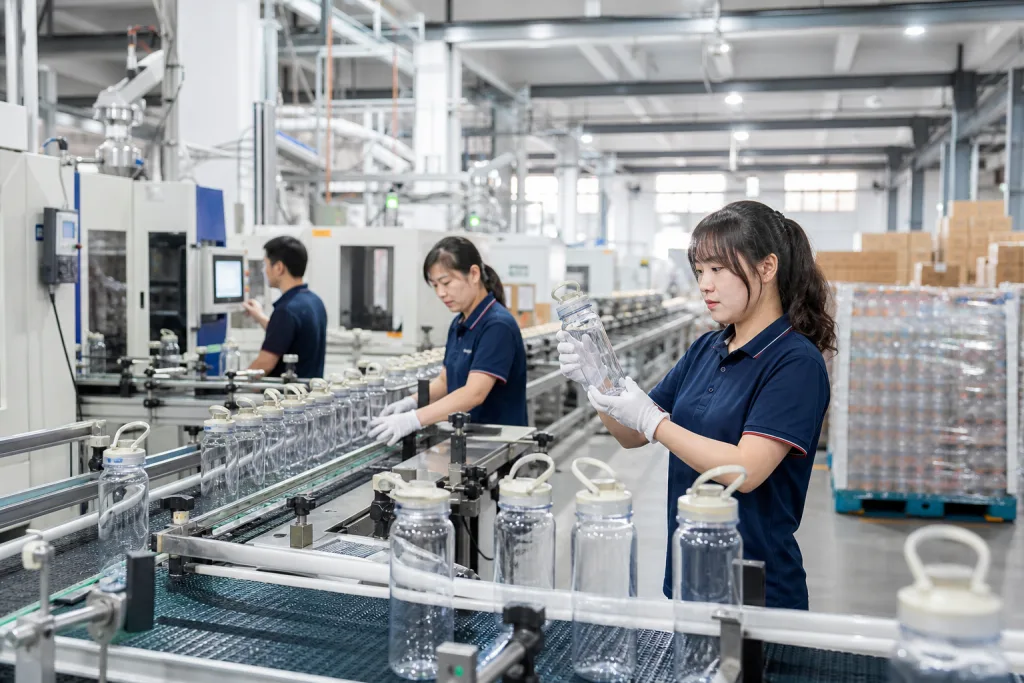
Custom Water Bottle Manufacturer RFQ Checklist for B2B Technical Buyers
A custom water bottle manufacturer RFQ should give suppliers the same controlled brief, the same response fields, and the same evidence requirements. That structure helps a buyer compare scope, assumptions, exclusions, documentation, quality controls, timing, and price on a consistent basis.
This checklist is based on the cited manufacturer and sourcing guides, with buyer-side RFQ controls that can be verified through supplier responses.
1. Build the Buyer-Controlled Brief First
A manufacturer guide recommends defining bottle style, capacity, lid type, drinking interface, carry option, inside and outside materials, surface finish, color reference, logo method, accessories, packaging route, destination market, order range, and launch window before comparing offers source.
Use the first RFQ page to separate buyer requirements from supplier assumptions.
| Buyer input | What to define before supplier contact | Supplier response required | |---|---|---| | Project scope | SKU list, destination market, sales channel, launch window, order range, reorder expectation | Quote validity, MOQ, lead-time assumptions, commercial exceptions | | Product architecture | Bottle type, nominal capacity, target height, target diameter, mouth opening, base or cup-holder constraints | Available model, drawing, tolerance notes, feasibility comments | | Materials | Body, liner if relevant, lid, gasket, straw or spout, coating, and all liquid-contact or mouth-contact parts | Component list, material declaration route, proposed substitutions, food-contact evidence plan | | Lid and drinking interface | Screw lid, flip lid, straw lid, chug opening, sip opening, handle, loop, lock, gasket approach | Lid drawing or photos, leak-control method, spare-part availability if offered | | Decoration and finish | Color reference, surface finish, texture, logo size, placement, artwork format, decoration method | Decoration limits, color-tolerance approach, pre-production sample method | | Packaging | Unit pack, retail pack, inner carton, master carton, label and barcode position, pallet or loading constraints | Pack-out drawing, carton dimensions, gross and net weight, protective material plan | | Compliance and claims | Target markets, intended user group, sales channel requirements, allowed product or packaging claims | Document list, testing responsibility, report timing, claim evidence | | Quality standard | Inspection stages, critical dimensions, cosmetic limits, functional checks, approval sample control | Inspection plan, sampling standard, defect definitions, corrective-action process |
Classify each line as required, optional, or supplier-proposed. Required lines should not change without written buyer approval. Optional lines can be priced as alternates. Supplier-proposed lines should identify the exact assumption behind the quote.
2. State the Manufacturing Route
Fully customized sourcing can involve bottle shape, lid style, material choices, and surface texture, not only logo placement source. The RFQ should state which manufacturing route the supplier is being asked to quote.
| Route | Use when | RFQ questions | Scope evidence to request | |---|---|---|---| | Existing model with decoration | The body, lid, and main component set can remain standard | Which dimensions, lids, gaskets, finishes, and packaging elements are fixed? | Current drawing, physical sample, component list, decoration area, packaging specification | | Existing model with accessory or packaging changes | The bottle is mostly standard but retail or channel presentation changes | Which accessories are standard, optional, or newly sourced? | Accessory sample, assembled pack-out sample, carton dimensions, packaging photos or drawings | | ODM modification | A lid, handle, surface, drinking interface, accessory, or finish needs a defined change | Which parts change, and does the change require a mold, fixture, or validation step? | Change drawing, prototype sample, compatibility confirmation, approval gates | | New tooling | The bottle body, lid system, or product architecture is unique | What dimensions, tolerances, user requirements, tooling responsibilities, and validation stages apply? | 3D files if available, DFM review, tooling quote, sample plan, revision process | | Smart or electronic bottle | The bottle includes reminder, display, UV, sensor, app-connected, charging, or other powered functions | Who controls electronics integration, PCBA, power management, sealing, charging, and service access? | Electronics responsibility map, prototype test plan, mechanical-electrical interface review |
A trend guide describes smart bottle features such as hydration reminders, temperature display, UV function, app or sensor functions, and notes that these functions involve electronics integration, PCBA control, and stable power management source. Treat powered functions as a separate subsystem in the RFQ. Require the supplier to state who is responsible for the electronics, mechanical interface, testing, and approval gates.
3. Define Evidence Before Comparing Quotes
A quotation is not ready for comparison until the supplier states what proof is included, what proof is excluded, and when each item will be available.
| Evidence item | When to require it | Buyer use | |---|---|---| | Product drawing or dimension sheet | Before quotation comparison for existing or modified models | Confirms size, capacity-related dimensions, fit constraints, and fixed geometry | | Bill of materials or component list | Before sample approval | Identifies body, lid, gasket, straw, spout, coating, packaging, and replacement parts if offered | | Material declaration and compliance plan | Before purchase order | Links each relevant component to the required market documents or tests | | Reference sample | Before prototype or pre-production approval | Establishes the physical baseline for shape, finish, lid fit, and handling | | Prototype or modified sample | Before tooling or mass production commitment | Checks changed parts, fit, finish, usability, and packaging assumptions | | Pre-production sample | Before mass production | Sets the approved standard for production, decoration, packaging, and assembly | | Packaging specification | Before final price approval | Confirms unit pack, carton, labeling, protection, dimensions, and weights | | Inspection plan | Before production starts | Defines checkpoints, sampling, defect categories, pass-fail criteria, and rework rules | | Test report plan | Before purchase order | Confirms which tests are required, who pays, who issues reports, and when results are due | | Change-control rule | Before purchase order | Prevents unapproved material, component, mold, decoration, packaging, subcontractor, or process changes |
4. Map Manufacturing Control and Quality Accountability
The supplier name on a quote is not enough for technical review. A manufacturer guide recommends asking who controls forming, welding, vacuum processing, coating or finishing, decoration, lid and gasket sourcing, assembly, inspection, and packing, and who has authority to answer technical questions or stop and correct production source.
Request a short responsibility table in each supplier response.
| Process area | Who performs it | Who approves it | What evidence is produced | |---|---|---|---| | Body forming or molding | Supplier to state | Supplier to state | Drawing, process notes, first-article result | | Welding or vacuum process if applicable | Supplier to state | Supplier to state | Process control note, test method, sample result | | Coating, finish, or surface texture | Supplier to state | Supplier to state | Color target, finish sample, appearance criteria | | Decoration | Supplier to state | Supplier to state | Artwork proof, decoration sample, adhesion method if required | | Lid, gasket, straw, and accessory sourcing | Supplier to state | Supplier to state | Component list, material declaration route, approved sample | | Assembly and packing | Supplier to state | Supplier to state | Pack-out sample, carton specification, packing photos | | Inspection and release | Supplier to state | Supplier to state | Inspection report, defect summary, corrective-action record if needed |
Quality planning should be visible before production starts. Ask for checkpoints covering incoming components, first-article review, in-process checks, decoration approval, assembly verification, packaging verification, and final random inspection. Define the sealed approval sample and require written approval before any production change.
5. Put Compliance and Claims Into the RFQ
OEM sourcing guidance recommends clarifying target market and compliance requirements before approaching a factory source. The RFQ should state the destination market, sales channel, intended user group, component types, and documents required before shipment.
Use evidence-first claim control.
| Claim or requirement area | RFQ instruction | |---|---| | Food-contact components | Identify every component that may touch liquid or the user's mouth, then require the document or test route for each component type | | Packaging and labeling | Define destination-market markings, barcode location, retail channel requirements, and who approves label artwork | | Sustainability claims | Request material facts, packaging weights, recycled-content evidence if claimed, recyclability assumptions by market, and claim wording approval | | Testing responsibility | State whether the buyer, supplier, or a third party arranges testing, who pays, and when reports must be available | | Shipment release | Tie shipment approval to the approved sample, inspection result, required reports, and completed shipment documents |
A trend guide states that B2B product development often begins 12-24 months before market launch and that buyers increasingly expect OEM and ODM customization, compliance readiness, and sustainability considerations source. A broader B2B sourcing guide frames material selection, manufacturing processes, quality control, logistics, and sustainability as sourcing decisions that can affect product safety, brand perception, and profitability source.
Use those points as sourcing context, not as evidence for a specific bottle. Do not approve environmental, performance, or compliance language for packaging, listings, product pages, or sales documents until the supporting evidence and exact wording are approved.
6. Normalize Quotes Before Discussing Unit Price
Ask every supplier to return the same pricing structure. This keeps exclusions visible before unit prices are compared.
| Quote line | Supplier must show | Buyer check | |---|---|---| | Unit price | Price by quantity tier and SKU | Same product, material, finish, decoration, packaging, and approval standard | | Tooling | Mold, fixture, artwork, plate, or setup costs | Ownership, maintenance, storage, revision cost, and transfer rights | | Samples | Reference, prototype, pre-production, production sample costs | Sample lead time, approval gate, freight, and rejection process | | Decoration | Method, setup, number of positions, color count, artwork limits | Durability method if required, color tolerance, logo placement, revision count | | Accessories | Included and optional items | Material, color, packaging fit, replacement-part plan if offered | | Packaging | Unit, retail, inner, master carton, inserts, labels, barcodes | Carton dimensions, weights, channel requirements, pallet or loading constraints | | Testing and inspection | Included tests, third-party reports if required, inspection costs | Timing, responsibility, pass-fail criteria, retest rule | | Freight and trade assumptions | Incoterm or delivery basis stated by supplier | Port, destination, insurance, duties, and excluded charges | | Commercial terms | MOQ, payment terms, lead time, quote validity | Alignment with launch date, reorder pattern, and approval schedule |
Shortlist suppliers that quote the same scope, explain assumptions clearly, provide evidence at the required stage, and accept written change control. Compare price only after product, packaging, documentation, quality control, and timeline are normalized.
7. RFQ Checklist to Attach to the Inquiry
- [ ] Project name, SKU list, destination markets, sales channel, and planned launch window.
- [ ] Required order range, target reorder pattern, and forecast visibility.
- [ ] Bottle type, nominal capacity, target height, target diameter, mouth opening, base dimensions, and fit constraints.
- [ ] Manufacturing route requested: existing model, existing model with changes, ODM modification, new tooling, or smart or electronic bottle.
- [ ] Body material, liner if relevant, lid material, gasket material, straw or spout material, coating, and all liquid-contact or mouth-contact components.
- [ ] Lid type, drinking interface, carry method, locking feature if required, and gasket design requirements.
- [ ] Performance expectations for leak resistance, insulation if applicable, drop or transport handling if required, cleaning method, and use environment.
- [ ] Color reference, surface finish, texture, logo position, artwork format, decoration method, and acceptable color-variation method.
- [ ] Accessory list, including straws, brushes, spare gaskets, sleeves, handles, tags, inserts, or retail components if required.
- [ ] Unit packaging, retail packaging, inner carton, master carton, carton markings, barcode position, and pallet or loading constraints.
- [ ] Required compliance documents by destination market and component type.
- [ ] Evidence required for any sustainability, recycled-content, recyclability, performance, or compliance claim.
- [ ] Sample sequence: reference sample, prototype, pre-production sample, sealed approval sample, and production sample if needed.
- [ ] Tooling requirements, tooling ownership, file ownership, maintenance responsibility, and revision approval process.
- [ ] Quote format covering unit price, MOQ, price breaks, tooling, samples, decoration, accessories, packaging, testing, inspection, and freight assumptions.
- [ ] Lead times for tooling, sampling, pre-production approval, mass production, packaging, testing, inspection, and shipment readiness.
- [ ] Responsibility map for forming or molding, welding or vacuum processing if applicable, coating, decoration, component sourcing, assembly, inspection, and packing.
- [ ] Quality plan with inspection stages, acceptance criteria, defect definitions, sampling standard, and corrective-action process.
- [ ] Written approval rule for changes to material, component, mold, decoration, packaging, subcontractor, or production process.
- [ ] Final deliverables: approved sample, drawings, bill of materials, packaging specification, inspection report, test reports, and shipment documents.
RFQ Output
At the end of supplier review, the buyer should have a controlled specification, documented supplier assumptions, approved sample path, responsibility map, evidence plan, normalized quote comparison, and written change-control rule. Use that package to compare custom water bottle manufacturers by stated scope, evidence, timing, and price.